The CILS A1 is the first step on the CILS ladder: an official certificate that proves you can get by in basic Italian. Here you’ll find the next exam dates, what the test looks like, and how I’d prepare for it.
In short
- The CILS A1 is the beginner certificate of Italian issued by the Università per Stranieri di Siena.
- It runs twice a year: next sessions on 10 June 2027 (register by 1 May) and 2 December 2027 (register by 23 October).
- It has five parts: listening, reading, grammar and vocabulary, writing, speaking.
- Most English speakers need about 3 to 5 months of steady study to get there.
- Not every exam center offers A1, so ask your center first.
What is the CILS A1 exam?
The CILS A1 is a certification that tests your basic Italian language skills at the beginner level.
You can take the CILS A1 exam in Italy or at approved testing centers worldwide, including universities and institutions recognized by the Italian Ministry of Education.
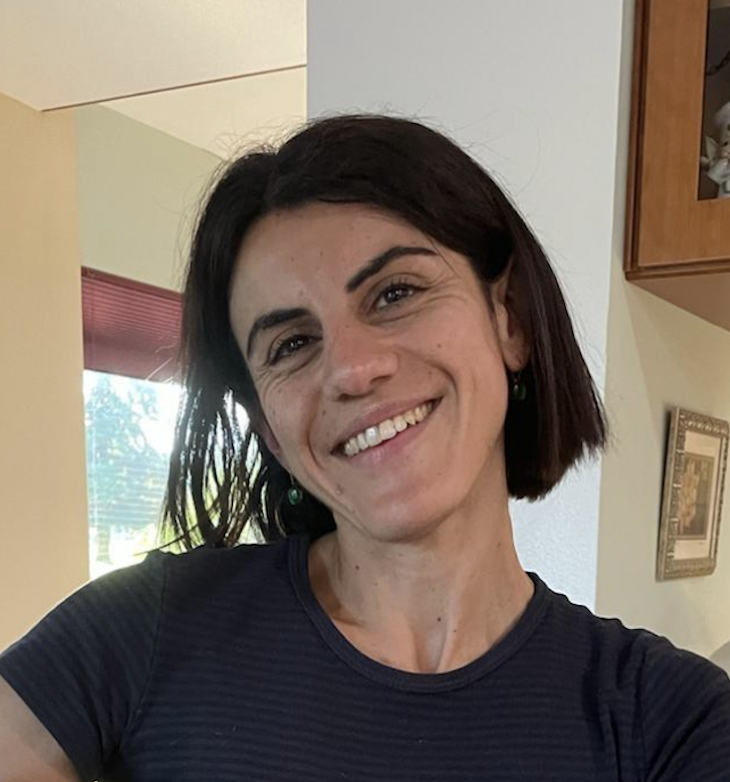
Ciao, I'm Serena
I'm a certified Italian teacher from Sicily, and I live in Rome. Since 2016 I've been teaching Italian online to English-speaking adults, through stories and comprehensible input. My graded readers grew out of those lessons: short stories in real, culturally rich Italian, with exercises and audio, so you can bring together and activate the grammar and vocabulary you already know. I believe this is the most effective way to learn a language, and to make learning it part of your lifestyle.

What does A1 mean?
The A1 level represents beginner Italian proficiency according to the CEFR (Common European Framework), enabling you to:
- Introduce yourself and ask basic personal questions
- Navigate everyday situations with simple phrases
- Discuss family, hobbies, and immediate needs
- Understand slow, clear speech on familiar topics
- Recognize and use essential vocabulary and grammar structures
This foundation level demonstrates basic communication abilities in Italian for everyday interactions.
CILS A1 Exam Dates 2026-2027
The CILS exam takes place on the same days all over the world, on dates set by the Università per Stranieri di Siena. The A1 level is offered only twice a year, in June and December, and only at exam centers that choose to activate it. So the first thing to do is ask your center whether it runs the A1.
| Exam date | Levels | Registration deadline* |
|---|---|---|
| Thursday, 3 December 2026 | A1 (standard, children, teens, integration) + A2, B1, B2, C1, C2 | 24 October 2026 (closed) |
| Thursday, 10 June 2027 | A1 (standard, children, teens, integration) + A2, B1, B2, C1, C2 | 1 May 2027 |
| Thursday, 2 December 2027 | A1 (standard, children, teens, integration) + A2, B1, B2, C1, C2 | 23 October 2027 |
Find a center near you in the official list of CILS exam centers (in Italy and abroad), then contact them to confirm they run the A1 and to ask about fees.
If you’re aiming for the June 2027 session, registration closes on 1 May. Count back from there: that’s the moment you want to feel ready to sign up, not the moment you start studying.
CILS A1 exam structure
The exam has five parts. The four written parts take about 30 minutes each, and the speaking test is a short one-on-one conversation with an examiner.
| Section | Description | Duration |
|---|---|---|
| Test di Ascolto (Listening Comprehension) | Divided into two parts: listening to two short texts. Multiple-choice exercises. Audio tracks repeated twice. | 30 minutes |
| Test di Comprensione della Lettura (Reading Comprehension) | Divided into three parts. Requires reading basic text messages. Multiple-choice questions or matching exercises. | 30 minutes |
| Test di Analisi delle Strutture di Comunicazione (Grammar and Vocabulary) | Consists of three fill-in-the-blank texts. Assesses basic grammar and vocabulary skills. Candidate must supply the correct article or verb. | 30 minutes |
| Test di Scrittura (Writing Production) | Consists of two short writing prompts. Texts should not exceed 40 words each. | 30 minutes |
| Produzione Orale (Speaking Part) | Divided into two parts. Administered individually. Examiner may assist a candidate having trouble speaking. Overall duration around 3-4 minutes. |
Where to find CILS A1 sample papers
Before exam day, get to know the format so nothing surprises you. You can find a copy of a previous CILS A1 exam on the official CILS website. If you want more practice, I recommend getting the “Quaderni,” which is a collection of mock tests from previous years’ CILS A1 exams.
A1 grammar for the CILS exam
| Verbs: Present Tense | Regular and irregular verbs in the present tense (e.g., parlare, essere, avere) |
| Verbs: Reflexive Verbs | Reflexive verbs (e.g., mi sveglio, ti lavi) |
| Articles | Definite (il, la, i, le) and indefinite articles (un, una, dei, delle) |
| Nouns: Gender and Number | Masculine/feminine, singular/plural (e.g., ragazzo/ ragazza, libri) |
| Possessive Adjectives | My, your, his/her (e.g., mio, tua, suoi) |
| Adjectives: Agreement | Agreement of adjectives with nouns (e.g., una casa grande, un uomo alto) |
| Prepositions | Simple prepositions (e.g., a, di, in, con, per, su) |
| Talking about the near future | Use the present tense with a time word (e.g., Domani vado al mare, Fra poco mangio) |
| Verbs: Imperative | Giving commands or instructions (e.g., Mangia! Ascolta!) |
| Pronouns | Subject pronouns (io, tu, lui/lei), object pronouns (mi, ti, lo) |
| Questions | Forming yes/no questions and questions with “che, dove, come” |
| Negation | Using “non” to form negations (e.g., Non parlo, Non voglio) |
| There is/There are | Using “c’è” and “ci sono” for existence (e.g., C’è un libro, Ci sono delle persone) |
| Comparatives | Making comparisons (e.g., più…di, meno…di) |
| Adverbs of Frequency | Expressing frequency (e.g., sempre, mai, spesso) |
Need a refresher? Start with my guides to the present tense, definite articles, reflexive verbs and possessive adjectives.
A1 speaking topics
| Introductions | Talk about your name, age, where you are from, and your hobbies. |
| Family | Describe your family members (parents, siblings, etc.) and their jobs or activities. |
| Daily Routine | Talk about your typical day (what time you wake up, work, study, etc.). |
| Free Time | Describe what you do in your free time (hobbies, activities, etc.). |
| Food | Discuss your favorite foods, meals, and eating habits. |
| Weather | Talk about the weather today or in different seasons. |
| School/Work | Describe your school or job, your subjects or work responsibilities. |
| National Holidays | Talk about holidays in your country and how you celebrate them. |
| Travel | Discuss places you have visited or want to visit. |
| House and Home | Describe your home, the rooms, and what it looks like. |
How long does it take to reach A1?
Learning time varies based on several factors, but the quality of your study time matters more than quantity when acquiring a new language. For native English speakers or those without prior experience in Romance languages (like Spanish or French), reaching an A1 level in Italian typically requires approximately 3 to 5 months of consistent study.
This timeframe assumes:
- 2-3 hours of focused practice per week
- Use of structured learning resources
- Regular conversation practice
- Some form of listening immersion (podcasts, videos, etc.)
Students with previous Romance language experience may progress more quickly, often achieving A1 proficiency in just 2-3 months. Remember that language learning is highly individualized, and your personal aptitude, study methods, and consistency will ultimately determine your progress.
How to prepare for the CILS A1
To reach A1, focus on basic grammar and everyday vocabulary, and follow a structured plan: a course, a class or a private teacher. Then practice all four skills: reading, writing, speaking and listening. You need each one to pass, so an app that teaches you phrases won’t be enough on its own.
A simple study plan
Here’s the order I suggest:
- Start with a structured course like Nuovo Espresso or Rocket Italian to build foundational knowledge
- Reinforce sentence patterns with the Italian Verb Drills
- Practice exam-specific skills with the CILS A1 Quaderni
- Clarify grammar concepts using Basic Italian Grammar
- When you’ve gained some vocabulary, begin reading Short Stories in Simple Italian
- Throughout your preparation, work with a tutor for conversation practice and personalized guidance
Remember that consistent practice across all four language skills (reading, writing, speaking, and listening) is essential for CILS exam success.
Best resources for CILS A1 preparation
A1 Textbooks
- CILS A1 Quaderni: Collection of previous exam papers that provide authentic practice with the exact format and difficulty level of the real exam
- Nuovo Espresso Italiano 1 (Alma Edizioni): Comprehensive course with audio materials, specifically designed for beginners with a good balance of grammar, vocabulary and conversational practice.
- Rocket Italian: Great self-paced learning method, particularly good for total beginners who prefer interactive audio lessons with cultural insights.
- Short Stories in Simple Italian: Perfect for improving vocabulary, listening and sentence building ability (Note: not recommended for absolute beginners, better for those who already have some basic vocabulary).
Grammar Resources
- Basic Italian Grammar: A solid grammar book that builds a strong framework for Italian fluency, with clear explanations of fundamental concepts needed for A1 level
- Praticamente Dimmi: Practical grammar exercises for beginners
- Italian Verb Drills: An excellent drill book for those just starting out with Italian, focusing on verb conjugations and developing proper syntax
Online Resources and Tutoring
- Preply or Italki or any other language school in your area: platforms to find an Italian tutor who can hold you accountable, provide personalized feedback, and monitor your A1 progress through regular lessons
- Get 70% off your Italian trial class on Preply by signing up with this link. I’m using it at the moment for my Swahili classes, and it’s great.
A1 Reading Practice: My Italian Short Stories
In the CILS A1 you need to understand short texts and simple spoken Italian about everyday life: family, travel, shopping, food, the city. Textbooks give you the grammar, but stories are where the vocabulary finally sticks. That’s why I write graded readers for exactly this level: short chapters, everyday Italian, exercises after each chapter and audio, so you can train reading and listening together.
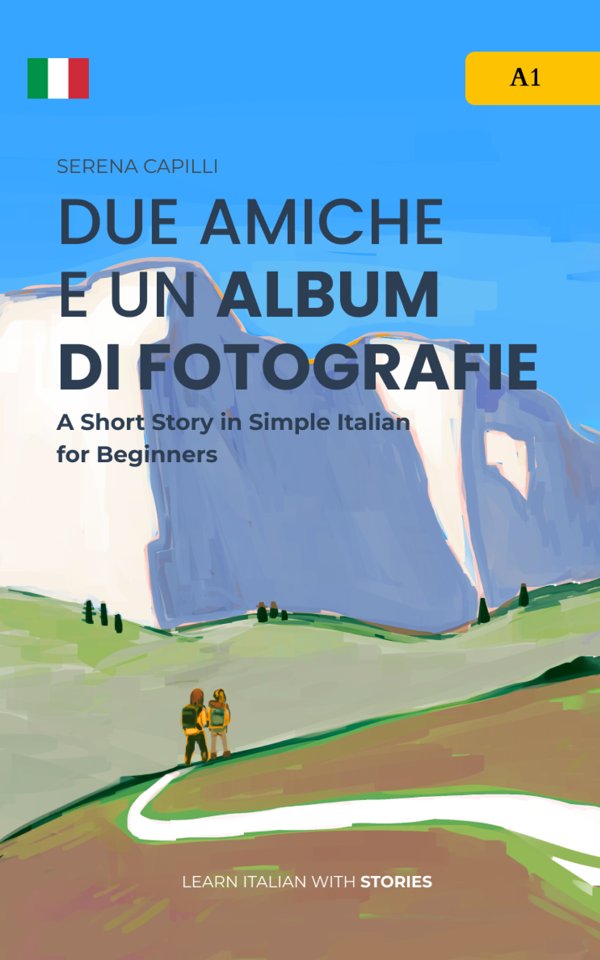
If you’re preparing for the CILS A1, start with Due Amiche e un Album di Fotografie (pure A1), then continue with the A1/A2 stories as your exam gets closer:
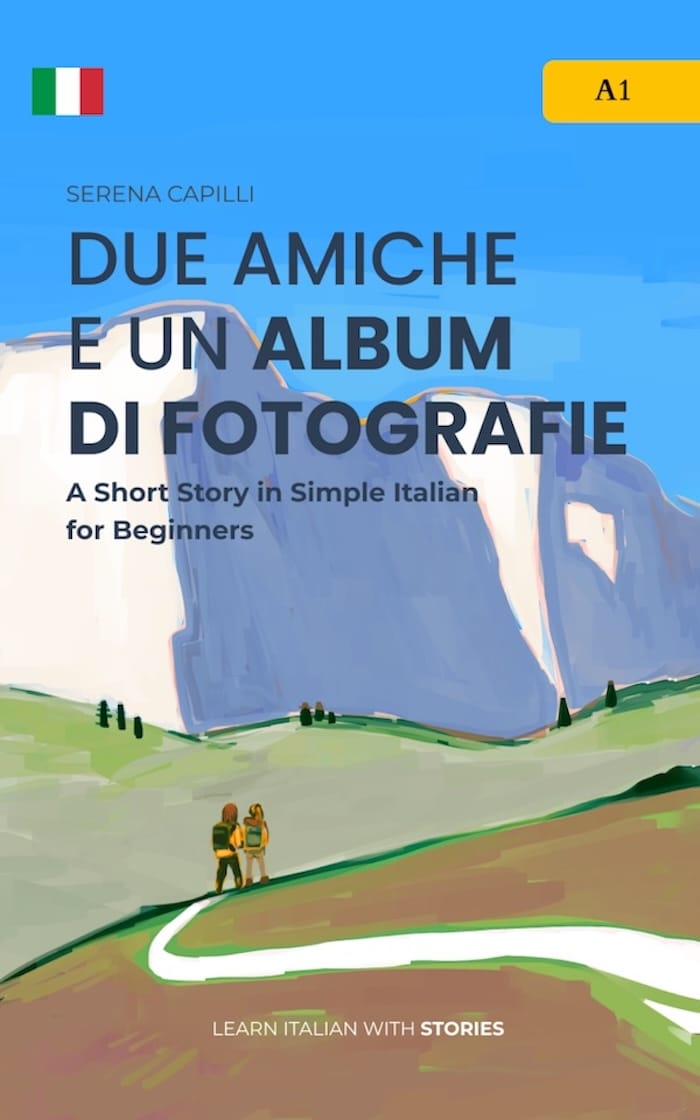
Due Amiche e un Album di Fotografie
Level A1
Two friends, an old photo album and a trip through South Tyrol. Short chapters, everyday vocabulary, exercises and audio.
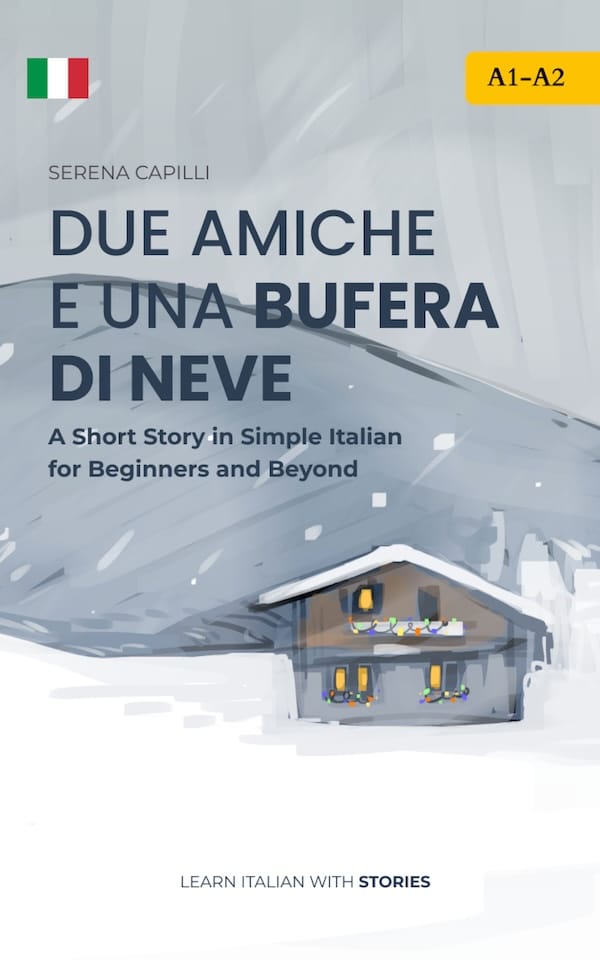
Due Amiche e una Bufera di Neve
Level A1/A2
Costanza and Anna are back for a winter adventure in Valle d’Aosta. The perfect next step after Book 1.
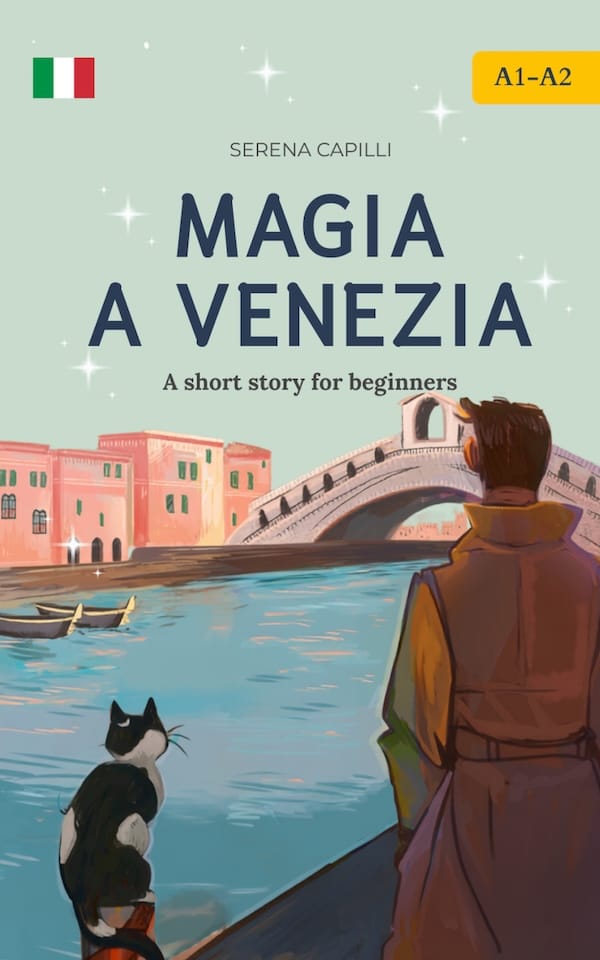
Magia a Venezia
Level A1/A2
A mystery in Venice with time travel, acqua alta and an unexpected meeting with Marco Polo.
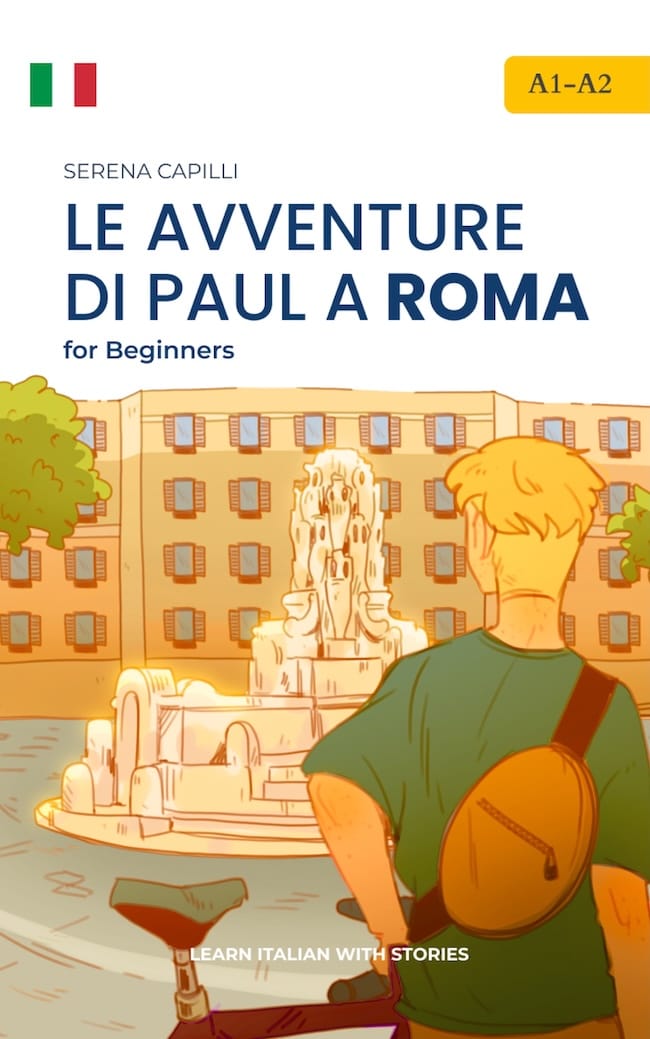
Le Avventure di Paul a Roma
Level A1/A2
Follow Paul around Rome: neighborhood life, Italian food and the everyday phrases you need for the CILS A1 speaking test.
CILS A1 Integrazione
The CILS A1 Integrazione is a version of the A1 exam designed for adults who live in Italy. It certifies that you can handle basic everyday situations in Italian.
The structure of the CILS A1 Integrazione is very similar to the standard CILS A1 exam, but the assignments are tailored to students living in Italy. The vocabulary and scenarios focus on situations that candidates may have already encountered or are likely to encounter during their stay in Italy. Examples include handling groceries, obtaining a driver’s license, enrolling in Italian lessons, or asking for information.
Exam samples for the CILS A1 Integrazione can be found on the official CILS website or through authorized testing centers in Italy.
What comes after the A1?
Once you pass, the next goal is the CILS A2. And if you’d like a teacher to build your plan and keep you on track, I offer bespoke private Italian classes online.
Frequently asked questions
When is the next CILS A1 exam?
The next CILS A1 sessions are on 10 June 2027 (registration closes on 1 May 2027) and 2 December 2027 (registration closes on 23 October 2027). Your exam center may close registrations earlier, so check with them.
How long is the CILS A1 exam?
The four written parts (listening, reading, grammar and vocabulary, writing) take about 30 minutes each. The speaking test is a short one-on-one conversation with an examiner.
How long does it take to prepare for the CILS A1?
For most English speakers, about 3 to 5 months of steady study. If you already speak Spanish or French, it can take 2 to 3 months.
What is the difference between CILS A1 and CILS A1 Integrazione?
The structure is very similar, but the Integrazione version is designed for adults who live in Italy, so the tasks focus on everyday situations there, like shopping or asking for information at an office.
Where can I find CILS A1 practice tests?
The official CILS website publishes a sample A1 exam. For more practice, the CILS A1 Quaderni collect real papers from past sessions.
Is the CILS A1 enough for Italian citizenship?
No. Italian citizenship by marriage or residence requires a B1 certificate. The A1 is a great first milestone on the way there.