Why Learn with Italian Short Stories?
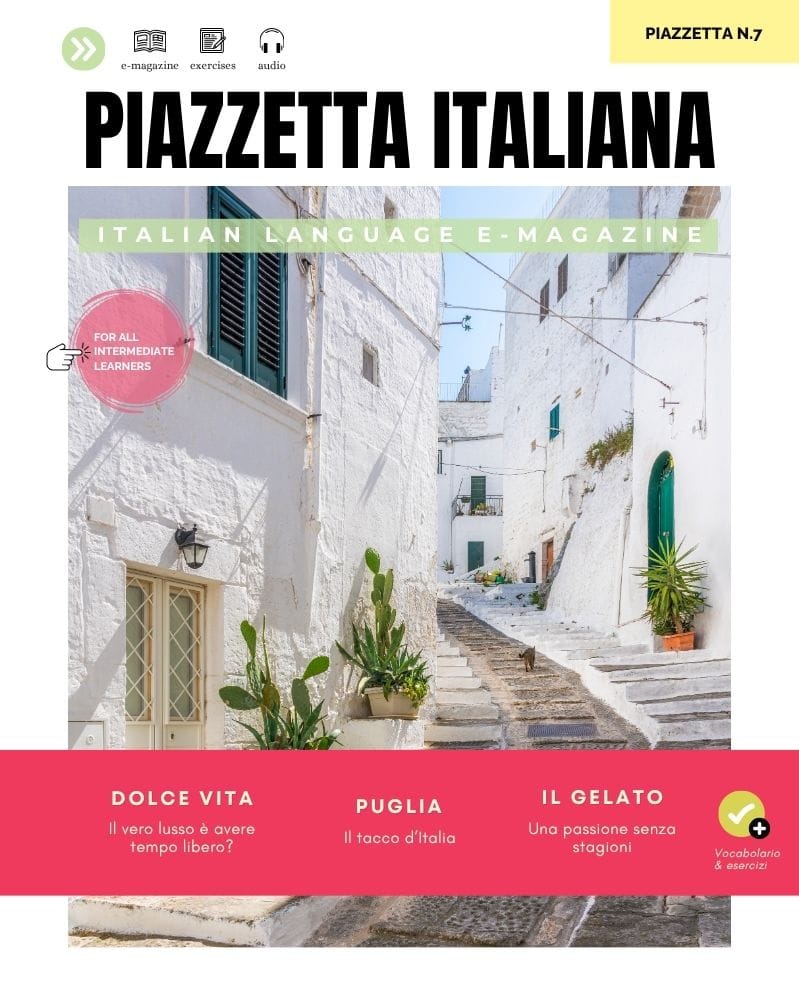
I’ve been learning and teaching languages for over a decade — I speak several, I’ve been writing short stories in simple Italian, I publish quarterly Piazzetta Italiana (a monthly Italian lifestyle magazine in easy Italian), and I run this blog you’re reading right now.After all these years, I can tell you this:
Short stories are my number one secret weapon for improving speaking, listening, and comprehension — whether you’re a beginner or a lower-intermediate learner stuck on a plateau.
I discovered this method years ago when I was learning my fourth language (German). I noticed I remembered words far better when I encountered them in a scene — when I could connect words and phrases to visuals, emotions, and a storyline.
Then I saw my private Italian students — especially beginners and lower-intermediate learners (A1, A2, B1) — thriving with the story-based approach. Because let’s be honest: if your target language isn’t solid yet, it’s hard to find conversation topics beyond “Where are you from?”, “Do you like travelling?”, and “What are you doing this weekend?”.
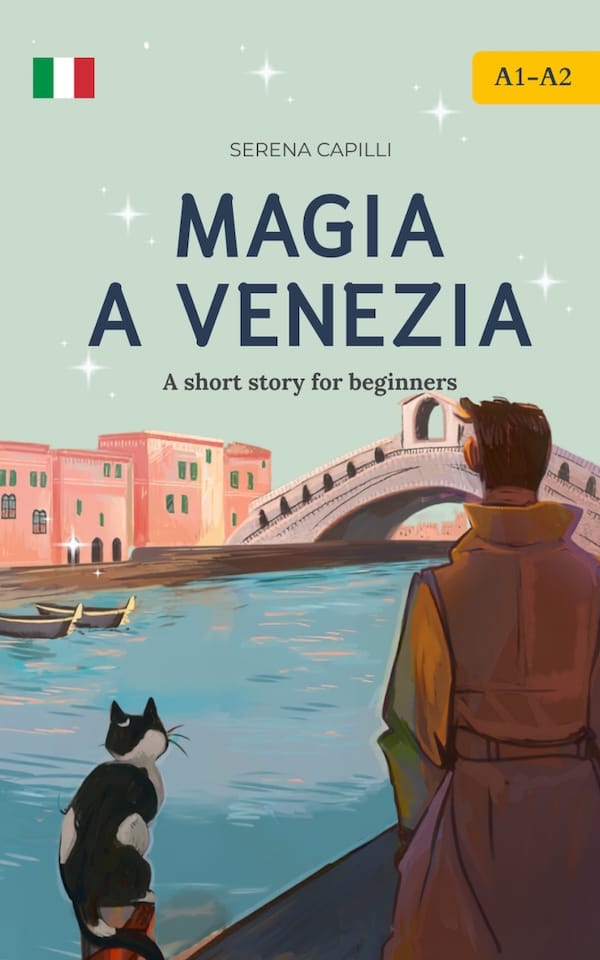
So, four years ago, on the recommendation of one of my students (grazie!), I decided to start writing my own simple, engaging stories that learners could finish in just a few days. It changed everything.
In this guide, I’ll share exactly how I — and hundreds of my students — use short stories to:
- Boost fluency and confidence
- Train listening skills
- Absorb grammar naturally

Why Short Stories Help You Learn Italian Faster (and Better)
Have you ever tried learning vocabulary from a list or flashcards? It’s hard to retain because words alone lack context.
Over years of teaching and learning, I’ve learned that our brains remember better when we connect words to images, situations, or emotions. That’s exactly what short stories provide.
Why they work:
- Words in context stick longer – Your brain remembers new vocabulary when it’s connected to a story, emotion, or image.
- Short and manageable – You can finish a story in days, not months, which keeps you motivated.
- Often includes audio – Many short story books (including mine) come with slow audio recordings. Reading and listening at the same time is one of the fastest ways to train your ear.
- Accessible even for beginners – The right short stories are designed so you can start reading and listening from day one.
- Affordable and Honest – Unlike many expensive courses that promise fluency in three months (and rarely deliver), short stories are low-cost, high-value, and make no wild claims. They won’t magically make you fluent overnight — but if you read, listen, study, and talk about them regularly, they will get you there. Just not in 3 months… and that’s okay.
Tip: Download my free Italian short story with audio and glossary to try it yourself.
Why Reading Boosts Speaking and Understanding
When you read in Italian, you:
- Revisit familiar words and grammar in different contexts – This strengthens active memory. I often need to see or hear a word 20 times before it sticks.
- Focus on sentence structure, not just single words – Perfect for tricky areas like prepositions.
- Internalize natural phrasing (“chunks”) – This makes speaking smoother and more automatic.
What Are “Chunks”?
Chunks are high-frequency combinations of words that Italians use every day.
Learning chunks instead of single words makes your Italian sound more natural.
Examples:
- Beginners (A1 CEFR): Ti consiglio di andare… (I recommend you go…) — from my short story book for beginners Le Avventure di Paul a Roma.
- Intermediate (A2–B1 CEFR ): La città è caotica (The city is chaotic) — from my short story book for lower-intermediate learners Incontri in Sicilia.
How to Use an Italian Short Story Effectively at Every Level
For Beginners (A1)
- Pick a story at your level — you should be able to understand about 70% of it when reading or listening.
- Read and listen at the same time (especially if you want to improve your listening skills).
- Don’t look up every word — focus on useful chunks of language.
- Summarize chapters in 3–6 simple sentences.
- Read aloud to practice pronunciation.
- Talk about the story with your tutor — or even to yourself.
For Intermediate Learners (A2–B1)
- Read first, then listen.
- Highlight natural-sounding sentences to reuse in conversation.
- Write summaries using the grammar you’re practicing (e.g., past tense).
- Discuss the story with a teacher, a language partner — or with yourself.
Why Stories Improve Speaking Skills More Than Textbooks
Stories help you:
- Talk about events, people, and settings — not just yourself, the news, or things you like (that’s not how real conversation works, by the way).
- Practice expressing opinions and retelling events.
- Expand your vocabulary beyond everyday life.
Retelling a story forces you to reuse the language you’ve just learned — which is one of the fastest ways to make it stick.

Next Steps to Learn Italian with Short Stories
- Start with testing free chapters of my bestselling short stories in Italian on Amazon→ Download here.
- Build a habit: read, listen, and speak from one story per week at your level, and talk about it.
- Pair this with a solid grammar book suited to your level and get regular feedback.
- I promise — if you do this consistently, you’ll be speaking and understanding Italian better than you ever have.
Read more: