If you’re here, you probably need to pass an Italian language test to get your Italian citizenship. You’re in the right place! In this post, I’ll break down how the CILS B1 Cittadinanza (CILS B1 for Citizenship) works and, above all, how to prepare for each part, using the same strategies I share with my private students.
In short
- 4 sections: listening, reading and grammar, writing, speaking. About 2 hours in total
- You must pass all four: if you fail one, you retake the whole exam
- Listening and reading: practice with materials just above your level, not with movies or the news
- Writing: one email of 80 to 120 words. Write often and get corrected
- Speaking: a short self-presentation and a conversation on a topic you choose
- Next sessions: 3 December 2026, then 18 February 2027
Jump to
Why the CILS B1 Cittadinanza?
There are other B1 certificates you can use for Italian citizenship, like the CELI or the PLIDA. I focus on the CILS B1 Cittadinanza here for a few reasons:
- It’s the most popular certification among my students.
- It’s shorter than the standard CILS B1 and focused on everyday life in Italy.
- It’s offered six times a year, in Italy and abroad.
One important thing: it’s valid only for citizenship applications. If you also need a certificate for work or university, choose the standard CILS B1.
Learn the smart way
Before diving into exam preparation, make sure you’ve built a solid foundation in Italian grammar. First reach a strong A1 to A2 level, with a language school, a teacher or even self-study. Once you’re confident at A2, you can work toward B1 and focus on the requirements of the CILS B1 for Citizenship.
CILS B1 Cittadinanza: exam overview
| Section | Tasks | Time |
|---|---|---|
| Listening | 2 | 30 minutes |
| Reading and grammar | 2 | 40 minutes |
| Writing | 1 | 40 minutes |
| Speaking | 1 | about 10 minutes |
To get the certificate you must pass all four sections. Unlike the standard CILS, there’s no “capitalization”: if you fail even one section, you have to retake (and pay for) the whole exam. For all the details on the format, read my guide to the CILS B1 Cittadinanza exam. Below, I’ll walk you through how to prepare for each part.
Part 1: Listening
What to expect
Two recordings of everyday conversations or announcements, each played twice, in 30 minutes. You answer multiple-choice questions and choose the true statements.
If your listening isn’t perfect, don’t worry: that’s totally normal at this level. Most learners can only follow Italian when it’s spoken slowly and with basic vocabulary. That’s OK.
How to prepare
The best way to improve is to use audio that matches your level, or is just a tiny bit harder. Here’s my golden rule:
If you don’t understand most of what you’re hearing, the audio is too difficult. Avoid jumping into movies or the Italian news: they’re too advanced for now and will only leave you frustrated. Go for content that’s just above your comfort zone.
Consistent exposure to the right content at the right level is the key to improving your listening. My slow Italian podcast, Piazzetta Italiana, is made exactly for this.
Part 2: Reading and grammar
What to expect
Two texts in 40 minutes: in the first one you find the true statements, in the second one you complete a text by choosing the right word for each gap.
How to prepare
To improve your reading, I recommend Italian short stories written for A2 to B1 learners, or any textbook at that level. Reading helps you absorb vocabulary, grammar patterns and sentence structure naturally.
Read and listen at the same time
One of the most effective ways to boost your Italian is to read and listen together. When you do it again and again, your brain absorbs grammar, vocabulary and sentence structure without memorizing long rules. You can use:
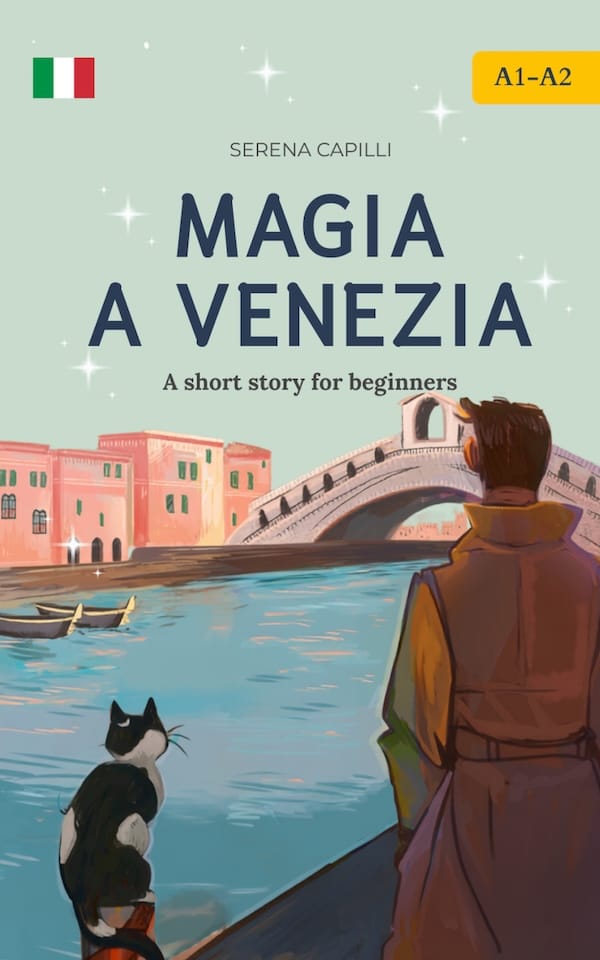
- easy readers written in simple Italian, like my Italian short stories
- my magazine Piazzetta Italiana, written for intermediate learners and with audio
- any textbook at your level with listening activities
This kind of input is effective and enjoyable, and it helps you internalize the language in a real, lasting way.
Part 3: Writing
What to expect
You get two prompts and choose one. You have 40 minutes to write an email or a message of 80 to 120 words. Typical prompts are practical: writing to your landlord because you’re moving out, or to a school principal about the school canteen.
How to prepare
Let’s be real: writing practice is non-negotiable if you want to pass this part. The good news? Writing is also one of the best ways to fix the little mistakes that sneak into your speaking, like verb endings, prepositions and articles.
- Write short texts regularly, especially emails and messages.
- Get them corrected by a teacher (best option!) or a language exchange partner.
- Don’t just chat during your language exchanges: ask your partner to correct your writing too.
Why writing reveals your blind spots. One of my students, an intermediate learner, once wrote a short essay for her exam prep. Just from that short piece, we spotted some very common mistakes: confusing meglio and migliore, misusing male and cattivo, and mixing up il and lo. If you don’t correct mistakes like these now, they can become “fossilized errors” that stick with you even as your Italian improves.
So: start writing, keep it short and regular, and get your work corrected. My guide on how to write a formal or informal email in Italian will help too. For five sample emails with corrections and 20 practice prompts, see my guide to the CILS B1 Cittadinanza writing test.
Part 4: Speaking
What to expect
The speaking test is short, and it’s recorded. First you briefly introduce yourself (name, where you’re from, where you live, your job). Then you choose one topic out of four and talk about it with the examiner, who will ask follow-up questions to see how you hold a conversation and express your opinions.
How to prepare
You don’t need to sound like a native: focus on being clear, relevant and natural.
- Record yourself answering sample prompts.
- Time yourself: start with 1 to 2 minutes, then stretch to 3 to 5.
- Don’t read or over-script: it should feel like a real chat.
- Ask a teacher or language partner to simulate exam conditions.
The goal? To sound like you, in Italian. Mistakes are OK as long as you communicate clearly and stay engaged.
Practice with real exam tasks
Want to train with the kind of questions you’ll face? My collection of 50+ writing and speaking prompts for the CILS B1 Citizenship exam (with answers) helps you practice effectively and build confidence.
Sample test and books
Take a look at a sample CILS B1 Cittadinanza exam (PDF) to see what the real test looks like.
Once you reach an intermediate level, the best strategy is to use a book with sample exams. It gives you a clear idea of the format and helps you practice effectively:


CILS B1 Cittadinanza dates and costs
The exam is offered six times a year. In 2026: 19 February, 14 April, 16 June, 22 July, 21 October and 3 December (registration closed on 24 October). The first 2027 sessions announced by exam centers are 18 February, 8 April and 10 June.
Register with your exam center at least a month in advance, and always check the official CILS calendar and your center, since deadlines can vary.
Cost: around €100 in Italy. Centers abroad set their own fees, so ask yours. Results usually arrive about two months after the exam.
Find a center near you in my list of CILS exam centers.
Frequently asked questions
How do I pass the CILS B1 Cittadinanza?
Reach a solid A2 level first, then practice each part: listening and reading with materials just above your level, regular short emails corrected by a teacher, and speaking practice with sample prompts. Remember you must pass all four sections.
What happens if I fail one section of the CILS B1 Cittadinanza?
You have to retake the whole exam. Unlike the standard CILS, the B1 Cittadinanza doesn’t keep the sections you passed.
How long is the writing task in the CILS B1 Cittadinanza?
You choose one of two prompts and write an email or message of 80 to 120 words in 40 minutes.
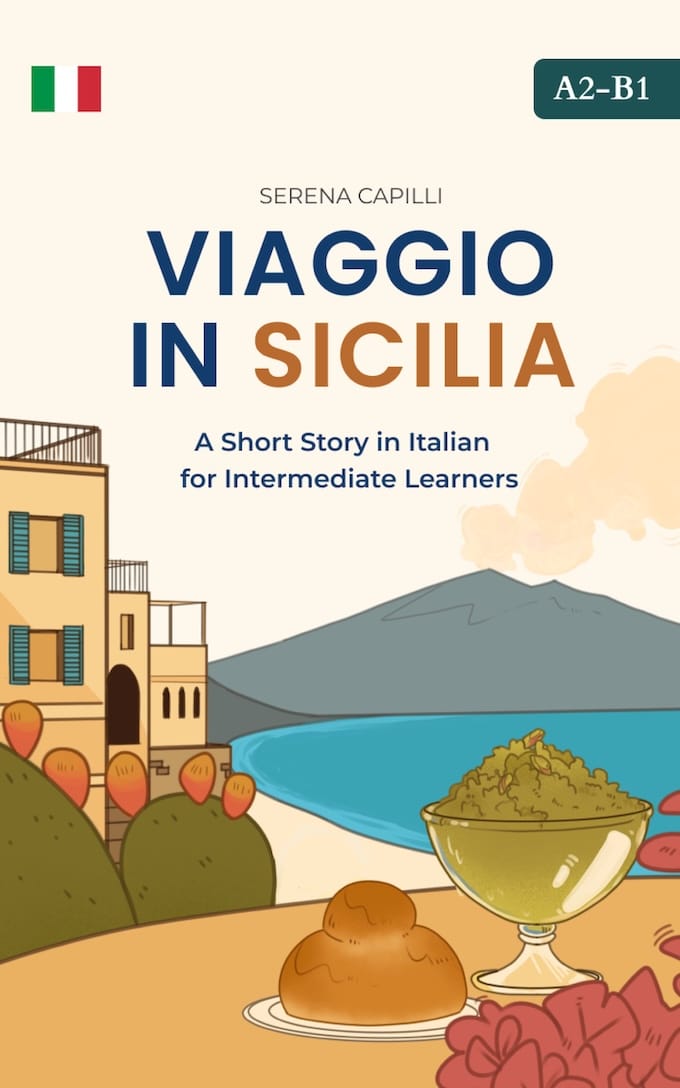
Reading stories at the right level is one of the best ways to prepare. In Incontri in Sicilia, Fiona travels to Sicily to look for her family roots and the documents she needs for citizenship: many of my readers recognize themselves in her story.

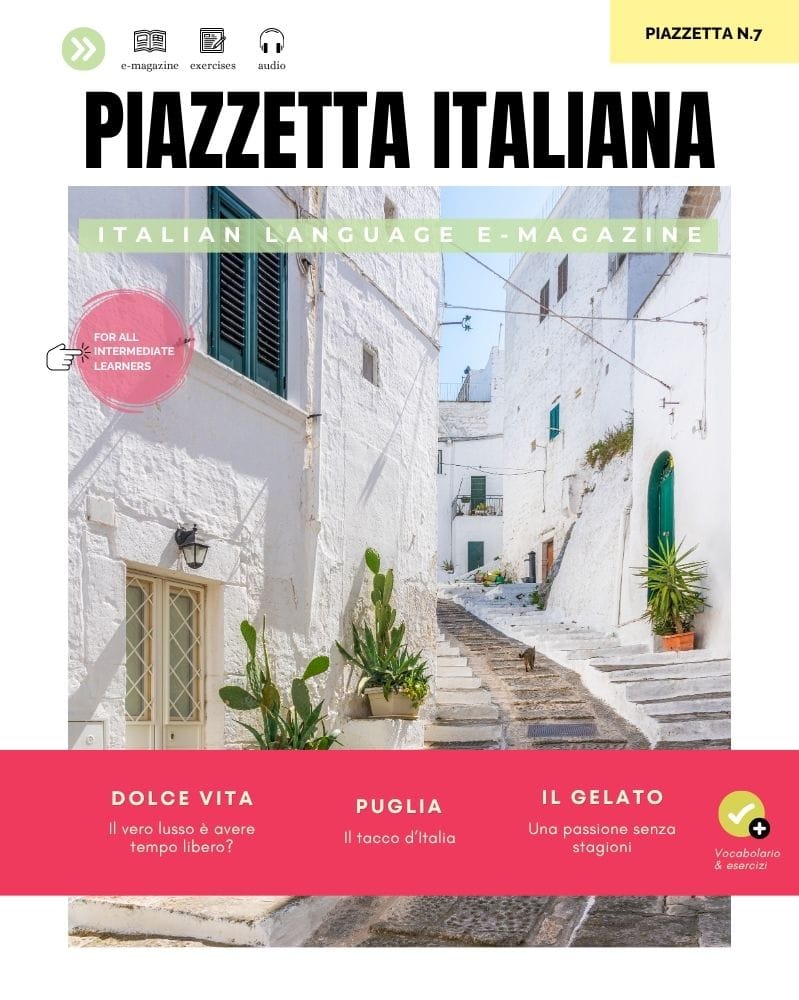
Piazzetta Italiana
Level A2/B1
My magazine for learners: real articles about Italian culture and everyday life, with vocabulary and audio.
Dive deeper: CILS B1 Cittadinanza: exam format · PLIDA B1 for citizenship · Italian language certifications