Quick answer: Italian pronominal verbs are verbs with one or more pronouns attached (ci, ne, la, si) that give them a new, often idiomatic meaning: farcela (to manage), andarsene (to leave), prendersela (to take offense). To conjugate them, move the pronouns before the verb and conjugate the base verb: ce la faccio, me ne vado, te la prendi.
In my lessons, pronominal verbs are the moment when intermediate students say: “Wait, I know every word in this sentence, so why don’t I understand it?” Non ce la faccio più has nothing to do with “doing” anything. These verbs are everywhere in spoken Italian, and once you learn the 15 or 20 most common ones, a lot of everyday conversations suddenly make sense.
What is a pronominal verb?
A pronominal verb is a normal verb combined with one or more pronouns, which together create a new meaning. Sometimes the change is small, sometimes the meaning is completely different from the base verb.
| Base verb | Pronominal verb | Meaning |
|---|---|---|
| andare (to go) | andarsene | to leave, to go away |
| fare (to do) | farcela | to manage, to make it |
| sentire (to hear, to feel) | sentirsela | to feel up to, to have the courage |
| prendere (to take) | prendersela | to take offense, to get upset |
| fregare (to rub, to cheat) | fregarsene | to not care |
- Me ne vado. (I’m leaving.)
- Non me la sento di uscire stasera. (I don’t feel up to going out tonight.)
- Perché te la prendi? (Why are you getting upset?)
How to conjugate pronominal verbs in Italian
The method is the same as with reflexive verbs:
- Separate the base verb from the pronouns: andarsene = andare + si + ne.
- Conjugate the base verb normally: vado, vai, va…
- Put the pronouns before the verb, in the same order.
Two small spelling rules:
- ci, la, ne never change: ce la faccio, ce la fai, ce la fa.
- The reflexive si changes with the subject, and before la or ne every i becomes e: me, te, se, ce, ve, se.
Farcela (to manage) = fare + ci + la
| Subject | Present tense |
|---|---|
| io | ce la faccio |
| tu | ce la fai |
| lui / lei | ce la fa |
| noi | ce la facciamo |
| voi | ce la fate |
| loro | ce la fanno |
Andarsene (to leave) = andare + si + ne
| Subject | Present tense |
|---|---|
| io | me ne vado |
| tu | te ne vai |
| lui / lei | se ne va |
| noi | ce ne andiamo |
| voi | ve ne andate |
| loro | se ne vanno |
With infinitives the pronouns attach to the end, and with dovere, potere, volere they can also go before: Non voglio andarmene = Non me ne voglio andare. With informal commands they attach too: Vattene! (Go away!) Smettila! (Stop it!)
The most common Italian pronominal verbs
With ci
| Verb | Meaning | Example |
|---|---|---|
| entrarci (con) | to have to do with | Questo non c’entra. → That’s got nothing to do with it. |
| volerci | to take (time, effort), impersonal | Ci vuole pazienza. → It takes patience. |
| metterci | to take (time), with a subject | Ci metto mezz’ora. → It takes me half an hour. |
| arrivarci | to get it, to understand | Non ci arrivo. → I don’t get it. |
With ne
| Verb | Meaning | Example |
|---|---|---|
| non poterne più (di) | to not be able to stand it anymore | Non ne posso più di questo traffico! → I can’t stand this traffic anymore! |
| farne a meno | to do without | Non posso farne a meno. → I can’t do without it. |
| valerne la pena | to be worth it | Ne vale la pena. → It’s worth it. |
| uscirne | to get out of a difficult situation | È stato difficile, ma ne sono uscita. → It was hard, but I got through it. |
| intendersene (di) | to know a lot about | Lui se ne intende di vino. → He knows a lot about wine. |
With -sela
| Verb | Meaning | Example |
|---|---|---|
| cavarsela | to manage, to get by | Me la cavo bene in cucina. → I’m pretty good in the kitchen. |
| sentirsela (di) | to feel up to | Oggi non me la sento di cucinare. → I don’t feel up to cooking today. |
| prendersela (con) | to take offense, to get upset with | Perché te la prendi con me? → Why are you getting upset with me? |
| passarsela | to be doing (well / badly) | Come te la passi? → How are you doing? |
| spassarsela | to have a blast | Ce la siamo spassata alla festa. → We had a blast at the party. |
| sbrigarsela | to deal with something (on your own) | Me la sono sbrigata da sola. → I sorted it out by myself. |
| tirarsela | to show off | Non tirartela! → Don’t show off! |
With -cela
| Verb | Meaning | Example |
|---|---|---|
| farcela | to manage, to make it | Ce la facciamo! → We can do it! |
| avercela (con) | to be mad at someone | Ce l’hai con me? → Are you mad at me? |
| mettercela tutta | to give it your all | Ce la metto tutta. → I’m giving it my all. |
With -sene
| Verb | Meaning | Example |
|---|---|---|
| andarsene | to leave, to go away | Me ne vado subito. → I’m leaving right away. |
| fregarsene (di) | to not care (informal) | Me ne frego. → I don’t care. |
| rendersene conto | to realize | Non me ne sono reso conto. → I didn’t realize. |
With la only
| Verb | Meaning | Example |
|---|---|---|
| smetterla (di) | to stop (doing something) | Smettila di lamentarti! → Stop complaining! |
| finirla | to stop, to cut it out | Finiscila! → Cut it out! |
Pronominal verbs are everywhere in my stories. My characters se ne vanno in a hurry, se la prendono for nothing and in the end ce la fanno. Read them in context in my intermediate stories:
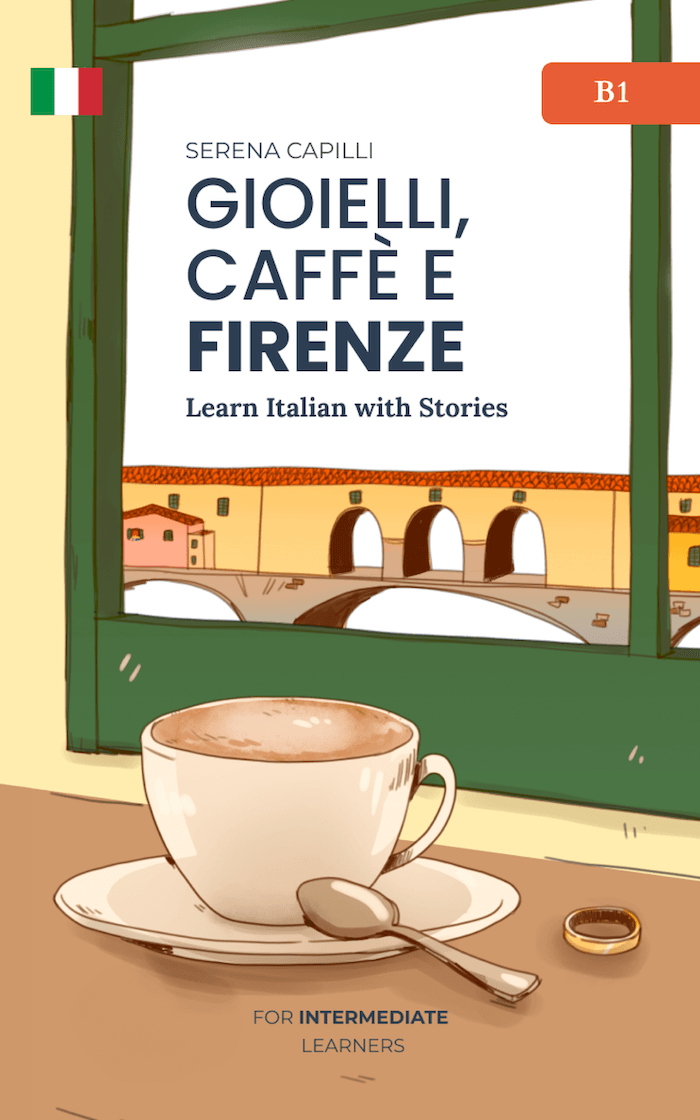
Gioielli, Caffè e Firenze
Level B1+
Marie moves to Florence, where jewelry making leads to a new life.

Cioccolato, Amore e Torino
Level B1+
Marie’s journey continues in Turin, between love, creativity and chocolate.

7 Romance Short Stories in Italian
Level B1/B2
Seven stories about love and everyday life, full of natural conversations.
Pronominal verbs in the past tense: essere or avere?
This is where many grammar books oversimplify. The rule is:
- Verbs with the reflexive si (-sela, -sene) always take essere: me la sono cavata, me ne sono andata, se l’è presa.
- Verbs with only ci, la or ne keep the auxiliary of the base verb: ce l’ho fatta (like ho fatto), ci ho messo un’ora (like ho messo), ci è voluto tanto (like è voluto), ne sono uscita (like sono uscita).
When the pronoun la comes before the auxiliary, the past participle agrees with it (feminine singular): ce l’ho fatta, me la sono cavata, ce la siamo spassata.
| Infinitive | Passato prossimo | English |
|---|---|---|
| farcela | ce l’ho fatta | I made it |
| metterci | ci ho messo un’ora | it took me an hour |
| volerci | ci è voluto un anno | it took a year |
| cavarsela | me la sono cavata | I managed |
| andarsene | me ne sono andato/a | I left |
| prendersela | se l’è presa | he/she took it badly |
Pronominal verbs with fixed prepositions
Some pronominal verbs always come with the same preposition. Learn them as a block.
| Verb + preposition | Example |
|---|---|
| farcela a | Ce la fai a finire entro stasera? |
| sentirsela di | Non me la sento di guidare. |
| avercela con | Ce l’ha con il suo capo. |
| prendersela con | Non prendertela con me! |
| smetterla di | Smettila di urlare! |
3 common mistakes
- Translating word by word. Me la cavo is not “I take it out of myself”. Learn the verb and its meaning as one block.
- Forgetting to change i to e. It’s me ne vado, not mi ne vado; te la senti, not ti la senti.
- Always using essere in the past. Ce l’ho fatta uses avere, because fare uses avere.
How to really learn pronominal verbs
Pronominal verbs rarely have a direct English translation, so lists alone won’t make you use them. This is what works with my students:
- Start with five: farcela, andarsene, cavarsela, prendersela, metterci.
- Notice them when you read or listen. My podcast Piazzetta Italiana is slow Italian full of everyday expressions like these.
- Write them down as full sentences, not single verbs: Non ce la faccio più, Me ne vado.
- Use them this week: in a voice note, a message to an Italian friend or your next lesson.
Want to go deeper? Read my full guides to farcela, sentirsela and andarsene.
Quick practice
Complete with the right form. Answers below.
- Non ___ (farcela, io) più, sono stanchissima!
- Perché ___ (prendersela, tu) sempre con me?
- Ieri alla festa ___ (spassarsela, noi).
- È tardi, ___ (andarsene, io).
- Quanto tempo ___ (metterci, tu) per arrivare in ufficio?
Answers: 1. ce la faccio; 2. te la prendi; 3. ce la siamo spassata; 4. me ne vado; 5. ci metti
Learn pronominal verbs the natural way. My Italian graded readers come with vocabulary support, exercises and audio, from A1 to B2.
FAQ
What is a pronominal verb in Italian?
A verb combined with one or more pronouns (ci, ne, la, si) that changes its meaning, often in an idiomatic way. For example, andare means “to go”, but andarsene means “to leave”.
How do you conjugate andarsene?
Move the pronouns before the verb and conjugate andare: me ne vado, te ne vai, se ne va, ce ne andiamo, ve ne andate, se ne vanno.
What does farcela mean?
Farcela means “to manage” or “to make it”: Ce la faccio! (I can do it!). In the negative, Non ce la faccio più means “I can’t take it anymore”.
Do pronominal verbs take essere or avere?
Verbs with the reflexive si (-sela, -sene) take essere: me ne sono andato. Verbs with only ci, la or ne keep the auxiliary of the base verb: ce l’ho fatta, ci ho messo un’ora.
What is the difference between cavarsela and farcela?
Both mean “to manage”. Farcela is about succeeding at a specific task or challenge; cavarsela is about getting by or coping reasonably well: Me la cavo in inglese (I get by in English).