Some Italian -ire verbs (third conjugation) follow a special pattern in the present tense: they add -isc- between the stem and the ending. Verbs like finire, capire and pulire insert -isc- in four forms: io, tu, lui/lei and loro. The noi and voi forms stay completely regular.
The good news? These verbs are not irregular: they all follow the same pattern. Once you learn it, you’ll start noticing -isc verbs everywhere.
In short
- -isc- goes in the io, tu, lui/lei, loro forms: capisco, capisci, capisce, capiscono
- noi and voi are regular: capiamo, capite
- Pronunciation: -isco, -iscono = “sk”, -isci, -isce = “sh”
- Only the present, the imperative and the present subjunctive use -isc-
- There’s no fixed rule to recognize them, but the “5th-letter trick” works most of the time
The three verb groups in Italian
Before we dive into -isc verbs, here’s a quick reminder of the three Italian verb families:
| Conjugation | Ending | Examples |
|---|---|---|
| 1st | -are | cucinare (to cook), mangiare, studiare, guardare |
| 2nd | -ere | scrivere (to write), leggere, vedere, vincere |
| 3rd | -ire | dormire (to sleep), aprire, partire, finire |
Most -ire verbs follow the regular pattern, like dormire. A smaller group uses the -isc pattern, like capire. Compare them:
| Person | Dormire (regular) | Capire (-isc) | English |
|---|---|---|---|
| io | dormo | capisco | I sleep / I understand |
| tu | dormi | capisci | you sleep / understand |
| lui/lei | dorme | capisce | he/she sleeps / understands |
| noi | dormiamo | capiamo | we sleep / understand |
| voi | dormite | capite | you all sleep / understand |
| loro | dormono | capiscono | they sleep / understand |
How to pronounce -isc verbs
The letters sc change sound depending on the vowel that follows:
| Form | Sounds like |
|---|---|
| capisco, capiscono | “sk” as in skateboard |
| capisci, capisce | “sh” as in shoe |
That’s why capisci sounds like “ca-PEE-shee,” while capisco sounds like “ca-PEE-sko.”
The most common -isc verbs in Italian
These are the -isc verbs you’ll hear and use most often in everyday conversation:
| Verb | Meaning | Present tense |
|---|---|---|
| preferire | to prefer | preferisco, preferisci, preferisce, preferiamo, preferite, preferiscono |
| finire | to finish | finisco, finisci, finisce, finiamo, finite, finiscono |
| capire | to understand | capisco, capisci, capisce, capiamo, capite, capiscono |
| pulire | to clean | pulisco, pulisci, pulisce, puliamo, pulite, puliscono |
| spedire | to ship, to send | spedisco, spedisci, spedisce, spediamo, spedite, spediscono |
| costruire | to build | costruisco, costruisci, costruisce, costruiamo, costruite, costruiscono |
| chiarire | to clarify | chiarisco, chiarisci, chiarisce, chiariamo, chiarite, chiariscono |
| digerire | to digest | digerisco, digerisci, digerisce, digeriamo, digerite, digeriscono |
| contribuire | to contribute | contribuisco, contribuisci, contribuisce, contribuiamo, contribuite, contribuiscono |
| fiorire | to bloom | fiorisco, fiorisci, fiorisce, fioriamo, fiorite, fioriscono |
| guarire | to heal, to recover | guarisco, guarisci, guarisce, guariamo, guarite, guariscono |
| inserire | to insert | inserisco, inserisci, inserisce, inseriamo, inserite, inseriscono |
| reagire | to react | reagisco, reagisci, reagisce, reagiamo, reagite, reagiscono |
| restituire | to give back | restituisco, restituisci, restituisce, restituiamo, restituite, restituiscono |
| unire | to unite, to join | unisco, unisci, unisce, uniamo, unite, uniscono |
| suggerire | to suggest | suggerisco, suggerisci, suggerisce, suggeriamo, suggerite, suggeriscono |
| impedire | to prevent | impedisco, impedisci, impedisce, impediamo, impedite, impediscono |
| sparire | to disappear | sparisco, sparisci, sparisce, spariamo, sparite, spariscono |
How to know if an -ire verb takes -isc: the 5th-letter trick
Is there a rule? Unfortunately, not an absolute one. But there is a strong pattern: count five letters back from the end of the infinitive.
- If the fifth-to-last letter is a vowel, the verb usually takes -isc: finire → finisco, pulire → pulisco, spedire → spedisco, proibire → proibisco.
- If it’s a consonant, the verb usually stays regular: aprire → apro, dormire → dormo, offrire → offro, seguire → seguo.
Is it perfect? No. The most common exceptions are the verbs ending in -uire, like costruire, contribuire and restituire: they take -isc even though the fifth-to-last letter is a consonant. Still, the trick works most of the time and is a helpful shortcut.
Important
The -isc pattern appears only in the present: the present indicative, the imperative (finisci!) and the present subjunctive (che io finisca). In all the other tenses, -isc verbs behave like regular -ire verbs:
- Imperfetto: finivo, finivi… (no -isc)
- Passato prossimo: ho finito (no -isc)
- Futuro: finirò (no -isc)
- Condizionale: finirei (no -isc)
Conclusion
The -isc verbs might look intimidating at first, but they follow a very predictable pattern:
- add -isc- in four present-tense forms (io, tu, lui/lei, loro)
- remember the sound change between “sk” and “sh”
- use the 5th-letter trick as a quick guide
Master a handful of the most common ones and you’ll start hearing them everywhere!
Exercise: complete with the right form
- Io non ______ (capire) la domanda.
- Noi ______ (finire) alle sei.
- Tu ______ (preferire) il tè o il caffè?
- Loro ______ (pulire) la casa il sabato.
- Voi ______ (spedire) il pacco oggi?
- Lei ______ (dormire) fino a tardi.
Show the answers
- capisco
- finiamo
- preferisci
- puliscono
- spedite
- dorme (dormire is a regular -ire verb!)
Frequently asked questions
What are -isc verbs in Italian?
They are -ire verbs that add -isc- between the stem and the ending in the io, tu, lui/lei and loro forms of the present tense, like capire: capisco, capisci, capisce, capiamo, capite, capiscono.
Are -isc verbs irregular?
No. They all follow the same predictable pattern, so they are a regular subgroup of the third conjugation.
How do you know if an Italian verb takes -isc?
There is no absolute rule, but if the fifth-to-last letter of the infinitive is a vowel (finire, pulire), the verb usually takes -isc. Verbs ending in -uire, like costruire, are common exceptions that also take -isc.
Practice with my stories
Verbs like capire, preferire and finire are everywhere in my stories. Reading them in context is the easiest way to make them automatic. Here are three to start with:
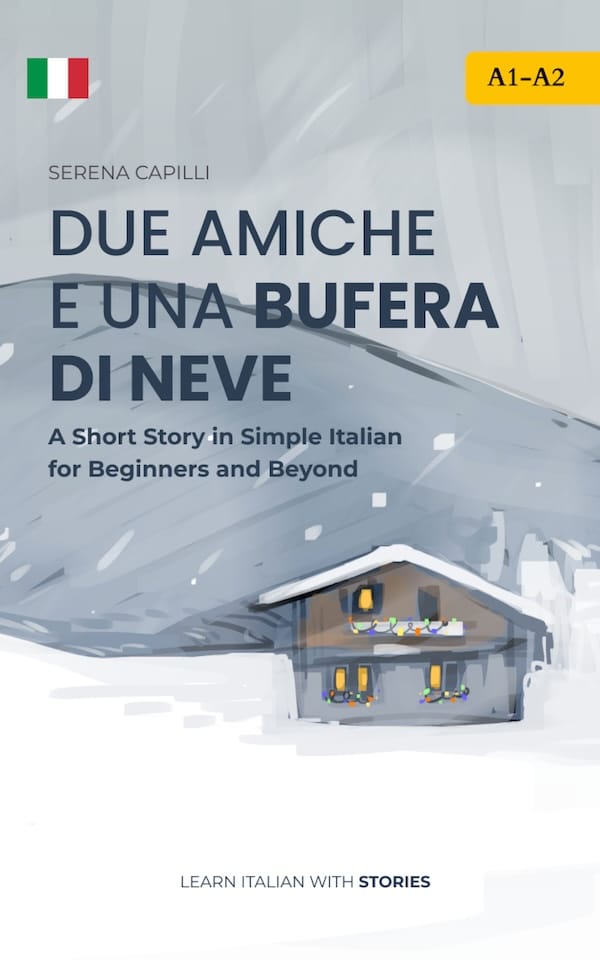
Due Amiche e una Bufera di Neve
Level A1/A2
Costanza and Anna get stuck in a snowstorm, with a surprise.
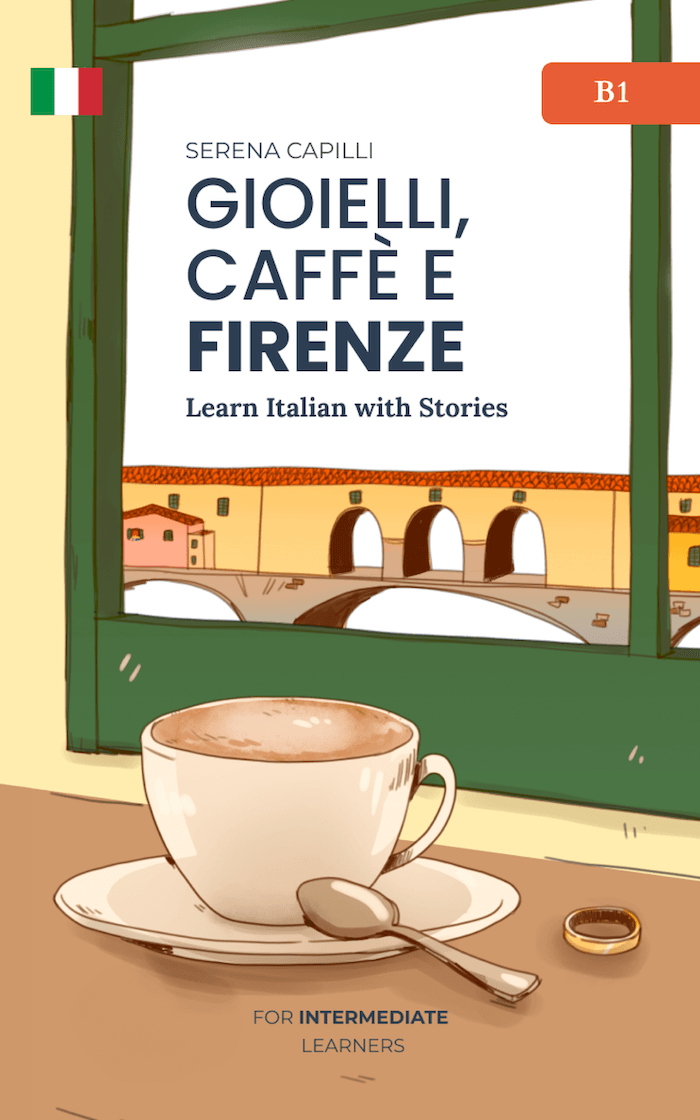
Gioielli, Caffè e Firenze
Level B1+
Marie moves to Florence, where jewelry making leads to a new life.
Read more: