Verbs are the core of every language because they express the meaning and the action. And when you’re learning Italian, mastering the most common Italian verbs is one of the fastest ways to start speaking with confidence.
Italian has thousands of verbs, but the reality is simple: we use only a limited number of verbs in daily conversation. That’s why focusing on the common Italian verbs you’ll actually use is far more effective than memorizing endless lists.
My teaching approach: instead of overwhelming learners with hundreds of verbs, I focus on the 20% of verbs you use 80% of the time. Master those first, and everything becomes easier.
In short
- Italian verbs end in -are, -ere or -ire, and regular verbs follow one pattern per group
- Learn three model verbs: parlare, prendere, dormire (plus capire for the -isc verbs)
- The most common verbs are often irregular: essere, avere, fare, andare, stare… learn them first
- Below: the full list of 60 verbs, the regular patterns and the irregular verbs conjugated in the present
Jump to
List of the 60 most common Italian verbs
Here they are, with their English meaning, their group and the io form of the present tense. “Irregular” means the verb doesn’t follow the regular pattern in the present.
| Verb | English | Group | io (present) |
|---|---|---|---|
| 1. essere | to be | irregular | sono |
| 2. avere | to have | irregular | ho |
| 3. fare | to do, to make | irregular | faccio |
| 4. dire | to say, to tell | irregular | dico |
| 5. potere | can, to be able to | irregular | posso |
| 6. dovere | must, to have to | irregular | devo |
| 7. volere | to want | irregular | voglio |
| 8. sapere | to know | irregular | so |
| 9. stare | to stay, to be | irregular | sto |
| 10. andare | to go | irregular | vado |
| 11. venire | to come | irregular | vengo |
| 12. vedere | to see | -ere | vedo |
| 13. dare | to give | irregular | do |
| 14. prendere | to take | -ere | prendo |
| 15. mettere | to put | -ere | metto |
| 16. parlare | to speak | -are | parlo |
| 17. trovare | to find | -are | trovo |
| 18. lasciare | to leave, to let | -are | lascio |
| 19. sentire | to hear, to feel | -ire | sento |
| 20. pensare | to think | -are | penso |
| 21. chiedere | to ask | -ere | chiedo |
| 22. uscire | to go out | irregular | esco |
| 23. lavorare | to work | -are | lavoro |
| 24. entrare | to enter, to go in | -are | entro |
| 25. rimanere | to stay, to remain | irregular | rimango |
| 26. aprire | to open | -ire | apro |
| 27. chiudere | to close | -ere | chiudo |
| 28. portare | to bring, to carry | -are | porto |
| 29. mangiare | to eat | -are | mangio |
| 30. bere | to drink | irregular | bevo |
| 31. scrivere | to write | -ere | scrivo |
| 32. leggere | to read | -ere | leggo |
| 33. dormire | to sleep | -ire | dormo |
| 34. capire | to understand | -ire (-isc) | capisco |
| 35. correre | to run | -ere | corro |
| 36. imparare | to learn | -are | imparo |
| 37. ricordare | to remember | -are | ricordo |
| 38. aspettare | to wait | -are | aspetto |
| 39. giocare | to play | -are | gioco |
| 40. diventare | to become | -are | divento |
| 41. studiare | to study | -are | studio |
| 42. cambiare | to change | -are | cambio |
| 43. guardare | to watch, to look at | -are | guardo |
| 44. passare | to pass, to spend (time) | -are | passo |
| 45. sperare | to hope | -are | spero |
| 46. vivere | to live | -ere | vivo |
| 47. morire | to die | irregular | muoio |
| 48. credere | to believe | -ere | credo |
| 49. rispondere | to answer | -ere | rispondo |
| 50. spiegare | to explain | -are | spiego |
| 51. usare | to use | -are | uso |
| 52. bisognare | to be necessary (bisogna) | impersonal | bisogna |
| 53. piacere | to like (to be pleasing) | irregular | mi piace |
| 54. pagare | to pay | -are | pago |
| 55. vincere | to win | -ere | vinco |
| 56. perdere | to lose | -ere | perdo |
| 57. comprare | to buy | -are | compro |
| 58. sorridere | to smile | -ere | sorrido |
| 59. offrire | to offer | -ire | offro |
| 60. scendere | to go down, to get off | -ere | scendo |
Two special ones: piacere works “backwards” compared to English (mi piace il caffè = coffee is pleasing to me), and bisognare is used almost only in the impersonal form bisogna (it’s necessary).
How to conjugate regular Italian verbs in the present
Understanding vocabulary is important, but conjugation is what gives meaning and direction to your sentences: parlo (I speak), parli (you speak), parla (he/she speaks). A single ending changes who is doing the action.
To conjugate a regular verb, remove -are, -ere or -ire and add the endings of its group:
| Person | Parlare (-are) | Prendere (-ere) | Dormire (-ire) | Capire (-isc) |
|---|---|---|---|---|
| io | parlo | prendo | dormo | capisco |
| tu | parli | prendi | dormi | capisci |
| lui/lei | parla | prende | dorme | capisce |
| noi | parliamo | prendiamo | dormiamo | capiamo |
| voi | parlate | prendete | dormite | capite |
| loro | parlano | prendono | dormono | capiscono |
Once you know these four models, you can conjugate hundreds of verbs. Watch out for small spelling changes that keep the sound: giocare → giochi, pagare → paghi, mangiare → mangi, studiare → studi.
The most common irregular verbs in the present
The most frequent verbs are often irregular, simply because we use them so much. These are the ones to learn by heart first (io, tu, lui/lei, noi, voi, loro):
| Verb | Present tense |
|---|---|
| essere | sono, sei, è, siamo, siete, sono |
| avere | ho, hai, ha, abbiamo, avete, hanno |
| fare | faccio, fai, fa, facciamo, fate, fanno |
| andare | vado, vai, va, andiamo, andate, vanno |
| stare | sto, stai, sta, stiamo, state, stanno |
| dare | do, dai, dà, diamo, date, danno |
| dire | dico, dici, dice, diciamo, dite, dicono |
| venire | vengo, vieni, viene, veniamo, venite, vengono |
| potere | posso, puoi, può, possiamo, potete, possono |
| dovere | devo, devi, deve, dobbiamo, dovete, devono |
| volere | voglio, vuoi, vuole, vogliamo, volete, vogliono |
| sapere | so, sai, sa, sappiamo, sapete, sanno |
| uscire | esco, esci, esce, usciamo, uscite, escono |
| bere | bevo, bevi, beve, beviamo, bevete, bevono |
| rimanere | rimango, rimani, rimane, rimaniamo, rimanete, rimangono |
Frequently asked questions
What are the most common verbs in Italian?
The most common Italian verbs are essere (to be), avere (to have), fare (to do, to make), dire (to say), potere (can), dovere (must), volere (to want), sapere (to know), stare (to stay, to be) and andare (to go).
How do you conjugate regular Italian verbs?
Remove -are, -ere or -ire from the infinitive and add the endings of the group. For example parlare: parlo, parli, parla, parliamo, parlate, parlano.
How many Italian verbs do I need to know to speak?
You don’t need hundreds. With the 60 verbs in this list, and especially the first 20, you can already handle most everyday conversations.
The best way to learn these verbs is to see them again and again in context. My short stories use exactly this everyday vocabulary, with audio. Here are three to start with:
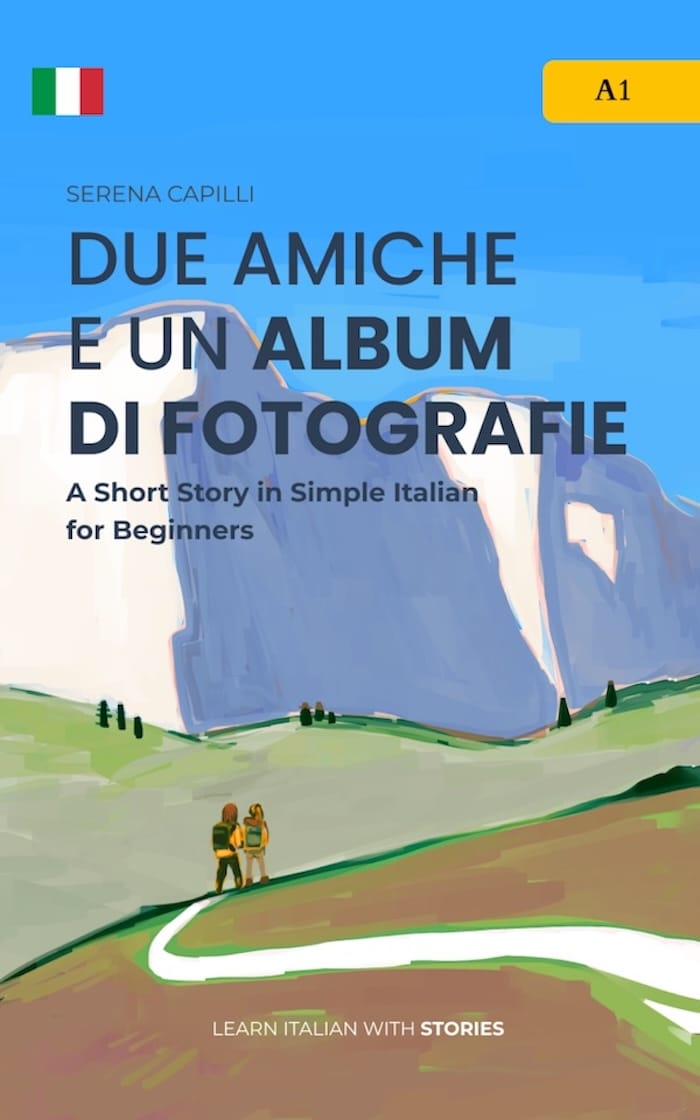
Due Amiche e un Album di Fotografie
Level A1
Two friends, an old photo album and a trip through southern Italy.

Read more: