Di or a? It depends.
In Italian, some verbs are followed by a preposition and an infinitive (iniziare a fare qualcosa, finire di fare qualcosa). Since English doesn’t use these prepositions, they cause a lot of confusion.
Unfortunately, there isn’t a clear rule: you just need to learn the right preposition for each verb. Here are the lists, with examples, to make it easier.
In short
- Some verbs take a + infinitive: iniziare a, continuare a, imparare a, riuscire a.
- Others take di + infinitive: finire di, smettere di, decidere di, sperare di.
- Many verbs take no preposition at all: voglio partire, mi piace leggere.
- There’s no logic to it: learn each verb with its preposition, as one chunk.
- Verbs of motion take a: vado a comprare il pane.
First: most verbs need no preposition
Not all Italian verbs are followed by a preposition. Most verbs take the infinitive directly, including the modal verbs:
| Verb | Example |
|---|---|
| volere, potere, dovere, sapere | Voglio imparare l’italiano. (I want to learn Italian.) |
| preferire, desiderare | Preferisco restare a casa. (I’d rather stay home.) |
| amare, odiare | Amo cucinare. (I love cooking.) |
| piacere | Mi piace leggere. (I like reading.) |
Italian verbs followed by A + infinitive
| Verb + A | English | Example |
|---|---|---|
| cominciare a / iniziare a | to start doing | Ho iniziato a studiare. |
| continuare a | to keep doing | Continua a piovere. |
| provare a | to try doing | Prova a chiamarlo. |
| imparare a | to learn to | Ho imparato a nuotare. |
| riuscire a | to manage to | Non riesco a dormire. |
| abituarsi a | to get used to | Mi sono abituata a guidare qui. |
| mettersi a | to start (suddenly) | Si è messo a ridere. |
| sbrigarsi a | to hurry up and | Sbrigati a vestirti! |
| aiutare qualcuno a | to help someone | Aiuto mia madre a cucinare. |
| incoraggiare qualcuno a | to encourage someone to | Mi ha incoraggiato a studiare. |
| convincere qualcuno a | to convince someone to | L’ho convinto a venire. |
| insegnare a qualcuno a | to teach someone to | Mi ha insegnato a guidare. |
| andare / venire a | to go / come and | Vado a comprare il pane. |
- Ho imparato a suonare il piano a 12 anni.
I learned to play the piano at 12. - Luca ha iniziato a giocare a tennis l’anno scorso.
Luca started playing tennis last year. - Non ho mai provato a cucinare questo dolce.
I have never tried to make this dessert. - Finalmente mi sono abituata a guidare negli Stati Uniti.
I finally got used to driving in the United States.
Italian verbs followed by DI + infinitive
| Verb + DI | English | Example |
|---|---|---|
| finire di / terminare di | to finish doing | Ho finito di lavorare. |
| smettere di | to stop doing | Ho smesso di fumare. |
| cercare di | to try to | Cerco di capire. |
| decidere di | to decide to | Ho deciso di partire. |
| pensare di | to plan to, to think of | Penso di andare a Roma. |
| sperare di | to hope to | Spero di superare l’esame. |
| ricordarsi di / dimenticarsi di | to remember / forget to | Mi sono dimenticata di chiamarti. |
| immaginare di | to imagine doing | Immagina di vivere in Sicilia. |
| credere di | to think, believe | Credo di aver capito. |
| accettare di / rifiutare di | to agree / refuse to | Ha rifiutato di rispondere. |
| promettere di | to promise to | Prometto di scriverti. |
| avere paura di / avere voglia di | to be afraid of / feel like | Ho voglia di uscire. |
| chiedere a qualcuno di | to ask someone to | Ho chiesto a Luca di aiutarmi. |
| dire a qualcuno di | to tell someone to | Di’ a Marta di venire. |
| consigliare a qualcuno di | to advise someone to | Ti consiglio di leggere ogni giorno. |
| proporre di | to suggest doing | Ha proposto di andare al mare. |
- Ieri ho finito di lavorare a mezzanotte.
Yesterday I finished work at midnight. - Ho deciso di iscrivermi a un corso di karate.
I decided to sign up for a karate class. - Marco ha deciso di cambiare lavoro.
Marco has decided to change jobs. - Spero di superare l’esame.
I hope to pass the exam.
Who does the action?
With most of these verbs, the person who decides, hopes or starts is also the one doing the second action: (Io) ho deciso di (io) partire.
But some verbs involve another person, and then the structure is verb + person + a / di + infinitive:
- Mia sorella mi ha incoraggiato a studiare italiano.
My sister encouraged me to study Italian. - Aiuto mia madre a cucinare.
I help my mother cook. - Ho chiesto a Luca di aiutarmi.
I asked Luca to help me. - Ti consiglio di leggere ogni giorno.
I advise you to read every day.
Tricky pairs
| Meaning | Example | |
|---|---|---|
| provare a vs cercare di | both “to try”: provare a = give it a go, cercare di = make an effort | Prova a mangiare il pesce crudo. / Cerco di arrivare in orario. |
| pensare di vs pensare a | to plan to vs to think about | Penso di partire. / Penso a te. |
| decidere di vs decidersi a | to decide vs to finally make up your mind | Ho deciso di partire. / Mi sono deciso a partire. |
| finire di vs finire per | to finish doing vs to end up doing | Ho finito di cucinare. / Ho finito per ordinare una pizza. |
Curious about pensare a? It’s the verb behind pensarci.
How to remember them
- Learn the verb with its preposition, as one chunk. Write smettere di, not smettere, in your notes.
- Make a sentence about your life with it: Ho smesso di mangiare zucchero.
- Read as much as you can. After meeting cercare di ten times in a story, you won’t have to think about it anymore.
Practice
Complete with a, di or nothing, then open the answers.
- Ho cominciato ___ studiare l’italiano due anni fa.
- Ho smesso ___ bere caffè la sera.
- Non riesco ___ capire questo esercizio.
- Spero ___ venire in Italia l’anno prossimo.
- Vorrei ___ imparare a cucinare.
- Mia sorella mi ha convinto ___ iscrivermi al corso.
- Ho chiesto a Marco ___ chiamarmi.
Show the answers
- a
- di
- a
- di
- no preposition: Vorrei imparare
- a
- di
Practice with my stories
Prepositions stick when you see them again and again in context. My stories are a good place to meet these verbs in real sentences.

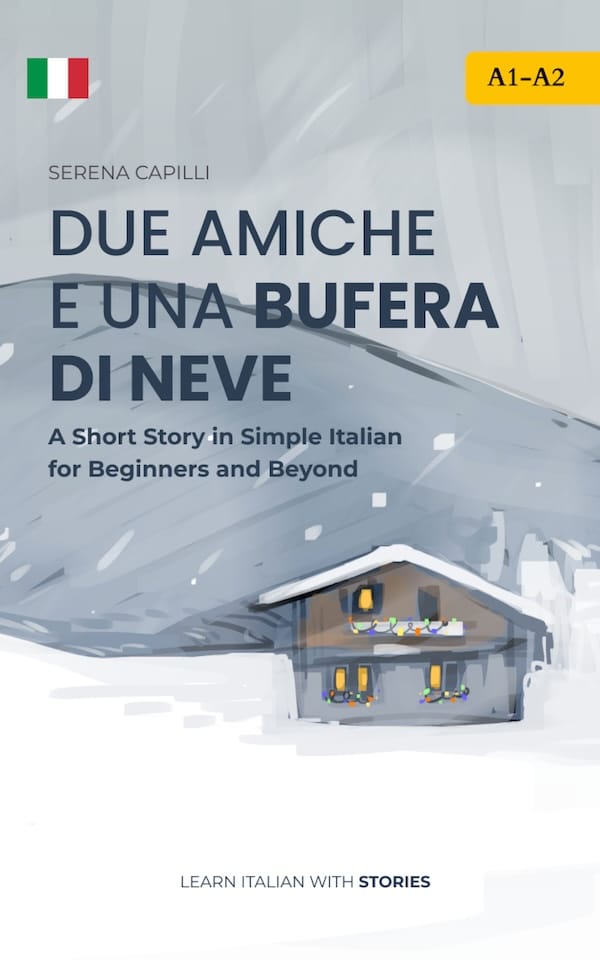
Due Amiche e una Bufera di Neve
Level A1/A2
Costanza and Anna get stuck in a snowstorm, with a surprise.
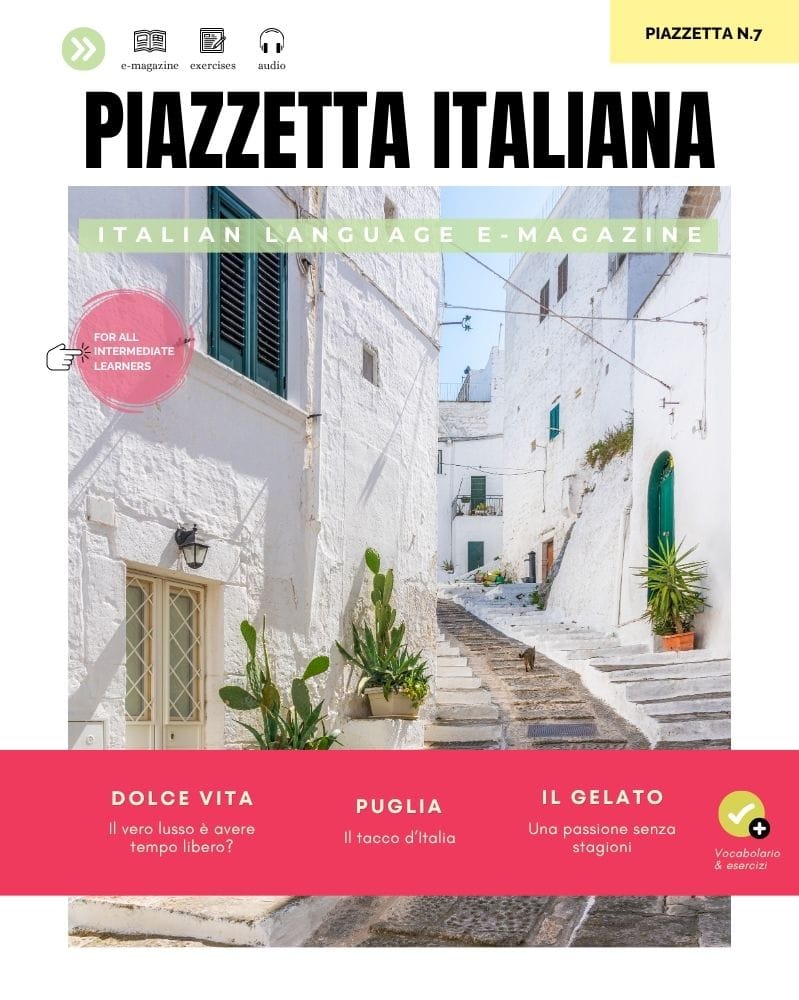
Piazzetta Italiana
Level A2/B1
My magazine for learners: real articles about Italian culture and everyday life, with vocabulary and audio.
Frequently asked questions
When do you use di or a before an infinitive in Italian?
It depends on the verb that comes first: there is no general rule. Verbs like iniziare, continuare, imparare and riuscire take a; verbs like finire, smettere, decidere and sperare take di. The best way is to learn each verb together with its preposition.
Which Italian verbs take no preposition before an infinitive?
Modal verbs (volere, potere, dovere, sapere) and verbs like preferire, desiderare, amare and piacere: Voglio partire, Preferisco restare, Mi piace leggere.
What is the difference between provare a and cercare di?
Both mean to try. Provare a means to give something a go, cercare di means to make an effort to do something: Prova a chiamarlo, Cerco di arrivare in orario.
Is it iniziare a or iniziare di?
Iniziare a, like cominciare a: Ho iniziato a studiare l’italiano.
Do verbs of motion take a or di?
Verbs of motion like andare and venire take a when you say why you go somewhere: Vado a comprare il pane, Vieni a cena da noi?