The CILS A2 is an official Italian language certificate issued by the Università per Stranieri di Siena (University for Foreigners of Siena). It proves that you have an elementary (A2) level of Italian, and its A2 Integrazione version is one of the certificates foreign residents can use for the Italian long-term residence permit.
In short
- 5 tests: listening, reading, grammar and vocabulary, writing and speaking
- About 2 hours 30 minutes of written tests, plus a 10-minute oral exam
- Each test is scored out of 12: you need at least 7/12 in every test (35/60 minimum)
- Passed tests are kept for 18 months, so you only retake what you failed
- Next A2 sessions: 3 December 2026, then from April 2027
There are six levels of language certification for Italian: beginner (A1), elementary (A2), intermediate (B1), upper-intermediate (B2), advanced (C1) and mastery (C2). The best-known certificates are the CILS (Università per Stranieri di Siena), the CELI (Università per Stranieri di Perugia) and the PLIDA (Società Dante Alighieri).
In this post, I’ll explain how the CILS A2 works and share my tips to pass it.
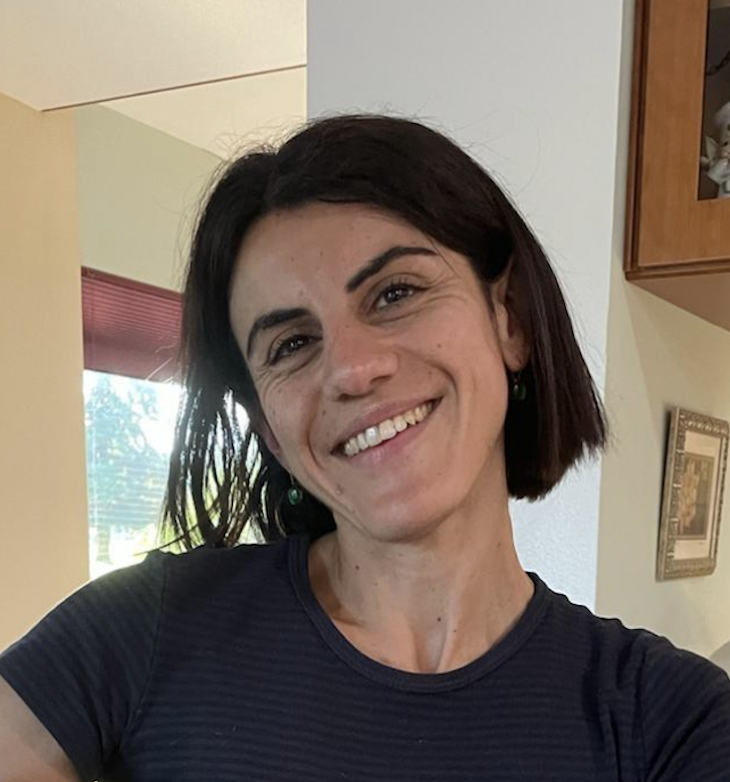
Ciao, I'm Serena
I'm a certified Italian teacher from Sicily, and I live in Rome. Since 2016 I've been teaching Italian online to English-speaking adults, through stories and comprehensible input. My graded readers grew out of those lessons: short stories in real, culturally rich Italian, with exercises and audio, so you can bring together and activate the grammar and vocabulary you already know. I believe this is the most effective way to learn a language, and to make learning it part of your lifestyle.
What does A2 mean?
A2 is the second level of the Common European Framework of Reference (CEFR), and it’s called “elementary.” Together with A1, it lays the foundation of the language. At this level you can talk about simple, everyday topics, describe your background (your family, work and interests) in simple terms, and handle routine situations like shopping, asking for directions or booking a room.
How to prepare for the CILS A2
To reach A2, you need to master the A1 basics and then learn the grammar and vocabulary of this level. You can take a class, work with a private tutor or follow a self-paced course. Whatever you choose, practice all four skills (reading, writing, listening and speaking), because the exam tests each of them separately.
My recommended tools to work on your A2 Italian:
New Italian Espresso (student book + workbook) for beginners and lower intermediate learners. This is a thorough textbook that will take students from the beginner level (A1) to a solid pre-intermediate level (A2+). This method is one of the best on the market as it lays out a clear itinerary combining all the different competencies of language learning (reading, grammar, listening, writing, and speaking). It works best when used in conjunction with a teacher, but will be useful for independent learners as well. It also includes a digital version with audio, dialogues, videos and grammar exercises.
Rocket Language Italian is a great self-paced learning method at a reasonable price if you don’t have the time or budget to commit to in-person live training. Find my review here.
Use easy Italian readers with slow audio to cement your grammar, vocabulary, and sentence-building abilities. Many of my Italian short stories are written for A1 and A2 learners. Have a look here.
Use Italki or Preply to find affordable tutors who can hold you accountable, provide feedback, and monitor your progress toward the exam.
Get a solid grammar book, like Easy Italian Step by Step, to use as a reference and keep the foundations in mind.
How long does it take to reach A2?
It takes roughly 150 hours to go from the A1 level to the A2 level. However, because time is relative, the quality of the time you spend with your language rather than the quantity will determine your success as a student. The best approach is to use the appropriate A2 level learning content, follow the A2 learning itinerary, and then work with A2 exam prep books, like the Quaderni CILS A1-A2 I list in the sample exams section below.
A2 grammar topics
| Topic | Example |
|---|---|
| Present progressive (stare + gerund) | Sto mangiando. |
| Direct and indirect object pronouns | Lo vedo. Gli telefono. |
| Impersonal si | In Italia si mangia bene. |
| Indefinite adjectives and pronouns | nessuno, niente, ogni, qualche |
| Articulated prepositions | al, della, nei |
| Imperfetto | Da bambino giocavo a calcio. |
| Passato prossimo vs. imperfetto | Mentre leggevo, è suonato il telefono. |
| Imperative | Prendi! Non toccare! |
| Simple future | Domani partirò. |
| Present conditional | Vorrei un caffè. |
| The particle ci | Ci vado domani. |
| Reflexive verbs in the passato prossimo | Mi sono svegliata tardi. |
The exam format
The CILS A2 has five tests. The written tests take about two and a half hours; the oral exam lasts about 10 minutes.
| Test | Time |
|---|---|
| Ascolto (listening) | 30 minutes |
| Comprensione della lettura (reading) | 40 minutes |
| Analisi delle strutture di comunicazione (grammar and vocabulary) | 40 minutes |
| Produzione scritta (writing) | 40 minutes |
| Produzione orale (speaking) | about 10 minutes |
Writing: example prompts
The writing test has two short tasks. Here are two examples of the kind of prompts you’ll find:
- Descrivi la città in cui vivi. (40 to 60 words)
- Questa settimana sei molto impegnato e non hai tempo di fare la spesa. Scrivi al tuo amico che vive con te di andare al supermercato. In your message, say that you can’t go shopping and why, write the list of things you need, and say that next week you’ll go.
Speaking: what to expect
Part 1 (2 to 3 minutes): you introduce yourself and answer simple questions. You start, and the examiner jumps in with more questions, for example:
- Come ti chiami?
- Dove abiti?
- Studi o lavori?
- Usi spesso il cellulare? Per cosa lo usi?
Part 2 (2 to 4 minutes): you choose a topic or a photo and talk about it on your own, with a few follow-up questions from the examiner.
Scoring and results
- Each of the five tests is scored out of 12, for a total of 60 points.
- You need at least 7/12 in every test (so at least 35/60) to get the certificate.
- If you pass only some tests, you keep them for 18 months and retake only the others.
- Results are usually published on the CILS website within about three months.
CILS A2 sample exams
Working on sample exams is a crucial part of your preparation: it helps you get familiar with the structure and the timing of each task. For example, you’ll often have to write your answers on a separate answer sheet, not next to the questions. Practicing with real papers makes exam day much less stressful.
My tips to pass the CILS A2
After years of preparing students for Italian exams, these are the habits that make the biggest difference:
- Read the instructions (la consegna) twice. Many points are lost not because of grammar, but because the task asked for something else.
- Respect the word count. If the prompt says 40 to 60 words, count them. A text that is too short can’t show what you know.
- Write simple sentences you’re sure of. At A2, clear and correct beats long and risky. Link your ideas with simple connectors like perché, quindi, poi, ma.
- Read the questions before the audio starts. You’ll know exactly what to listen for.
- Prepare your self-introduction. Part 1 of the oral exam is always about you: name, city, work or studies, free time. Practice it out loud until it feels natural.
- Practice describing photos. Useful phrases: Nella foto vedo…, c’è…, ci sono…, secondo me…
- Time yourself with real sample papers. On exam day, the format should feel familiar.
For the writing test, my CILS writing guide has sample texts with my corrections. It’s written for the B1 citizenship exam, but the method works at A2 too.
The CILS A2 Integrazione
The CILS A2 Integrazione in Italia is a version of the A2 designed for foreigners who live in Italy. It can be used to prove the A2 level of Italian required for the permesso di soggiorno UE per soggiornanti di lungo periodo (EU long-term residence permit).
- It has four tests: listening, reading, writing and speaking (no separate grammar test).
- The topics are everyday situations a foreign resident meets in Italy: offices, work, health, housing.
- It’s offered much more often than the standard A2: in 2026 on 19 February, 14 April, 16 June, 22 July, 21 October and 3 December.
Dates and exam centers
In 2026 the standard CILS A2 is offered on 14 April, 16 June, 21 October and 3 December. Register with your exam center about a month before the exam, and check the official CILS calendar for the 2027 dates.
The CILS is offered at universities, Italian Cultural Institutes and language schools in Italy and abroad. Find a center near you in my list of CILS exam centers.
Frequently asked questions
How is the CILS A2 scored?
Each of the five tests is scored out of 12. You need at least 7/12 in every test, so a minimum of 35/60, to pass.
How long does it take to prepare for the CILS A2?
Most learners need around 150 hours of study to go from A1 to A2. With regular lessons and practice, that is usually a few months.
What is the difference between CILS A2 and CILS A2 Integrazione?
The A2 Integrazione is designed for foreigners living in Italy and is used for the EU long-term residence permit. It has four tests instead of five and focuses on everyday life in Italy. It is also offered more often.
Is the CILS A2 hard?
It is an elementary exam, so the texts and tasks are short and about everyday life. The challenge is passing all five tests with at least 7/12 each, so prepare every skill, not just grammar.
Practice with my stories
Reading easy stories is one of the best ways to prepare for the A2: you see the grammar in context and learn vocabulary without effort. These are written for A1 and A2 learners, with audio:
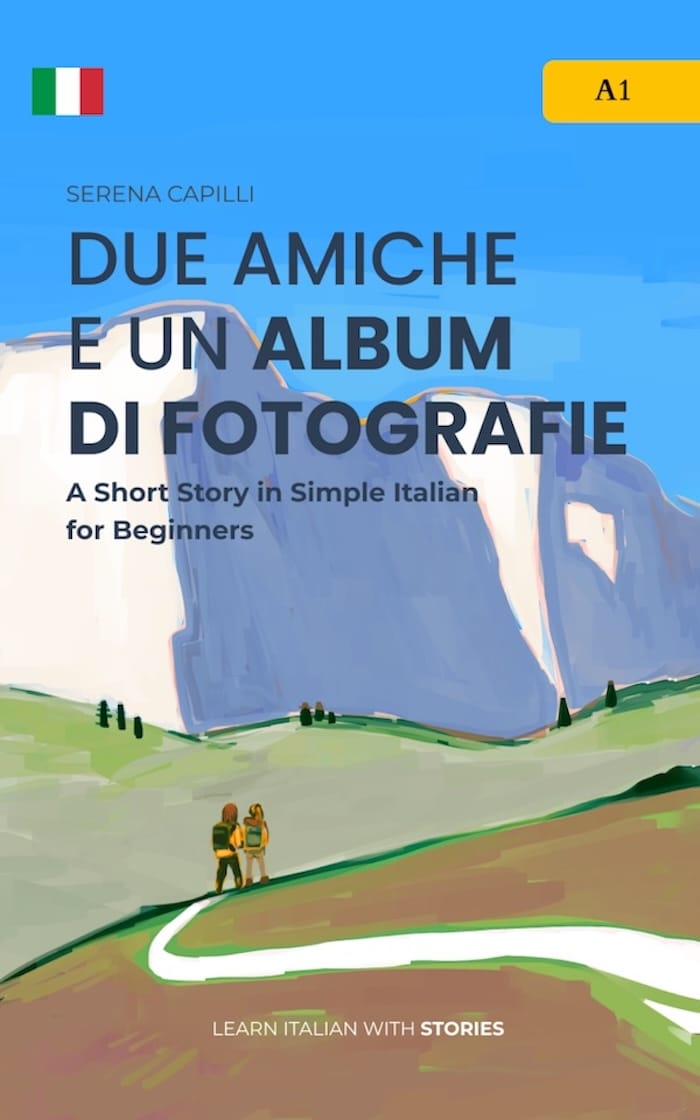
Due Amiche e un Album di Fotografie
Level A1
Two friends, an old photo album and a trip through southern Italy.
Due Amiche e una Bufera di Neve
Level A1/A2
Costanza and Anna get stuck in a snowstorm, with a surprise.