Italians talk about love a lot, and our proverbs show it: some are sweet, some are wise, a few are a little cynical. Here are the sayings you’ll actually hear in Italy, what they mean and when to use them, plus the everyday expressions for crushes, butterflies and love at first sight.
In short
- Al cuore non si comanda: you can’t choose who you fall for.
- Il primo amore non si scorda mai: you never forget your first love.
- L’amore non è bello se non è litigarello: a little arguing is part of love.
- Lontano dagli occhi, lontano dal cuore: out of sight, out of mind.
- Love at first sight is a colpo di fulmine, and a crush is una cotta.
Italian sayings about love
1. L’amore non è bello se non è litigarello
Literally: love isn’t beautiful if it isn’t quarrelsome.
Meaning: a little arguing is part of every relationship.
There’s no exact English equivalent, although Shakespeare comes close: “The course of true love never did run smooth.” Italians say it with a smile after a small fight, to ease the tension. Litigarello comes from litigare (to argue), and it’s a playful word you’ll rarely hear outside this proverb.
Avete litigato? Dai, l’amore non è bello se non è litigarello! (You had a fight? Come on, love isn’t love without a little arguing!)
2. Chi s’assomiglia si piglia
Literally: those who are alike take each other.
Meaning: people who are similar, in looks or in character, end up together.
Piglia is a colloquial form of prende. It’s the Italian version of “birds of a feather flock together”, used mostly for couples.
Sono tutti e due pigri: chi s’assomiglia si piglia! (They’re both lazy: birds of a feather!)
3. Sfortunato al gioco, fortunato in amore
Literally: unlucky at games, lucky in love.
Meaning: if you lose at cards, at least you’ll be lucky in love.
Italians say it to cheer up someone who’s losing a game, usually cards.
Hai perso di nuovo? Sfortunato al gioco, fortunato in amore! (You lost again? Unlucky at cards, lucky in love!)
4. Il primo amore non si scorda mai
Literally: you never forget your first love.
Meaning: your first love stays with you forever.
It explains itself. Italians also use it jokingly for a first car, a first football team or the first city they lived in.
Ho rivisto Luca dopo vent’anni: il primo amore non si scorda mai. (I saw Luca again after twenty years: you never forget your first love.)
5. Al cuore non si comanda
Literally: you can’t give orders to the heart.
Meaning: you can’t choose who you fall in love with.
You’ll also hear al cuor non si comanda. We say it when someone falls for the “wrong” person, and there’s nothing anyone can do about it.
Lo so che non è il ragazzo giusto per lei, ma al cuore non si comanda. (I know he’s not the right guy for her, but you can’t help who you love.)
Read love stories in Italian
If you enjoy these sayings, you’ll love my 7 Romance Short Stories in Italian: seven stories about love and everyday life, full of natural conversations, for B1 and B2 learners. It’s the best way to see how Italians really talk about feelings, in context.
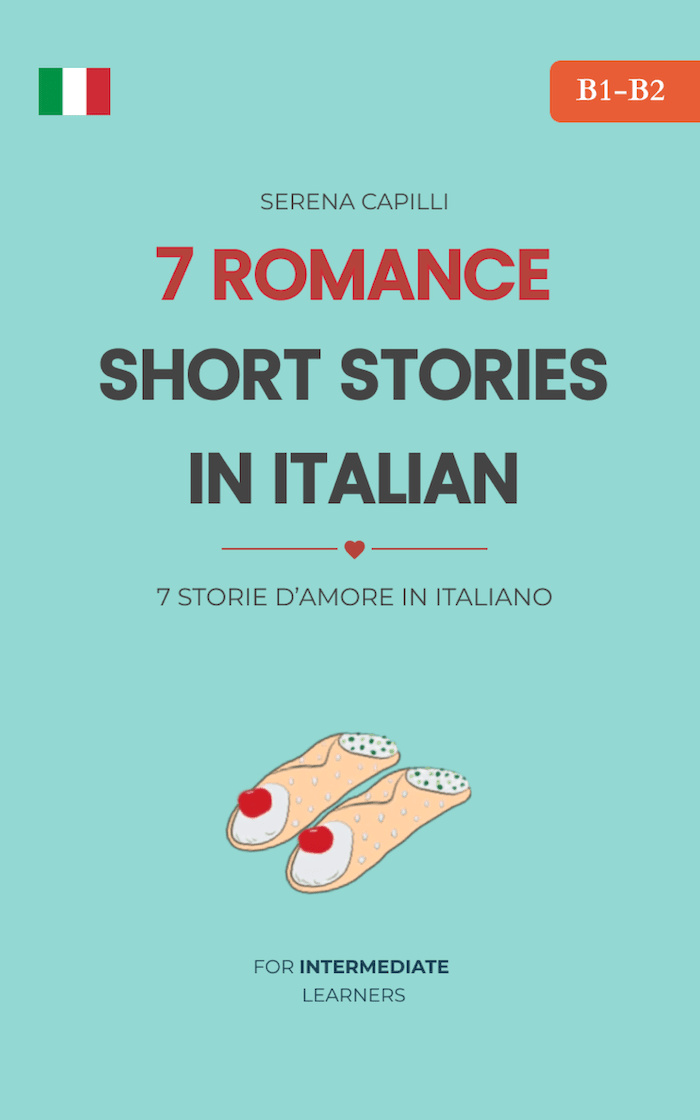
7 Romance Short Stories in Italian
Level B1/B2
Seven stories about love and everyday life, full of natural conversations.
6. L’amore è cieco
Literally: love is blind.
Meaning: when you’re in love, you don’t see your partner’s flaws.
Same as in English. It sounds a little malicious, but I’ve heard it a few times.
Non vede che lui è un bugiardo? L’amore è cieco. (Can’t she see he’s a liar? Love is blind.)
7. Lontano dagli occhi, lontano dal cuore
Literally: far from the eyes, far from the heart.
Meaning: out of sight, out of mind.
A classic for long-distance relationships, usually said with a sigh.
Da quando si è trasferito a Londra non mi scrive più: lontano dagli occhi, lontano dal cuore. (Since he moved to London he doesn’t write anymore: out of sight, out of mind.)
8. Tra moglie e marito non mettere il dito
Literally: between wife and husband, don’t put your finger.
Meaning: don’t get involved in a couple’s arguments.
Good advice for friends and relatives who like to take sides.
Litigano sempre, ma io non dico niente: tra moglie e marito non mettere il dito. (They always argue, but I stay out of it: never come between a couple.)
9. Chi disprezza compra
Literally: who criticizes buys.
Meaning: people who criticize someone often secretly like them.
Perfect for teasing a friend who keeps saying they can’t stand someone.
Dici sempre che è antipatico? Chi disprezza compra! (You always say he’s annoying? Sounds like a crush to me!)
10. Ogni lasciata è persa
Literally: every chance you leave is lost.
Meaning: if you don’t take your chance, you lose it.
Not only about love, but often used to push a shy friend to make a move.
Invitala a cena! Ogni lasciata è persa. (Ask her out to dinner! You snooze, you lose.)
11. L’amore e la tosse non si possono nascondere
Literally: love and a cough can’t be hidden.
Meaning: sooner or later, everyone notices when you’re in love.
An old proverb, still used today with a wink.
Sorridi sempre al telefono… l’amore e la tosse non si possono nascondere! (You keep smiling at your phone… you can’t hide love!)
12. Chi ama teme
Literally: who loves, fears.
Meaning: when you love someone, you worry about them.
Used for jealous partners, but also for parents who worry too much.
Mi chiama dieci volte al giorno: chi ama teme. (He calls me ten times a day: when you love, you worry.)
13. Due cuori e una capanna
Literally: two hearts and a hut.
Meaning: love is enough, even without money.
Often used ironically, when love meets the reality of rent and bills.
Due cuori e una capanna? Bello, ma l’affitto chi lo paga? (Love in a cottage? Lovely, but who pays the rent?)
14. Moglie e buoi dei paesi tuoi
Literally: wives and oxen from your own village.
Meaning: marry someone from your own place.
Very old-fashioned, and today mostly said as a joke when someone falls for a foreigner.
Ti sposi un americano? Mia nonna direbbe: moglie e buoi dei paesi tuoi! (You’re marrying an American? My grandma would say: stick to your own kind!)
15. Amor, ch’a nullo amato amar perdona
Literally: love, which forgives no one who is loved from loving in return.
Meaning: if someone truly loves you, sooner or later you love them back.
This one is pure literature: it’s Francesca speaking in Dante’s Inferno (Canto V). Italians still quote it when talking about passionate, fated love.
Come dice Dante: amor, ch’a nullo amato amar perdona. (As Dante says: love forgives no beloved from loving back.)
Romantic expressions Italians use every day
Proverbs are fun, but these are the words you’ll hear in real conversations about love.
| Expression | Meaning | Example |
|---|---|---|
| un colpo di fulmine | love at first sight | Per noi è stato un colpo di fulmine. |
| prendersi una cotta per qualcuno | to get a crush on someone | Mi sono presa una cotta per il mio vicino. |
| essere cotto/cotta di qualcuno | to be head over heels | Marco è cotto di Giulia. |
| avere le farfalle nello stomaco | to have butterflies in your stomach | Quando lo vedo ho le farfalle nello stomaco. |
| perdere la testa per qualcuno | to lose your head over someone | Ha perso la testa per una ragazza di Napoli. |
| fare gli occhi dolci | to make eyes at someone | Smettila di fargli gli occhi dolci! |
| mi manchi | I miss you (literally, “you are missing to me”) | Torna presto, mi manchi. |
| ti amo / ti voglio bene | I love you (romantic) / I love you, I care about you (family, friends, partner) | Ti voglio bene, mamma. |
Want to hear expressions like these in real dialogues? That’s exactly what my 7 Romance Short Stories in Italian are for: read a story, underline the expressions you like, and start using them.
Frequently asked questions
What is the most famous Italian saying about love?
Al cuore non si comanda (you can’t command the heart) and Il primo amore non si scorda mai (you never forget your first love) are two of the most quoted.
What does l’amore non è bello se non è litigarello mean?
It means love isn’t beautiful without a little arguing. Italians say it with a smile, to play down a small fight between partners.
How do you say love at first sight in Italian?
Colpo di fulmine, literally a lightning strike: È stato un colpo di fulmine.
What is the difference between ti amo and ti voglio bene?
Ti amo is only for romantic love. Ti voglio bene is used with family and friends, and also between partners, as a warm, everyday way to say I love you.
What does chi disprezza compra mean?
Literally who criticizes buys. It means that people who criticize something, or someone, often secretly want it. Italians use it to tease someone who keeps saying they don’t like a person.