This is my list of the non-fiction books I have read in the last few years. Every book on this list has inspired me in one way or another. Some books were recommended to me by my lovely students too! Since I believe that reading non-fiction in Italian is an excellent exercise for intermediate and advanced learners, I hope you will also find any of these books a valuable addition to your Italian language bookshelf.
In short
- Nonfiction is perfect for intermediate and advanced learners: real Italian on topics you already care about
- Easiest picks: La mafia spiegata ai ragazzi (written for teenagers), the graphic novel Salvezza and Sette brevi lezioni di fisica
- My favorite: Le parole sono finestre (oppure muri) by Marshall B. Rosenberg
- Choose books you understand at least 90% of, and read about topics you love
My 12 favorite nonfiction books in Italian
1. La mafia spiegata ai ragazzi by Antonio Nicaso

The Mafia and its implications in our society are not easy to explain to foreigners, as it has its roots in the cultural and political context of centuries of Sicilian and Italian history. That is why I have begun to recommend to my students who are interested in learning more about the Mafia to read “La Mafia spiegata ai ragazzi.” This short book was written to explain the Mafia to teenagers. This format is handy as the language is tailored to younger readers and is suitable for most intermediate Italian learners.
2. Il metodo Ikigai by Héctor García and Francesc Miralles

This very delightful book explores the concept of Ikigai, a Japanese word that stands for the reason to live or the reason to get out of bed. After researching the lives of many people who stand out for their longevity, the authors, Héctor García and Francesc Miralles, concluded that the main ingredient for a happy and long life is the Ikigai itself. This book also inspired an episode of my slow Italian podcast about the Blue Zones.
3. Miracle Morning by Hal Elrod

This book was recommended to me by one of my students a couple of years ago. It’s a bestseller revolving around the idea that waking up a little earlier every day can help you be more productive and energetic in the long term. The authors promote the idea that the morning is the best time of the day to cultivate one’s hobbies or complete the tasks that we might not be able to finish after our regular workday. As an Italian proverb says, “Il mattino ha l’oro in bocca” (the early bird catches the worm).
4. Le parole sono finestre (oppure muri) by Marshall B. Rosenberg

If you had to choose just one book out of this list, I would opt for this one. Marshall Rosenberg, an American psychologist, developed Nonviolent Communication. The manual provides a set of skills and guidelines to use in our daily conversations with friends, family, and clients, and it teaches us how to understand our deeper needs and the needs of others using only the power of listening and peaceful communication. This was a life-changing read for me, and I think for most people who have read it.
5. Salvezza (graphic novel) by Marco Rizzo and Lelio Bonaccorso

Another great way to integrate authentic Italian reading into your Italian routine is through Italian graphic novels. That’s a fantastic way to learn because the content comes in the shape of conversations, and the drawings will help your understanding. Salvezza is one of my favorite examples of graphic novels, which I have already used with many of my students in my Italian fluency programs. This work results from the author’s experience of spending time on an NGO ship rescuing migrants in the Mediterranean Sea and of the interviews they conducted with the staff and the refugees on the boat.
6. Il dono del silenzio by Thich Nhat Hanh

Another incredible short book, written by the Vietnamese Buddhist monk Thich Nhat Hanh, who was nominated for the Nobel Peace Prize. It revolves around how we need silence to listen to ourselves and stop the mental chatter that “pollutes” our lives. It’s easier said than done, but this little gem of a book is a good start.
7. I quattro accordi by Don Miguel Ruiz

This is one of my favorite books, and guess what? The suggestion came from one student. Based on ancient Toltec wisdom, it proposes four simple agreements to live more freely: be impeccable with your word, don’t take anything personally, don’t make assumptions, and always do your best. It’s short, clear and surprisingly practical. I enjoyed every minute of this reading and it helped me improve my focus, mindfulness, and concentration.
8. Il monaco che vendette la sua Ferrari by Robin Sharma

This international bestseller tells the story of Julian Mantle, a successful lawyer who, after a heart attack, sells his Ferrari and everything he owns and travels to India in search of a more meaningful life. There he meets the sages who change his life forever. The whole book is a metaphor for the path of self-growth and uses the monk’s experiences to teach great life lessons.
9. Il movimento del mondo by Parag Khanna

This book, which was one of my favorite reads in 2021, looks at the migratory, economic, and social flows that will make our world the focus of attention in the next thirty years. Parag Khanna, the author, wonders which countries will succeed and which will fail, which ones will be able to survive the climate change crisis and, at the same time, also looks at those who have been marked by pandemics, plagues, wars, and genocides. If you’re interested in geopolitical affairs, this is the one to stretch your Italian with.
10. Sette brevi lezioni di fisica by Carlo Rovelli
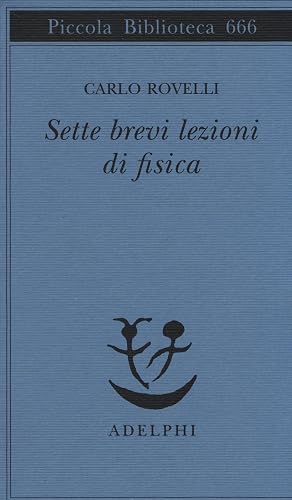
A tiny book that became an international bestseller. In seven short chapters, the physicist Carlo Rovelli explains relativity, quantum mechanics, black holes and the structure of the universe in clear, almost poetic Italian.
It’s perfect for learners because every chapter is short and can be read in one sitting. And you don’t need to love physics: it reads like a beautiful essay about curiosity and our place in the world.
11. L’arte di essere fragili by Alessandro D’Avenia
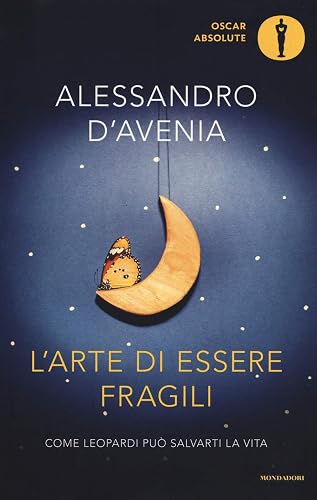
Alessandro D’Avenia, a high school teacher and writer, imagines a series of letters to the poet Giacomo Leopardi. Through Leopardi’s life and poems, he talks about fragility, beauty and how to find your way in life.
If you’ve ever wanted to approach Italian literature without feeling intimidated, this is a wonderful door. The language is warm and personal, ideal for upper-intermediate learners.
12. Dieci cose che ho imparato by Piero Angela
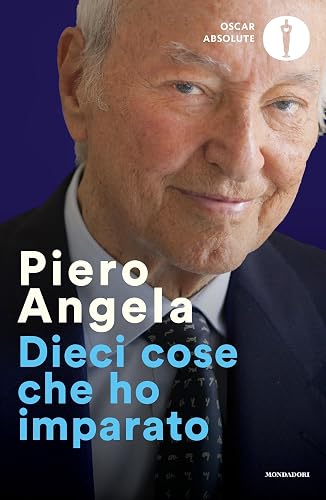
Piero Angela was the most beloved science communicator on Italian TV for decades. In this short book, one of his last, he shares ten lessons from a long life: on science, education, innovation and the future of Italy.
Piero Angela wrote the way he spoke on TV: clearly, calmly and with great respect for his readers. That makes this book a great choice for intermediate learners who want to read real Italian nonfiction.
Why reading books in Italian is a brilliant idea
Did you know that most of the vocabulary we know as adults, even in our mother tongue, comes from reading, not from conversation?
Reading is widely recognized as one of the most powerful learning tools for foreign languages.
Here’s why reading in Italian works so well:
- Reading in Italian is an excellent way to get the hang of the prepositions or verb conjugations: as you read, you visualize and absorb the (correct) language naturally. You unconsciously absorb grammar patterns and the correct spelling of words. In other words, when reading in Italian, you polish your Italian.
- It does not sound like “learning.” Forget about those boring textbooks where you are forced to read about Marco and Chiara’s happenings on vacation or at the supermarket. You are in charge of the content you want to spend time with.
- Through Italian reading, you reactivate all the passive vocabulary that you have previously internalized during your Italian lessons or trips to Italy.
When my students ask me to recommend what Italian books to read, I always give them two pieces of advice.
- Pick something comprehensible (you should understand at least 90% of it).
- Read nonfiction books.
Why the latter?
Why is reading nonfiction books in Italian a great idea?
I love nonfiction books. When I read a great book, I’m in the habit of reading it a second time in another language. I’ve done it in five languages so far and profoundly enjoyed every minute of it. Beyond my personal experience, I think nonfiction books offer the opportunity to learn and improve your Italian and expand your horizons in your field of interest.
In addition, I find the language used in a nonfiction book way easier to remember and even more useful. When you read something related to a field that interests you, you are more likely to retain that vocabulary and use it in your Italian conversations.
I will never stop saying that language is a tool to expand your knowledge, hobbies, and visions. It’s never the final destination. Use the language with a purpose.
Frequently asked questions
What nonfiction books should I read to learn Italian?
Start with short, accessible books on topics you love. Good picks are La mafia spiegata ai ragazzi (written for teenagers), the graphic novel Salvezza, Il metodo Ikigai and Le parole sono finestre (oppure muri).
Is reading nonfiction good for learning Italian?
Yes. When you read about a subject that interests you, you remember the vocabulary more easily and can use it in real conversations about that topic.
What level do I need to read nonfiction in Italian?
Most of these books are best for intermediate (B1) and advanced learners. Choose books where you understand at least 90% of the text.
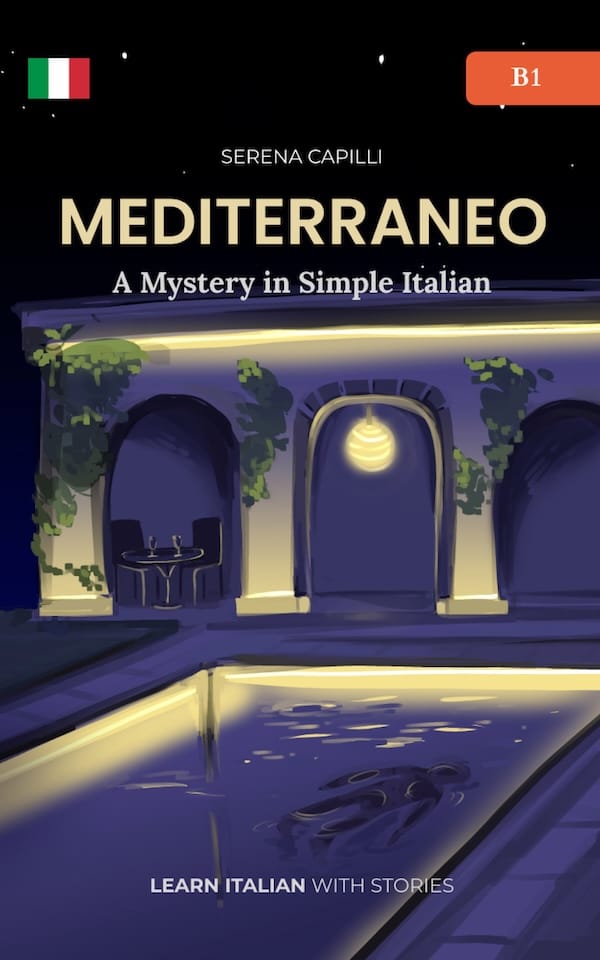
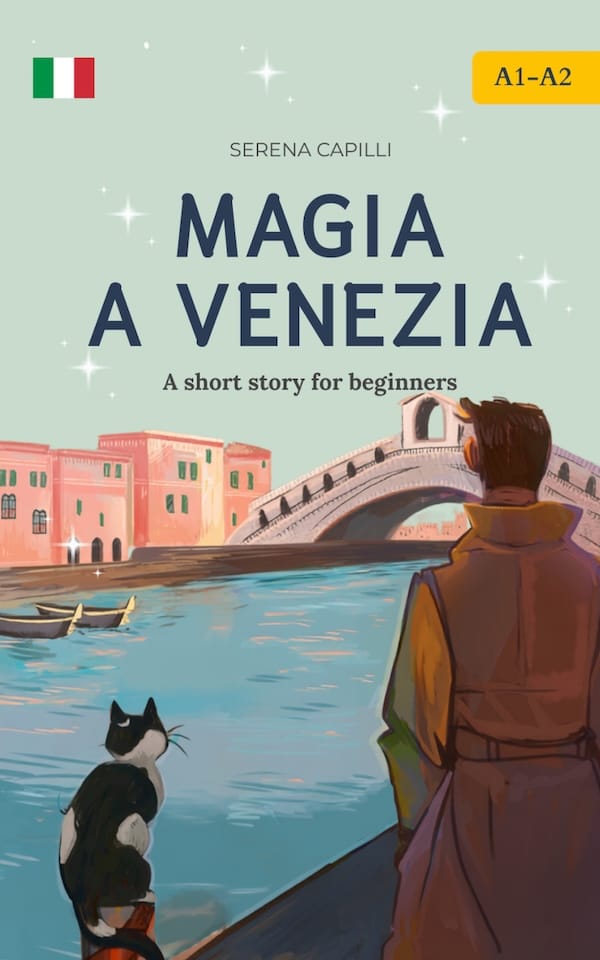
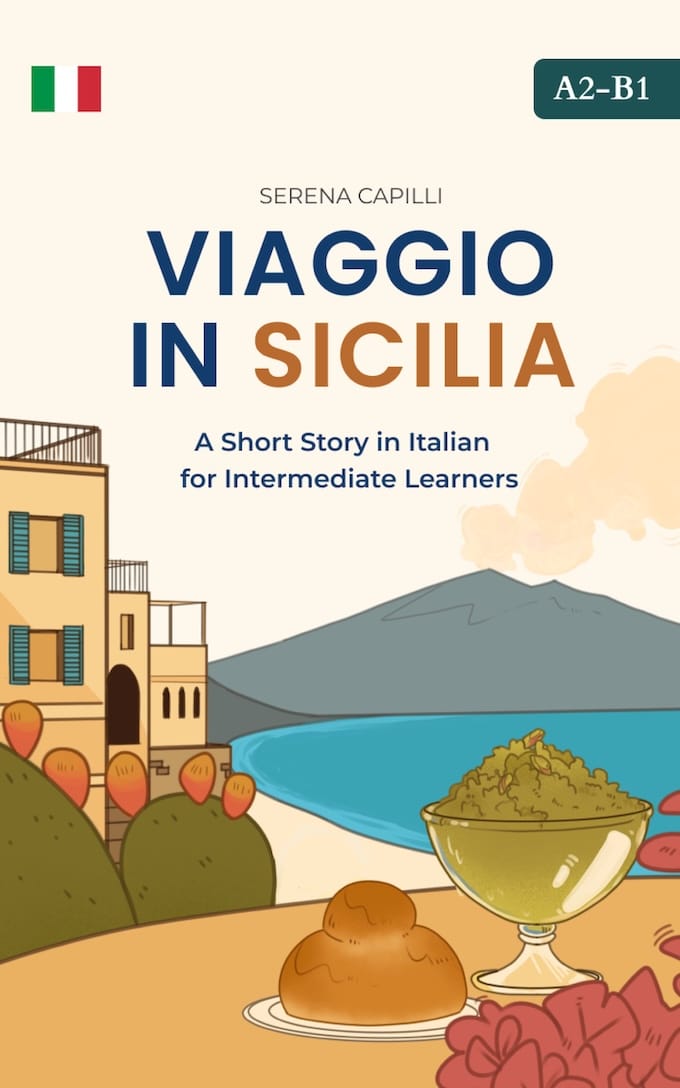
If you’re not ready for a full book yet, start with shorter texts written for learners. My magazine Piazzetta Italiana has real articles about Italian culture, and my graded readers are stories with vocabulary support and audio:
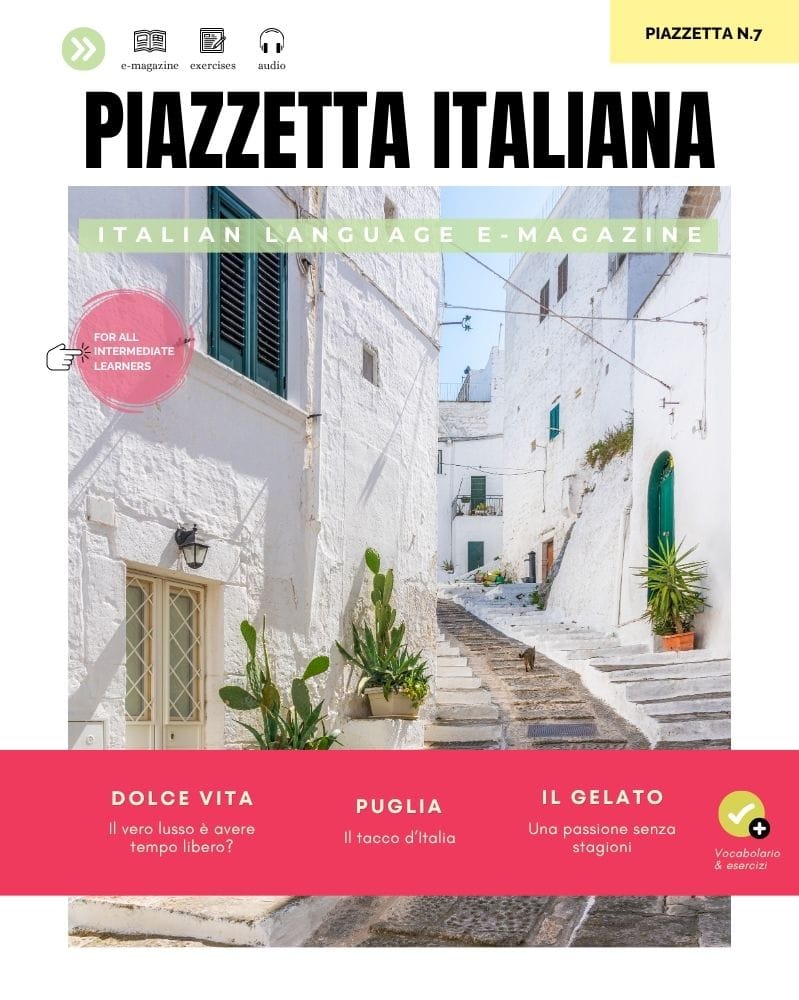
Piazzetta Italiana
Level A2/B1
My magazine for learners: real articles about Italian culture and everyday life, with vocabulary and audio.
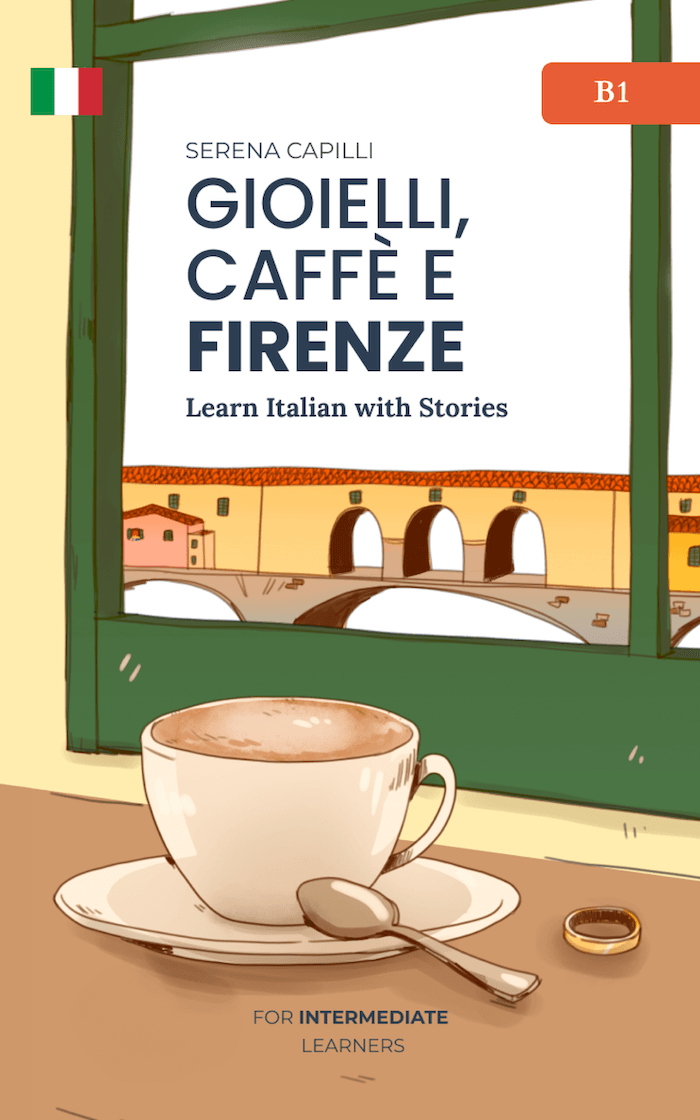
Gioielli, Caffè e Firenze
Level B1+
Marie moves to Florence, where jewelry making leads to a new life.