What does qualsiasi mean?
In English, qualsiasi usually translates as “any” or “whatever.”
Examples:
- Puoi scegliere un libro qualsiasi. → You can choose any book.
- Dimmi qualsiasi cosa. → Tell me whatever you want.
Think of qualsiasi as a way to say: “it doesn’t matter which one.”
Grammar: Where does qualsiasi go in a sentence?
This is the tricky part!

Ciao, I'm Serena
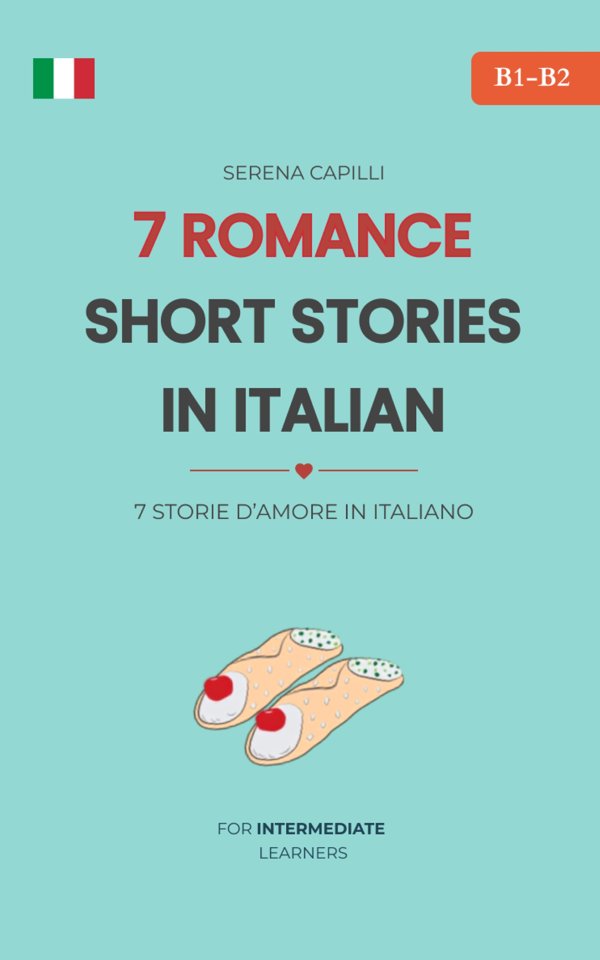
I'm a certified Italian teacher from Sicily, and I live in Rome. Since 2016 I've been teaching Italian online to English-speaking adults, through stories and comprehensible input. My graded readers grew out of those lessons: short stories in real, culturally rich Italian, with exercises and audio, so you can bring together and activate the grammar and vocabulary you already know. I believe this is the most effective way to learn a language, and to make learning it part of your lifestyle.
Unlike English, where “any” comes before the noun, in Italian qualsiasi comes after the noun.
- un giorno qualsiasi → any day
- Cerco un lavoro qualsiasi → I’m looking for any job
- Puoi scegliere un libro qualsiasi → You can choose any book
Common Mistakes: English Any vs Italian
English speakers often struggle with any because Italian doesn’t always translate it directly.
So remember this:
- In questions, any usually becomes a partitive article:
Do you have any friends in Italy? → Hai degli amici in Italia?
Is there any milk in the fridge? → C’è del latte in frigo. - In negatives, any disappears:
I don’t have any money. → Non ho soldi.
There isn’t any time left. → Non c’è più tempo. - As “whatever / whichever”, any = qualsiasi:
You can choose any book you like. → Puoi scegliere un libro qualsiasi.
Call me at any time. → Chiamami in qualsiasi momento.
Qualsiasi vs Qualunque
Sometimes you’ll also see qualunque. The good news: in most everyday contexts, they are interchangeable.
- Puoi venire in qualsiasi momento.
- Puoi venire in qualunque momento.
(Both mean: You can come at any time.)
Difference:
- qualsiasi → more common in modern spoken Italian
- qualunque → slightly more formal or literary
Common Expressions with qualsiasi
Here are some very useful phrases:
- in qualsiasi momento → at any time
- da qualsiasi parte → anywhere / from any place
- per qualsiasi ragione → for any reason
- qualsiasi persona → any person
These are great ready-to-use chunks for daily conversation.