How many ways do you know to say “you’re welcome” in Italian? If you think prego is the only one, you might be surprised: Italians have lots of ways to answer a grazie, from neutral to warm to very informal.
Here they are, with examples, so you can sound more natural (and friendlier!) when you speak Italian.
In short
- Prego: the classic, works everywhere
- Di niente / Di nulla: “it was nothing,” very common
- Figurati (informal) / Si figuri (formal): “don’t mention it”
- Non c’è di che: “no need to thank me”
- Ci mancherebbe!: “of course, it was my pleasure”
| Expression | Register | Closest English |
|---|---|---|
| Prego | neutral | You’re welcome |
| Di niente / Di nulla | neutral | It was nothing |
| Figurati! | informal | Don’t mention it! |
| Si figuri! | formal | Don’t mention it! |
| Non c’è di che | neutral | No need to thank me |
| Non c’è problema / Nessun problema | neutral | No problem |
| E di che? | informal | What for? |
| Ci mancherebbe (altro)! | neutral | Of course! My pleasure |
| Ma ti pare! | informal | Oh, come on! |
| È stato un piacere | neutral | It was a pleasure |
1. Prego
Prego is the easiest and most popular way to say “you’re welcome” in Italian. You can use it with anyone, in any situation. Besides “you’re welcome,” prego also has other meanings (see the bonus section below), and it’s the first person singular of the verb pregare (to pray, to beg).
A: Grazie per il tuo aiuto!
B: Prego!
2. Di niente / Di nulla
Di niente is just as common as prego. It literally means “of nothing,” so it sounds like “it was nothing.” Di nulla means exactly the same thing.
A: Grazie per il passaggio!
B: Di niente!
3. Figurati! / Si figuri!
Figurati (informal, with tu) and Si figuri (formal, with Lei) mean “don’t mention it!” They’re warm and very natural. You’ll often hear them with ma in front: Ma figurati!
A: Grazie mille, sei gentilissima!
B: Ma figurati!
4. Non c’è di che
Non c’è di che means “there’s nothing to thank me for.” It gives the idea that you were happy to help.
A: La ringrazio per la disponibilità.
B: Non c’è di che.
5. Non c’è problema / Nessun problema
Non c’è problema means “no problem at all.” It’s very common when you’ve done someone a small favor.
A: Grazie per avermi aspettato!
B: Non c’è problema!
6. E di che?
E di che? literally means “and for what?”, as in “what are you thanking me for?” It’s used only in informal situations, with friends and family.
A: Grazie per il caffè!
B: E di che?
7. Ci mancherebbe (altro)!
Ci mancherebbe altro! literally means “that would be the last thing missing!” You use it when someone thanks you warmly for a favor, to say “of course, I was happy to do it, don’t mention it!” You can also just say Ci mancherebbe!
A: Grazie davvero per avermi ospitato!
B: Ci mancherebbe altro!
8. Ma ti pare!
Ma ti pare! is a very informal and friendly way of saying “oh, come on, it was nothing!” With someone you address as Lei, it becomes Ma Le pare!
A: Grazie per avermi aiutato con il trasloco!
B: Ma ti pare!
9. È stato un piacere
È stato un piacere means “it was a pleasure.” It’s perfect after you’ve hosted someone, given a tour or spent time helping.
A: Grazie per la bellissima serata!
B: È stato un piacere!
Bonus: when prego doesn’t mean “you’re welcome”
Prego is one of those little words you’ll hear everywhere in Italy, with different meanings:
- After you / Go ahead: if you’re standing in line and someone says prego, they’re letting you go first. On a crowded bus, you can say prego to let someone get off before you.
- Please, come in / take a seat: Prego, si accomodi! (Please, have a seat!)
- How can I help you?: in shops and bars you’ll often hear Prego? or Prego, desidera?
- Sorry, could you repeat?: Prego? with a questioning tone is a polite way to say “Pardon?” or “Come again?”
Frequently asked questions
What is the most common way to say you’re welcome in Italian?
Prego is the most common and works in any situation. Di niente and figurati are also very common in everyday conversation.
What is the difference between figurati and si figuri?
They both mean “don’t mention it.” Figurati is informal (tu), while si figuri is formal (Lei), for example with a customer or someone older you don’t know well.
Does prego mean please in Italian?
Sometimes. Prego can mean “after you,” “please, go ahead” or “please, come in.” To ask for something politely, though, Italians say per favore or per piacere.
Want to hear these expressions in real conversations? My short stories for beginners are full of everyday dialogues like these, with audio. Here are three to start with:
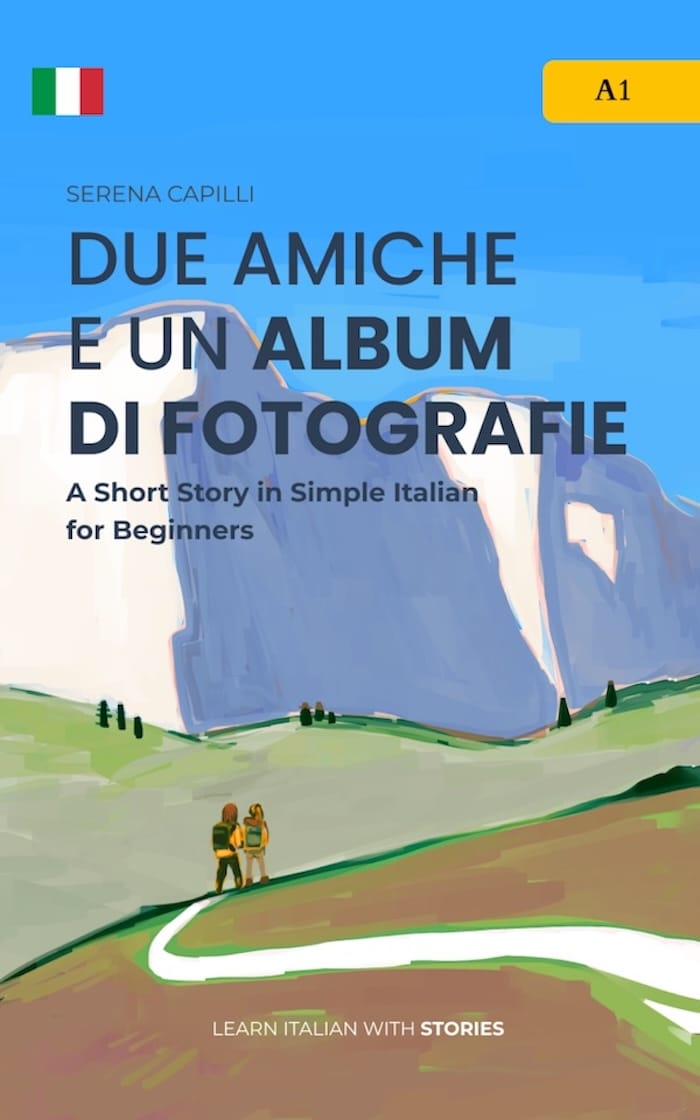
Due Amiche e un Album di Fotografie
Level A1
Two friends, an old photo album and a trip through southern Italy.
Due Amiche e una Bufera di Neve
Level A1/A2
Costanza and Anna get stuck in a snowstorm, with a surprise.