Is Sicilian a language or a dialect? As a Sicilian, I have a clear answer to this one: Sicilian is a language, with many local varieties across the island. Here’s why, how it differs from Italian, where its words come from, and how you can learn it.
In short
- Sicilian is a Romance language that evolved directly from Latin, not a version of Italian.
- In Italy it’s called a dialetto because it has no official status, not because of linguistics.
- Its words come from Greek, Arabic, Norman French, Catalan and Spanish, thanks to the many peoples who ruled the island.
- It’s spoken by about 4.7 million people, but everyone in Sicily also speaks Italian.
- You don’t need Sicilian to travel to Sicily, but a few words like amunì will make people smile.
Is Sicilian a language or a dialect?
The widespread idea that Sicilian is a dialect comes from the fact that most people don’t know what makes a dialect different from a language.
In everyday Italian, dialetto simply means a local language with no official status.
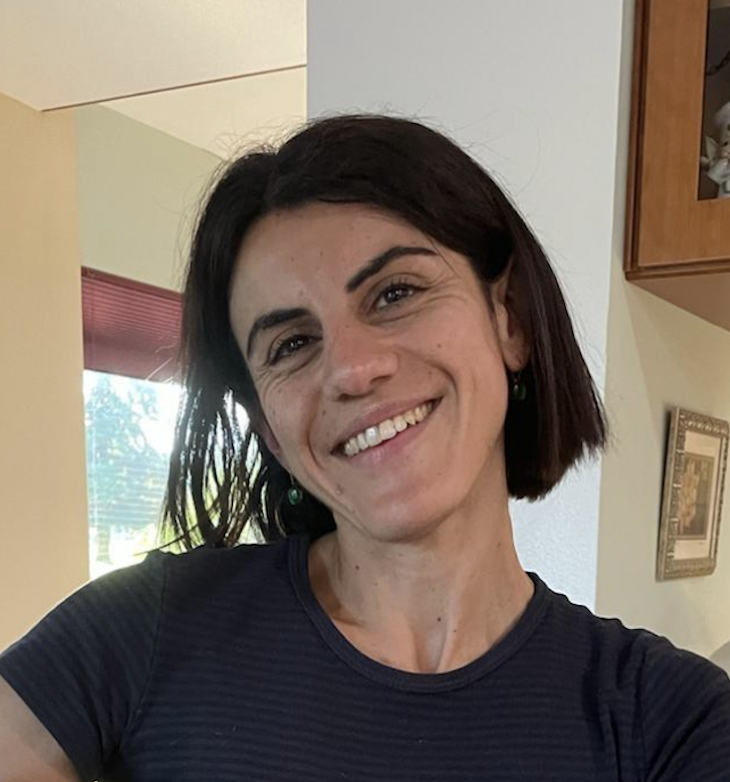
Ciao, I'm Serena
I'm a certified Italian teacher from Sicily, and I live in Rome. Since 2016 I've been teaching Italian online to English-speaking adults, through stories and comprehensible input. My graded readers grew out of those lessons: short stories in real, culturally rich Italian, with exercises and audio, so you can bring together and activate the grammar and vocabulary you already know. I believe this is the most effective way to learn a language, and to make learning it part of your lifestyle.
But Sicilian is not a variation of Italian: it’s an evolution of Latin, a sister of Italian rather than a daughter, with massive influences from Ancient Greek, Arabic, French, Catalan and Spanish. Quite a unique combination, isn’t it?
So why do so many people, including Sicilians, call it a dialect? In a nutshell: prejudice. For decades, Sicilian was considered the way uneducated people or peasants spoke.
Things are changing: in 2018 the Sicilian Region officially referred to Sicilian as a language, and the Cademia Siciliana is doing a great job creating a standard spelling and spreading awareness of Sicilian across the island and the world.
How is Sicilian different from Italian?

Sicilian is as different from Italian as the other Romance languages are. Its grammar shares the same foundations and, in my opinion, it’s closer to Spanish grammar. Compare it with Romanesco, the variety spoken in Rome, which stays very close to Italian:
| English | Italian | Romanesco (Rome) | Sicilian |
|---|---|---|---|
| What are you doing? | Che fai? | Che stai a fa’? | Chi fai? |
| Where do you work? | Dove lavori? | ‘Ndo stai a lavorà? | Unni travagghi? |
| I did / I made | Ho fatto (passato prossimo) | Ho fatto | Fici (passato remoto) |
What this table shows:
- No passato prossimo. Sicilian uses the passato remoto, even for something that happened five minutes ago. Spanish does the same: yo hice.
- Unni (where) recalls the French où.
- Travagghiari (to work) shares its root with Spanish trabajar, French travailler and Portuguese trabalhar.
That’s just one example: I could make a very long list of similarities between Sicilian and Spanish.
Where Sicilian words come from
The reason for this mix goes back to our history. Greeks, Arabs, Normans, Catalans and Spaniards all conquered and settled in Sicily, leaving traces in our art, our food and our language.
| Sicilian | English | Italian | Comes from |
|---|---|---|---|
| babbiari | to kid around | scherzare | Greek (babazein) |
| sciarra | a quarrel | un litigio | Arabic |
| zibbibbu | muscat grape | uva moscata | Arabic |
| accattari | to buy | comprare | Norman French |
| muccaturi | tissue, handkerchief | fazzoletto | French (mouchoir) |
| addunàrisi | to notice | accorgersi | Catalan |
| pappadiari | to blink | sbattere le palpebre | Spanish (parpadear) |
| travagghiari | to work | lavorare | Latin, like Spanish trabajar and French travailler |
Is Sicilian still spoken today?
Yes, but it has been under pressure from Italian for a century, and it has become more and more “italianized”. Here’s where it stands today:
- Speakers: about 4.7 million (2002 estimate), in Sicily and in parts of Calabria and Puglia.
- Official status: none. Italy’s law on minority languages (482/1999) doesn’t include it.
- Schools: a 2011 regional law encourages teaching Sicilian, but progress has been slow.
Still, as a Sicilian and a polyglot, I’ve seen a real revival in the last few years. The Cademia Siciliana and some brilliant polyglots and language students are shining a light on Sicilian, and its spelling is now used even by Google Translate, which added Sicilian in 2024.
Where is Sicilian spoken?
Sicilian is also spoken outside Italy, in Sicilian communities in the USA, Canada, Argentina, Germany and Australia. It’s not rare to meet third generation Sicilian Americans who understand it well, or speak it fluently, because they learned it from their grandparents.
Fun fact: the Sicilian spoken abroad keeps many words and expressions that have been forgotten in Sicily. It’s a lot of fun listening to an old Canadian nonno speaking a much older and purer Sicilian than my family in Sicily does!
Are Sicilians bilingual?
Yes and no. Italian is the official and most spoken language: we use it at school, at work and in most everyday situations.
So if you’re wondering whether you’ll understand Sicilian people, my answer is yes: we do speak Italian.
Sicilian is used in informal settings, for jokes or to stress something with a bit of irony. The only people who might not speak standard Italian are very few, mostly elderly people in rural areas.
Do you need Sicilian to travel to Sicily?
No. If you plan a longer stay, learning Italian is a great idea, but Italians don’t expect any foreigner to speak the local language.
That said, hearing someone from far away speak a few words of Sicilian makes the day of any Sicilian: it’s what happened to me every time a foreigner spoke Sicilian with me. So why not pick up a few words before your trip?
| Sicilian | Meaning | When you’ll hear it |
|---|---|---|
| Amunì! | Let’s go! Come on! | Everywhere, all the time |
| Talìa! | Look! | When someone wants to show you something |
| Unni? | Where? | Unni sì? Where are you? |
| beddu / bedda | beautiful, dear | Bedda Sicilia! |
| picciriddu | little child | Said with tenderness, at any age |
| mischinu | poor thing | When something bad happens to someone |
| camurrìa | a nuisance, an annoying thing | Chi camurrìa! What a pain! |
| babbiari | to joke | Nun babbiari! Stop joking! |
How to learn Sicilian
As a minority language, Sicilian doesn’t have as many textbooks as the other Romance languages. But don’t let that put you off. Sicilian culture is everywhere on the island, and there’s a wealth of songs, books and online material you can use as authentic input.
- Online courses and tutors: you can learn Sicilian with uTalk or take lessons with a private tutor on italki.
- Wikipedia in Sicilian: a free and surprisingly rich source of real texts.
- Dictionary: on Glosbe you’ll find Sicilian to English and Sicilian to Italian dictionaries.
- Cademia Siciliana: for the standard spelling and lots of resources.
Books to learn Sicilian on your own:
- Learn Sicilian – Gaetano Cipolla (textbook for Sicilian learners)
- U principinu (the Little Prince by Antoine de Saint-Exupéry in Sicilian)
- Li me primi 101 palori (my first Sicilian words, intended for kids but good for adults too)
- Basic Sicilian-English Dictionary
Fall in love with Sicily in Italian
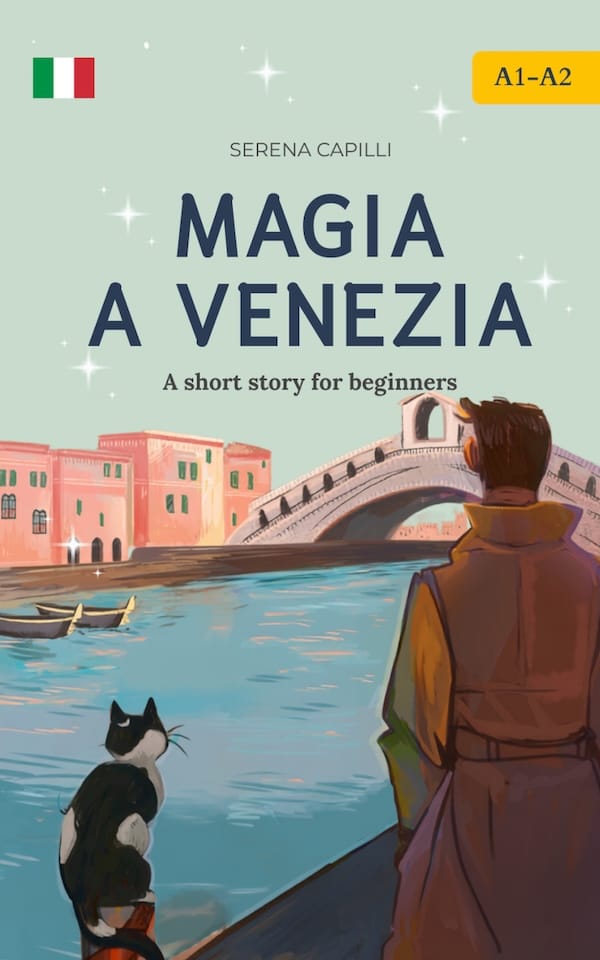
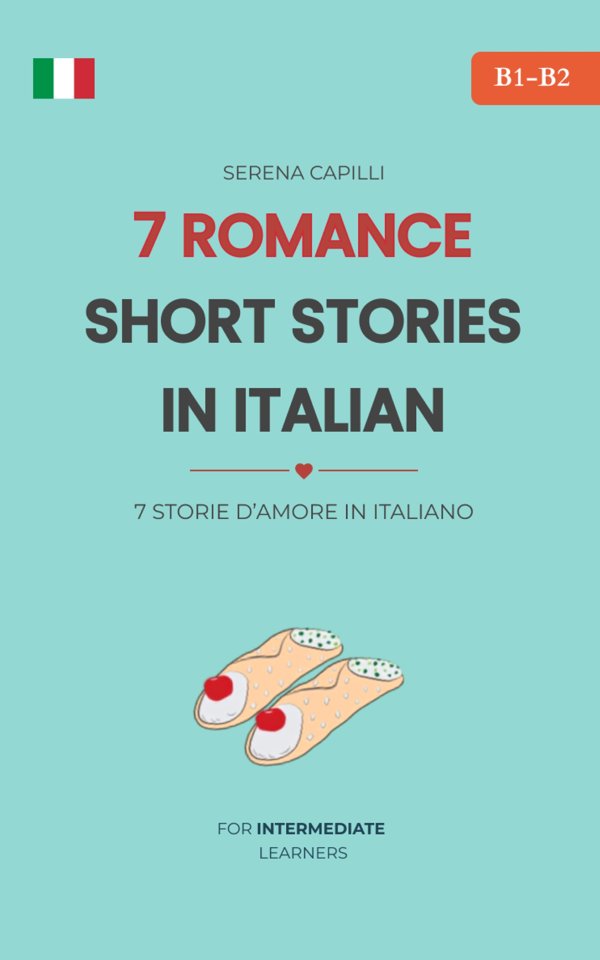
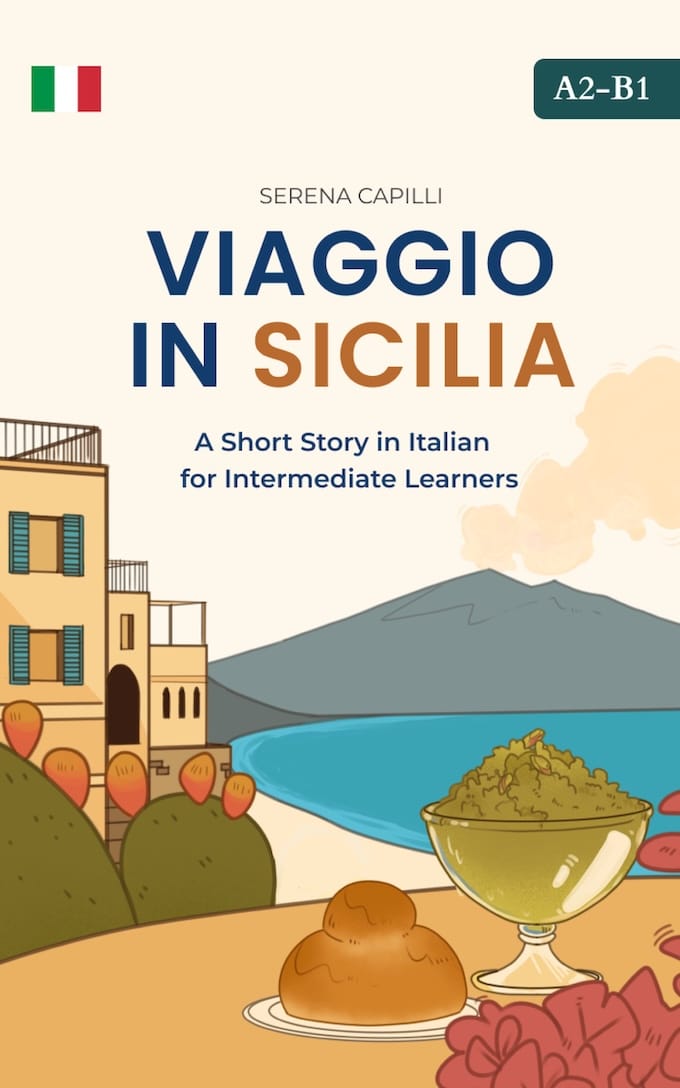
If Sicily is calling you, the best first step is still Italian. Two of my graded readers are set on the island, and they’re full of its places, food and people. And if you’re dreaming bigger, here are 7 reasons why moving to Sicily is a great idea.
Stories set in Sicily
Read your way around Sicily, in Italian written for your level.

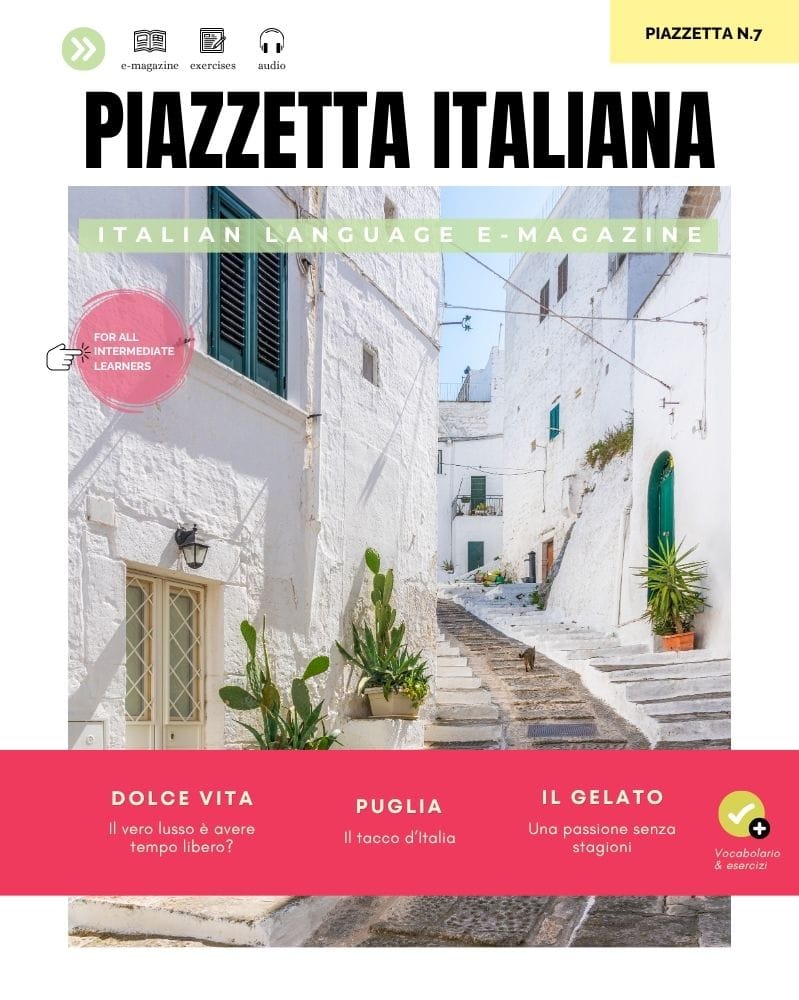
Piazzetta Italiana
Level A2/B1
My magazine for learners: real articles about Italian culture and everyday life, with vocabulary and audio.
Disclaimer: I wrote this article from my own experience with Sicilian, in Sicily and within the international community of polyglots who have embraced the Sicilian journey. There are certainly academics who can describe the state of the Sicilian language today in more scientific terms.
Frequently asked questions
Is Sicilian a language or a dialect?
Linguists classify Sicilian as a Romance language that evolved directly from Latin, like Italian, Spanish or French. In Italy it is commonly called a dialetto because it has no official status, but that is a social label, not a linguistic one.
How many people speak Sicilian?
About 4.7 million people, according to a 2002 estimate, in Sicily and parts of Calabria and Puglia, plus Sicilian communities abroad, for example in the US, Canada, Argentina, Germany and Australia.
Is Sicilian different from Italian?
Yes. The grammar and vocabulary are different enough that an Italian speaker from the north may not understand it. For example, Sicilian uses the passato remoto for recent events (fici, I did) where Italian uses the passato prossimo (ho fatto).
Do I need to speak Sicilian to travel to Sicily?
No. Everyone in Sicily speaks Italian, and nobody expects visitors to speak Sicilian. Learning a few words like amunì or talìa will make locals smile, though.
How can I learn Sicilian?
Start with a textbook like Learn Sicilian by Gaetano Cipolla, use online resources like Sicilian Wikipedia and the Cademia Siciliana, and practice with a tutor. Sicilian is also available on Google Translate, using the Cademia Siciliana spelling.