There are so many reasons to live in Sicily, whether you’re a digital nomad, a remote worker or looking for a place with a beautiful climate to spend your retirement years.
I’m Sicilian, born and raised on the island, and I’ve traveled and lived abroad a lot. Living and working in other countries has made me see Sicily through different eyes. In this post, updated for 2027, I’ll go over the pros and the cons of my island, because no matter where you go, there will always be challenges.
In short
- Pros: low cost of living, amazing food, a mild climate, sea and mountains, and a warm, welcoming culture
- Cons: slow bureaucracy, public transport that requires planning, few local jobs, and chaotic big cities
- Budget: in my experience, around $1,500 to $2,500 a month for a comfortable life
- Visas for non-EU citizens: the digital nomad visa (remote workers, about €28,000 a year) or the elective residence visa (passive income, about €31,000 a year)
- Retirees: small Sicilian towns qualify for Italy’s 7% flat tax on foreign pensions
- Learn at least some Italian before you move: it changes everything
Jump to

1. An exotic life within Europe
Sicily is in Europe, and at the same time it isn’t. As part of Italy, it enjoys the living standards of a southern European country. But Sicily is also a place where kids play soccer in the streets and people go to the beach after work. Sicilians love spending time outdoors, and you’ll be surprised by the life in big cities and small towns, day and night.
Sicily is also a unique mix of the civilizations that settled on the island over the centuries. Greeks, Arabs, Normans, Spaniards and French left their mark on Sicilian architecture, language, food and lifestyle. In some towns with a strong Arab heritage, the traditional dish is couscous. And some of the vast, unspoiled beaches will make you wonder if you’re in Sicily or the Caribbean.
Cons: Sicilians are extremely proud of their culture and cuisine, and they give little space to anything that isn’t distinctly Sicilian, compared to other expat favorites like southern Spain or the Canary Islands. When it comes to food, for example, Sicilians like to do things their way (and not only food).
2. Living on the cheap
The cost of living in Sicily is still among the lowest in Western Europe. How much does it cost per month? I’d say around $1,500 to $2,500, even though I know locals who live well on less. Everything depends on your lifestyle.
As a Sicilian who has worked remotely from the island, here’s my rough idea of prices:
- Rent: still affordable compared to the rest of Italy, but it has been rising in recent years, especially in Palermo and in tourist spots by the sea, where prices also climb in summer. A two-room flat in a central area of Catania, Palermo or Messina is usually around €700 a month, and smaller towns like Ragusa, Enna, Caltanissetta, Agrigento or Milazzo are cheaper. Check current prices on immobiliare.it.
- Food and markets: you can live well on a small budget if you shop at the local markets (every town has one). Believe me: you’ll get the best value for money in Europe in terms of food quality.
- Gym: a monthly membership at a local gym is usually around €40, and in small gyms you can often pay month by month, which is ideal for digital nomads.
- Well-being: a full-body massage costs €40 to €60. I used to take private Pilates lessons in Siracusa for €40 an hour.
| Item | Typical cost (my experience) |
|---|---|
| Pizza margherita | about €7 |
| A glass of good wine | €5 to €7 |
| Blow-dry at the hair salon | €12 to €20 |
| Dental cleaning | €80 to €100 |
| Physiotherapy session | €50 to €80 |
Healthcare
Italy has a public national health service (SSN). EU citizens and legal residents can register with it; visitors from the EU can use their European health card. Non-EU residents who don’t work in Italy, such as elective residence visa holders, usually have to register voluntarily and pay a yearly fee: since 2024 it’s at least €2,000 a year. Many people also use private healthcare, which is much cheaper than in the US.
Public transport
Sicily is not famous for its public transport. But if you live in a city or a well-connected town, you won’t need to stress: Sicilian towns are very walkable, and shops and services are usually close to the center.
You can travel between the main cities by train with Trenitalia or by regional bus (SAIS Autolinee, Autoservizi Salemi). The smaller islands, like the Aeolian Islands, Lampedusa or Favignana, are reached by ferry. Transport in Sicily is not as bad as people think: it just requires a bit more planning.
3. Visas and paperwork in 2027
If you’re an EU citizen, you can move freely and register as a resident. If you’re from the US, Canada, the UK or Australia, you’ll need a visa to stay longer than 90 days. The most common options are:
| Visa | Who it’s for | Main requirement |
|---|---|---|
| Digital nomad / remote worker visa | Highly skilled remote workers (degree or 5 years of experience) | About €28,000 a year from remote work, plus health insurance and accommodation |
| Elective residence visa | Retirees and people with passive income | About €31,000 a year in passive income (pensions, investments, rentals); you can’t work in Italy |
Moving to Sicily as a retiree? Sicily is one of the regions where Italy’s 7% flat tax on foreign pensions applies, if you move to a town with no more than 30,000 inhabitants. It lasts nine years and has other conditions, so talk to a tax advisor first.
Rules and amounts change every year, so always check with your Italian consulate before you plan your move. And if you have Italian ancestors, read about the CILS B1 exam for Italian citizenship.
4. Learn Italian in Sicily
Many young Sicilians speak English and are happy to practice it, but older generations often don’t speak it at all. Don’t let that put you off: Sicilians will always find a creative way to make themselves understood, and they have a reputation as some of the most welcoming people in Italy.
But if you’re moving to Sicily for good, or for a long time, I strongly encourage you to learn at least the basics of Italian. What would you think if someone moved into your neighborhood and didn’t speak your language? A few sentences will help you deal with offices, make friends with your neighbors and feel at home much sooner.
How to learn Italian before you move
There are language schools in Sicily, but ideally you should start working on your Italian well before you move. These are the tools I recommend:
- Preply and italki: online marketplaces where you can book affordable one-on-one lessons with Italian teachers.
- Rocket Languages Italian: a self-paced course for complete beginners and intermediate learners, great for building the basics.
- Piazzetta Italiana, my slow Italian podcast about everyday life in Italy, and my magazine for intermediate learners.
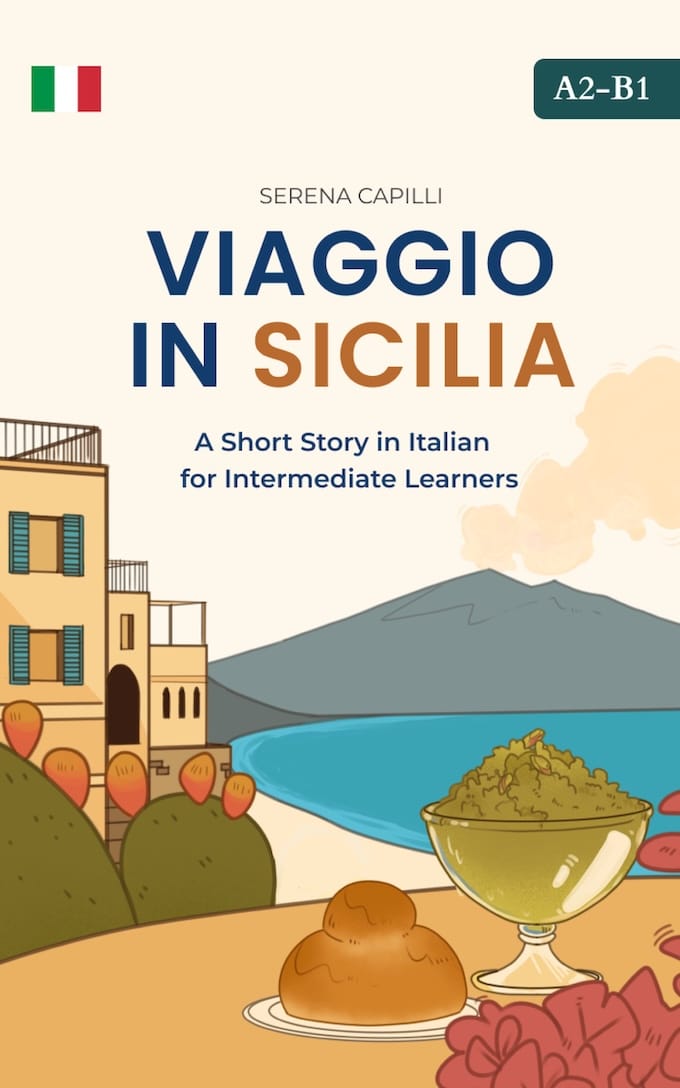
- My Italian short stories: easy stories set in Italy that help you consolidate what you learn and pick up new words in context. Two of them are set in Sicily!
Learn Italian before you move
The fastest way to get conversational before your move is one-on-one practice with a teacher. On Preply you can find Italian tutors for every budget and schedule, and try a first lesson to see if it’s a good fit.
This is an affiliate link: if you book a lesson, I may earn a small commission at no extra cost to you.
5. Travel within Italy and the rest of the world
Sicily has four international airports. The largest, Catania, has direct flights to many European cities, often cheap ones, and easy connections to the rest of the world through hubs like Rome, Milan, Munich, Amsterdam and Istanbul.
Long-distance buses connect Sicily to Naples and Rome, and ferries leave every day for Naples, Sardinia, Genoa and Malta.
Cons: Sicily is an island, and most travel outside it is by plane. Trains and buses do reach the rest of Italy, but the journey is long and not very comfortable. To live here, you need to be OK with flying.
6. A unique variety of landscapes
When you think of Sicily, you probably picture unspoiled beaches and seaside villages. You’d be right, and wrong. Sicily is also a large, mountainous island, with three mountain ranges, nature reserves and hiking trails you can enjoy most of the year thanks to the mild climate. There are even a couple of ski resorts, where you can ski looking at the sea! And don’t forget: Sicily has three active volcanoes.
Because so many civilizations conquered Sicily over the centuries, every town is different: Siracusa will make you feel in Spain, the Valley of the Temples in Agrigento will take you to Greece, and Mazara del Vallo will remind you of Tunisia.
Cons: cities like Palermo, Catania and Messina can be pretty chaotic. If you don’t like a hectic Mediterranean pace, avoid them. Some cities, especially Palermo and Catania, also have a trash problem. Many smaller towns, on the other hand, are spotless.

7. Is Sicily safe?
As a well-traveled woman, I feel that daily life in Sicily is safe, and many expats say the same. I know Sicily has a reputation because of the Mafia, but it would be wrong to connect it to the safety of everyday life: it’s a criminal organization with no interest in ordinary residents or tourists. In the big cities, just use the same common sense you’d use in any European city.
Besides, Sicilians are very helpful: if anything happens, you can be sure your neighbors will show up and give you a hand.
8. Buying a house in Sicily
Sicily is a dream destination for many people: low property prices, a warm climate and delicious food sound like a win-win. But buying a property here has its difficulties, like anywhere else.
I generally discourage buying 1-euro homes. They look like a great deal, but they come with a lot of constraints and red tape, and most of them are in remote villages that are picturesque but lack services.
My advice: rent for at least a few months first and use it as a base to explore different areas (Sicily is big!). If you really fall in love with a place, hire a local professional to help you through the process.
My favorite places to start your search
| Type | Places |
|---|---|
| Historic cities | Siracusa, Messina |
| Historic towns | Ragusa, Modica, Scicli, Noto, Trapani, Marsala, Mazara del Vallo |
| Beach towns | Letojanni, Sciacca, Castellammare del Golfo, Capo d’Orlando, Villafranca Tirrena, Avola |
| Hilltop villages (borghi) | Montalbano Elicona, Gangi, Erice |
Is it easy to find a job in Sicily?
Sadly, no. Sicily has one of the highest unemployment rates in Europe, and many young people move to other parts of Italy or Europe. Since the pandemic, some have come back to work remotely. If you’re not self-employed or a remote worker, finding a regular job can be hard: most people work in tourism, agriculture or the public sector, and Catania and Palermo offer the best opportunities. Salaries are low, which is also why the cost of living is low.
Let’s talk about Sicily
Every day I get emails asking what life in Sicily is like and where to go. I’m happy about the interest in my home island! But I work full time as an educator and author, so I can’t answer personal relocation questions in my spare time. If you’d like to hear about my firsthand experience living and working remotely in Sicily, you can book a call with me here.
Frequently asked questions
How much does it cost to live in Sicily?
In my experience, a comfortable life in Sicily costs around $1,500 to $2,500 a month, depending on where you live and your lifestyle. Rent is the biggest expense and is higher in Palermo and in tourist areas.
Can Americans move to Sicily?
Yes, but for stays longer than 90 days you need a visa. The most common options are the digital nomad visa for remote workers and the elective residence visa for people with passive income, such as retirees.
Do I need to speak Italian to live in Sicily?
You can get by without it at first, especially with younger people, but learning at least the basics makes daily life, paperwork and friendships much easier.
Want a taste of Sicily before you move? Two of my graded readers are set on the island: follow Fiona as she looks for her Sicilian roots, or a team from Milan on a week in Taormina. Learn Italian and discover Sicily at the same time:

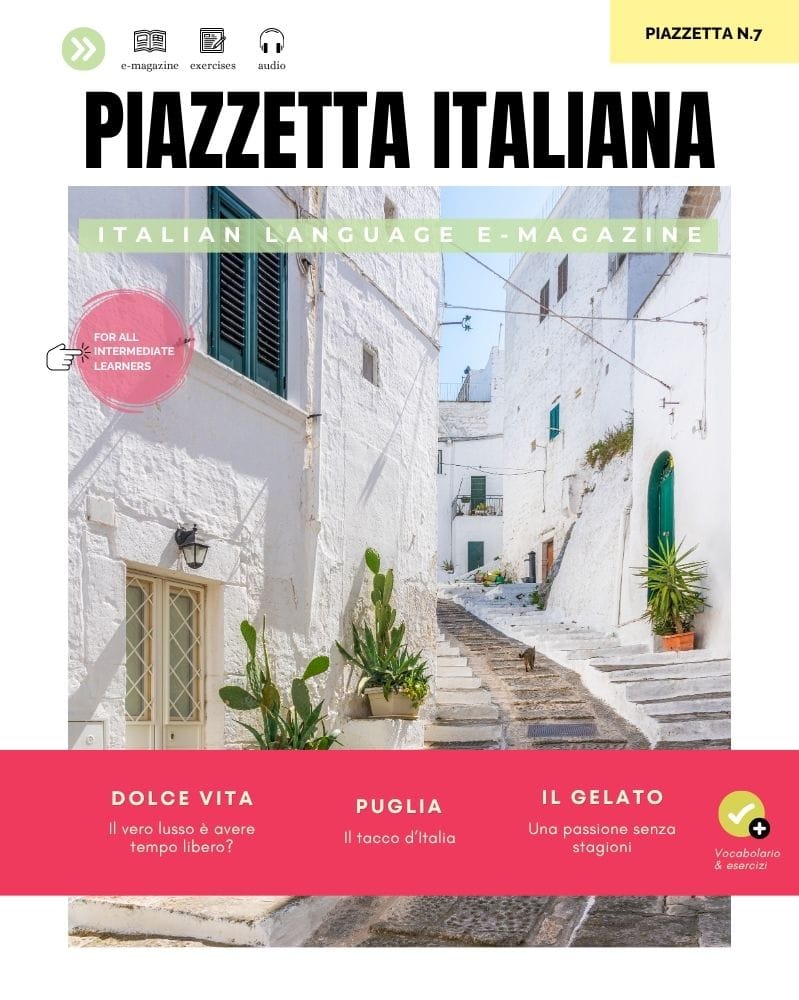
Piazzetta Italiana
Level A2/B1
My magazine for learners: real articles about Italian culture and everyday life, with vocabulary and audio.