Ancora is one of those Italian words that you hear all the time, with several different meanings: “still,” “again,” “not yet,” “more” and “even.” As always, the context tells you which one is meant.
My advice: memorize one or two examples for each meaning, then reuse them by changing the vocabulary. That’s how these little words become natural.
In short
- Still: Sei ancora qui? (Are you still here?)
- Again: Prova ancora! (Try again!)
- Not yet: Non ho ancora mangiato. (I haven’t eaten yet.)
- More: ancora un minuto (one more minute)
- Even + comparative: ancora più caldo (even hotter)
Ancora = still
The most common meaning of ancora is “still”: the action or situation continues up to now. It’s very common with stare + gerund, but you can use it with any tense.
| Italian | English |
|---|---|
| Stai ancora dormendo? | Are you still sleeping? |
| Sto ancora aspettando l’autobus. | I’m still waiting for the bus. |
| Sto ancora cucinando. | I’m still cooking. |
| Sono ancora qui. | I’m still here. |
| Abiti ancora a Milano? | Do you still live in Milan? |
Ancora = again
Ancora also means “again,” when you do something one more time. In these sentences you can replace it with its synonym di nuovo.
| Italian | English |
|---|---|
| Fallo ancora! / Fallo di nuovo! | Do it again! |
| Prova ancora! / Prova di nuovo! | Try again! |
| Ancora tu?! | You again?! |
Non… ancora = not yet
With non, ancora means “not yet.” It’s very common with the passato prossimo, and ancora usually goes between the auxiliary and the participle.
| Italian | English |
|---|---|
| Non ho ancora mangiato oggi. | I haven’t eaten yet today. |
| Non sono ancora stato in Italia. | I haven’t been to Italy yet. |
| Non abbiamo ancora preparato la colazione. | We haven’t made breakfast yet. |
| Hai finito? Non ancora! | Are you done? Not yet! |
The opposite of non… ancora is già (already): Hai già mangiato? No, non ho ancora mangiato.
Ancora = more
When you want to add a bit more of something (more coffee, more time, more days), Italians often use ancora, not più. You can also use altro: Vuoi dell’altro caffè?
| Italian | English |
|---|---|
| Vuoi ancora un po’ di zucchero? | Do you want some more sugar? |
| Ancora due giorni e poi parto! | Two more days and then I leave! |
| Ancora un minuto, per favore. | One more minute, please. |
| Ancora una volta. | One more time. |
Ancora più, ancora meno = even more, even less
Lastly, ancora + più or meno + adjective means “even more” or “even less.”
| Italian | English |
|---|---|
| ancora più caldo | even hotter |
| ancora più economico | even cheaper |
| ancora meno attraente | even less attractive |
| Oggi fa ancora più freddo di ieri. | Today it’s even colder than yesterday. |
Fun fact: àncora or ancóra?
The same spelling has two words with different stress. Ancóra (stress on the o) is the adverb we’ve seen in this post. Àncora (stress on the first a) is a noun: “anchor,” the one of a ship! In writing, the accent mark is not used; the context tells you which one it is.
Exercise: what does ancora mean?
Read the sentences and decide: still, again, not yet, more or even?
- Non ho ancora finito il libro.
- Sei ancora arrabbiato con me?
- Mi dai ancora un po’ di pane?
- Questo esercizio è ancora più difficile!
- Ho sbagliato, devo farlo ancora.
- Ancora cinque minuti e arriviamo.
Show the answers
- not yet
- still
- more
- even
- again
- more
Frequently asked questions
What does ancora mean in Italian?
Ancora can mean still (Sei ancora qui?), again (Prova ancora), more (ancora un minuto) and, with più or meno, even (ancora più caldo). With non, it means not yet: Non ho ancora mangiato.
How do you say “not yet” in Italian?
Non… ancora: Non ho ancora finito (I haven’t finished yet). As a short answer, just say Non ancora!
What is the difference between ancora and di nuovo?
When ancora means “again,” it is a synonym of di nuovo: Prova ancora = Prova di nuovo. But di nuovo can’t mean still, more or not yet.
Little words like ancora, già and di nuovo are easier to learn in a story than in a list. Here are three of my graded readers, with audio:
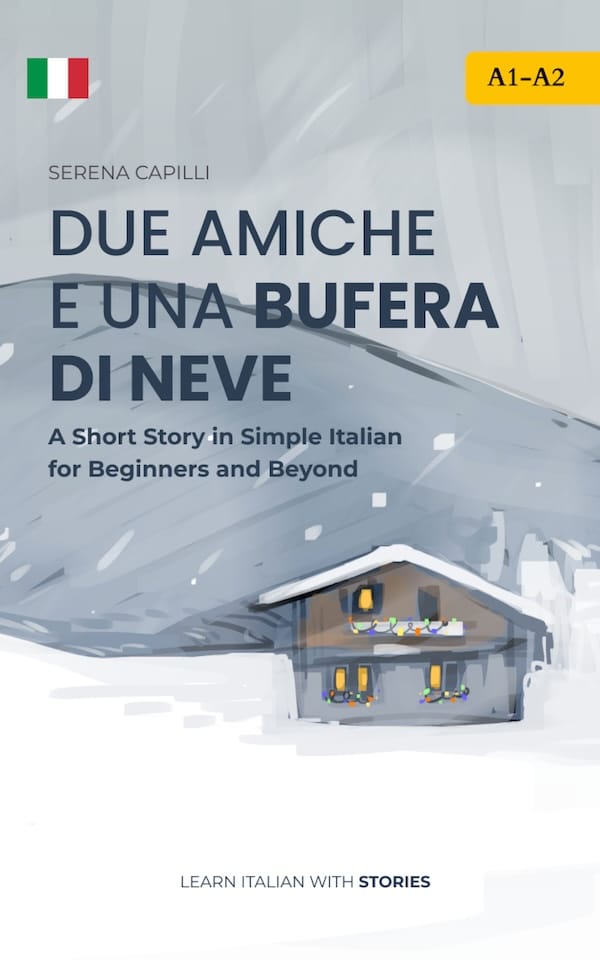
Due Amiche e una Bufera di Neve
Level A1/A2
Costanza and Anna get stuck in a snowstorm, with a surprise.
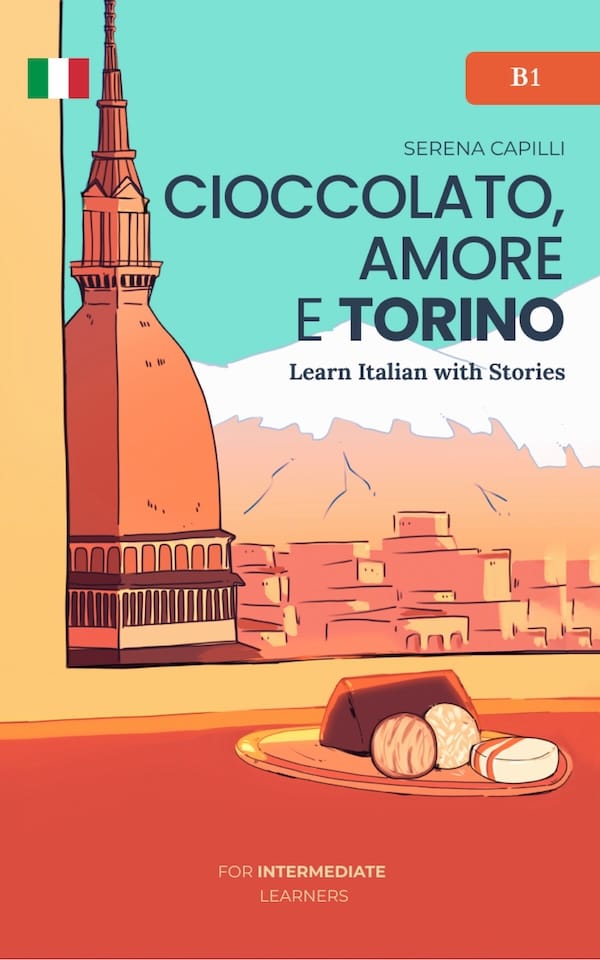
Cioccolato, Amore e Torino
Level B1+
Marie’s journey continues in Turin, between love, creativity and chocolate.