
My method
The Paguro Method: how I teach Italian through stories
Learn Italian with stories you can understand and chunks you can use straight away. It’s the method behind my graded readers, my podcast, my magazine and my classes.
30,000+ copies sold14 graded readersLevels A1 to B2Teaching since 2014
In short
- The Paguro Method is comprehensible input built around chunks: word combinations you can reuse in conversation.
- You start from a story you can understand, not from a grammar rule or a word list.
- You read and listen to the same chapter, then retell and discuss it, so what you understood becomes what you can say.
- It works from A1 to B2: on your own, in a small group or with a teacher.
- Teachers can use it as a ready made routine for conversation classes.
Start here
Where do you want to start?
Learning on your own
Read your way into Italian
Pick a graded reader for your level. Read a chapter, listen to it, then talk about the story.
Learning with a teacher
Speak in a small group
Join a Speaking Club (A2, B1 or B2/C1). Places are very limited, so the waitlist comes first.
Prefer one to one? See my private classes
Teaching Italian
Use it in your classes
Get my free guide with a ready made routine for conversation lessons, from one chapter to one conversation.
Where it started
Why I created the Paguro Method
You study grammar and do the exercises. Then someone asks you an unexpected question, and your mind goes blank. For years I saw this in my conversation classes, and I felt stuck between three options:
Empty conversations
Asking a beginner to keep up a free conversation is like asking someone to run before they can stand.
Overwhelming native content
One sentence of a newspaper or a film can hold several new words, an idiom and a new tense. You feel lost, not challenged.
Lifeless textbook dialogues
The language is accessible, but the topics rarely give you something you want to talk about.
My students needed a fourth option: a story they could understand. So I started writing short Italian stories for my classes. One day a student told me: “You should publish these.” So I did. Read the whole story
You cannot speak a language from nothing.
The idea behind everything I create
The method
The three principles of the Paguro Method
1
Stories first
You learn more when you want to know what happens next. Every chapter is short enough to finish in one sitting.
2
Chunks, not lists
Word combinations you can reuse in conversation, not isolated words to memorize. You meet them again and again.
3
Read and listen
Every book has audio in clear, slow Italian, plus exercises with answer keys.
Reviews
What learners say
Serena’s writing captures your interest and makes it easy to learn new phrases.
Lucie S. · Verified Amazon purchase
This is one of the most effective Italian learning tools on the market.
Amazon customer · Due Amiche e un Album di Fotografie
Amazing book!! It’s the first foreign language book where I have found all the skills together to learn Italian.
Maria · B1/B2 learner, Surrey, UK
The heart of the method
What is a chunk?
A chunk is a group of words that Italians always use together: a ready made piece of language.
If you learn a single word, you still don’t know how to use it. If you learn the whole chunk, you can use it today.
✕ voglia = desire. And now?
✓ Ho voglia di un caffè. I feel like a coffee.
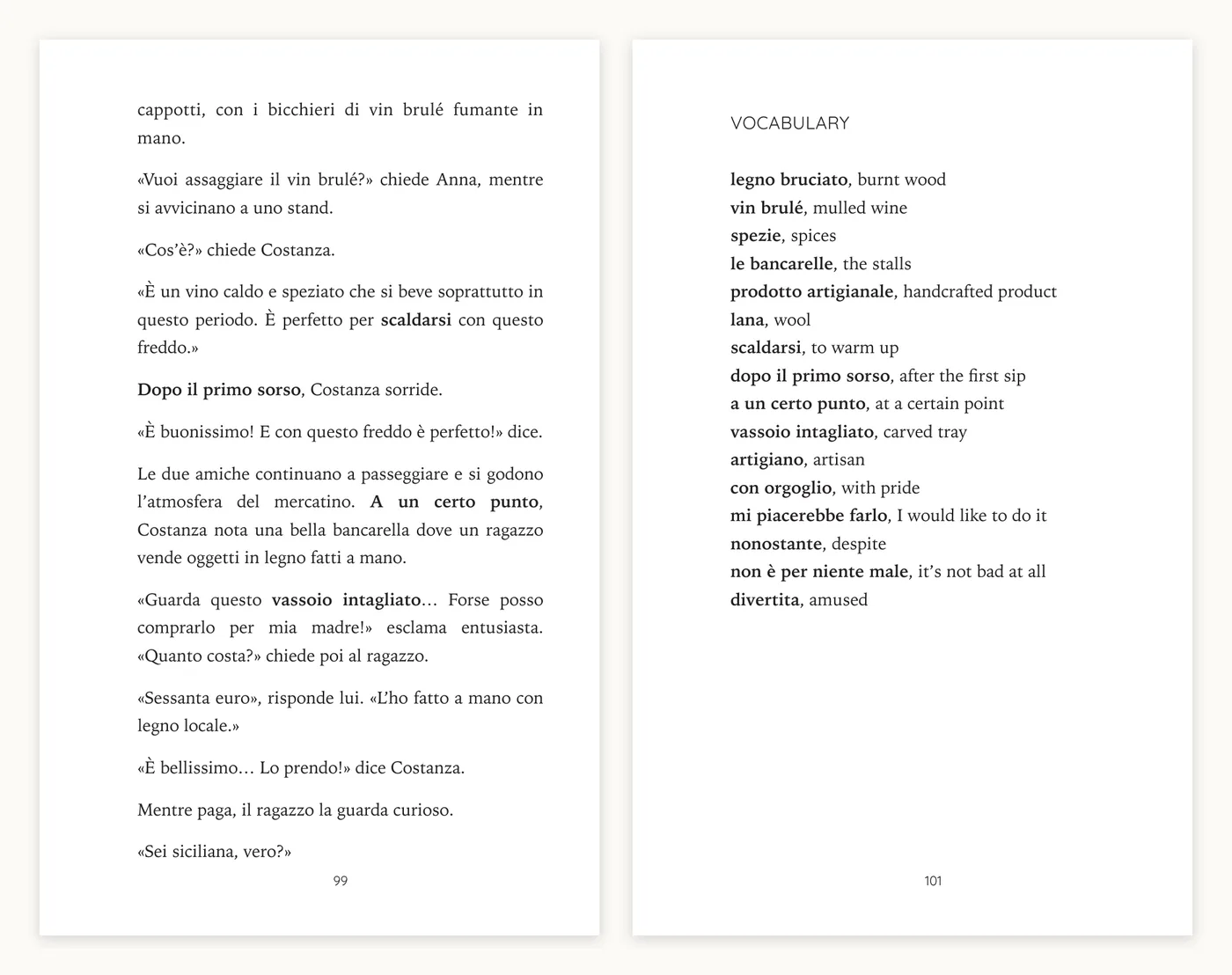
In my books, chunks are in bold in the story, and you find them again in the vocabulary.
A few chunks you’ll find everywhere in my stories
| Chunk | Meaning | In a sentence |
|---|---|---|
| ho voglia di | I feel like | Ho voglia di un gelato. I feel like an ice cream. |
| non vedo l’ora di | I can’t wait to | Non vedo l’ora di partire. I can’t wait to leave. |
| mi sa che | I think, I guess | Mi sa che piove. I think it’s going to rain. |
| dai! | come on! | Dai, andiamo! Come on, let’s go! |
Step by step
How it works: from reading to speaking
Every chapter becomes a complete lesson: on your own, with a language partner or with a teacher.
1
Read
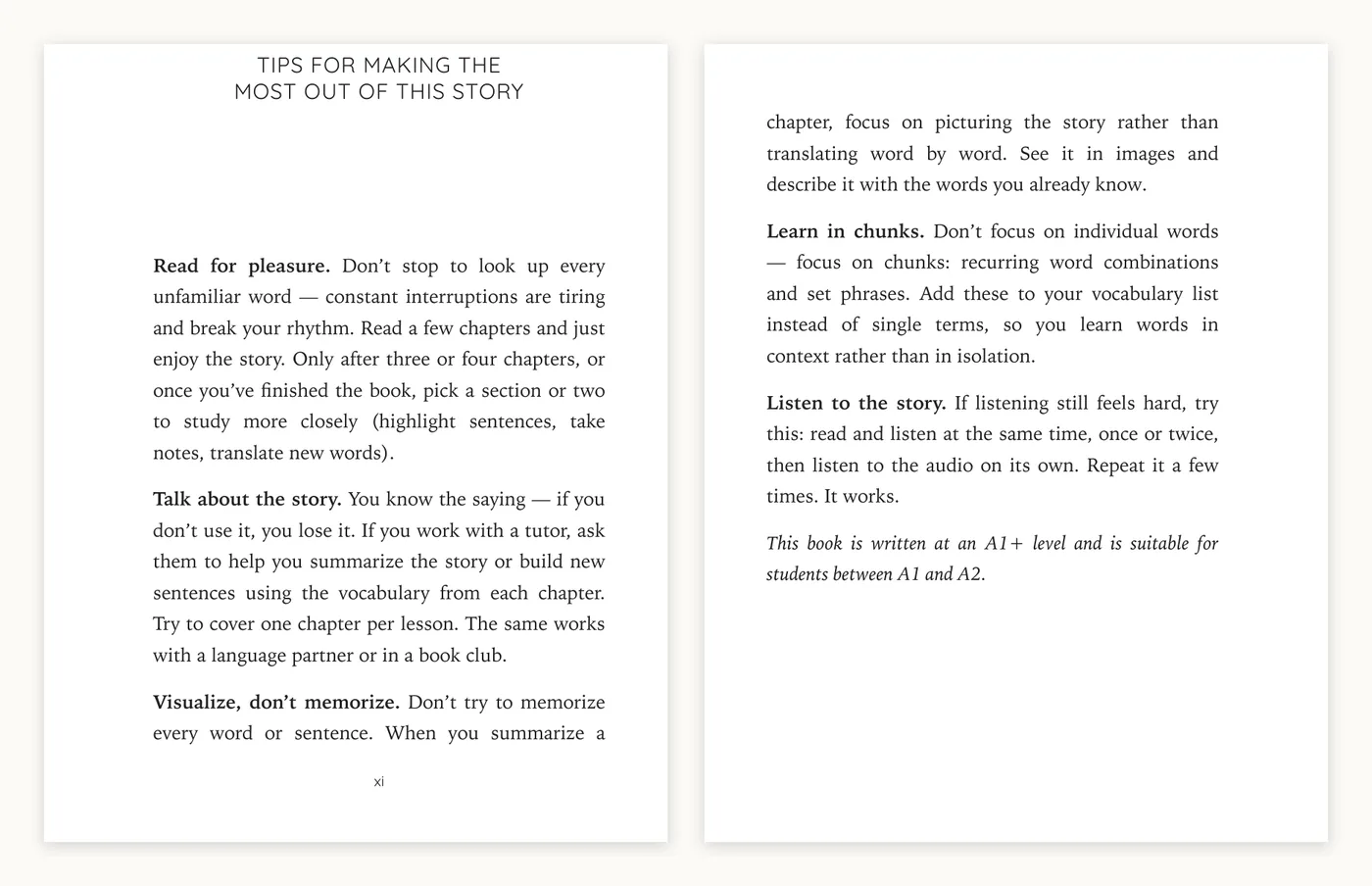
Read a short chapter for the story. You don’t need every single word.
2
Listen
Listen to the same chapter. Now the words have a sound and a rhythm.
3
Check
Do the exercises and check the answer key.
4
Retell
Summarize the chapter out loud, in your own words.
5
Talk
Describe the characters, give your opinion, imagine a different ending.
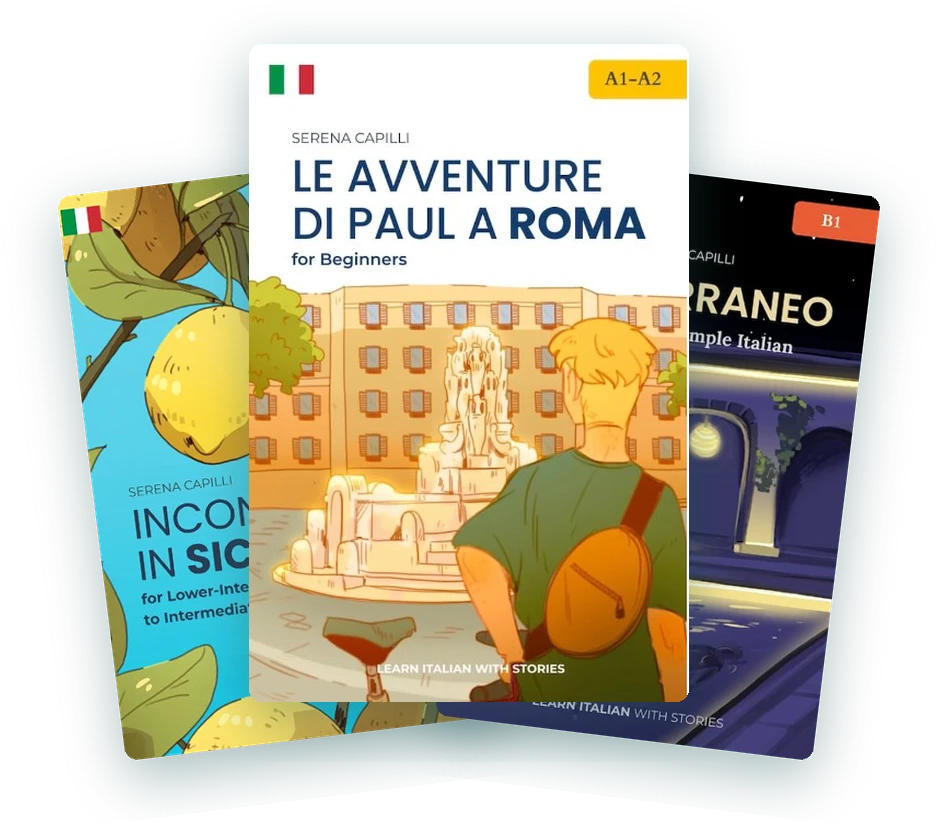
My graded readers
Choose your starting point
Choose your level first, then the story that interests you. Every book is set in a different corner of Italy.
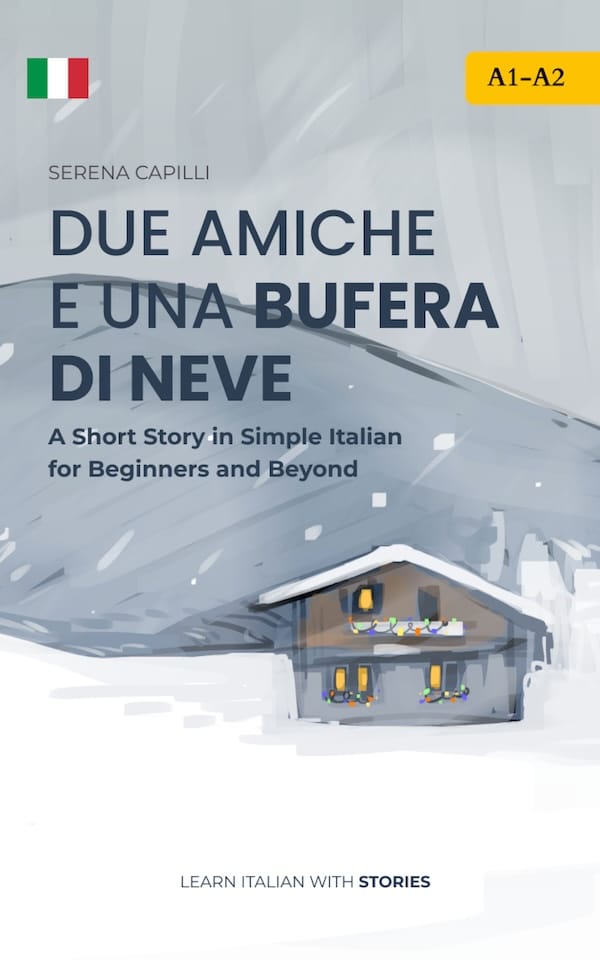
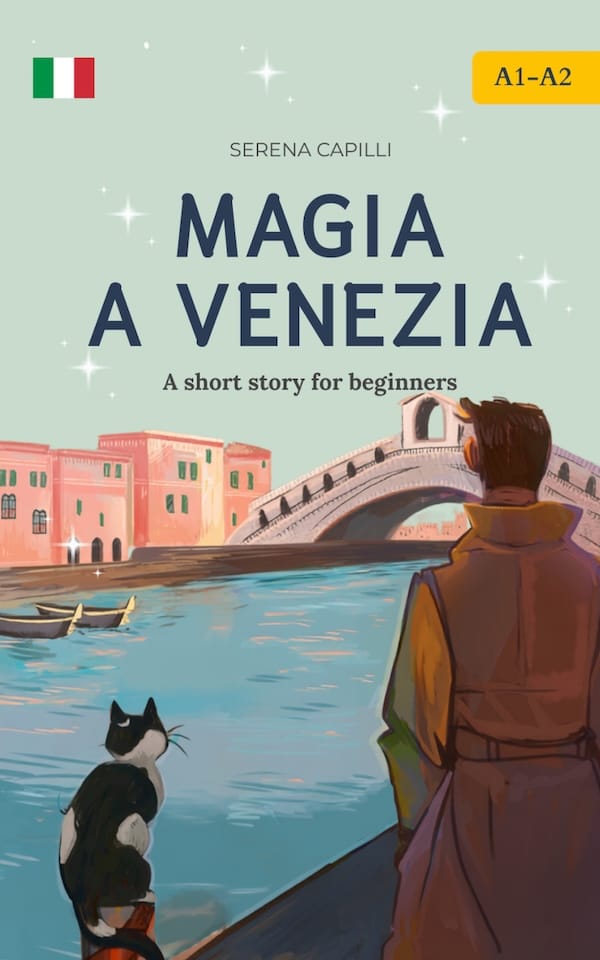
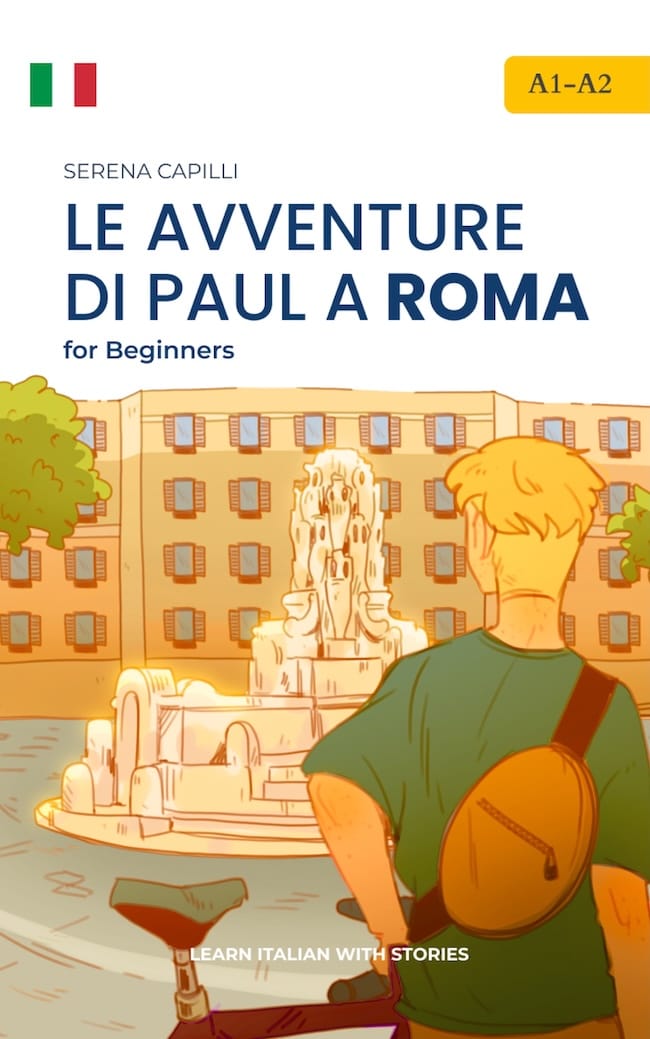
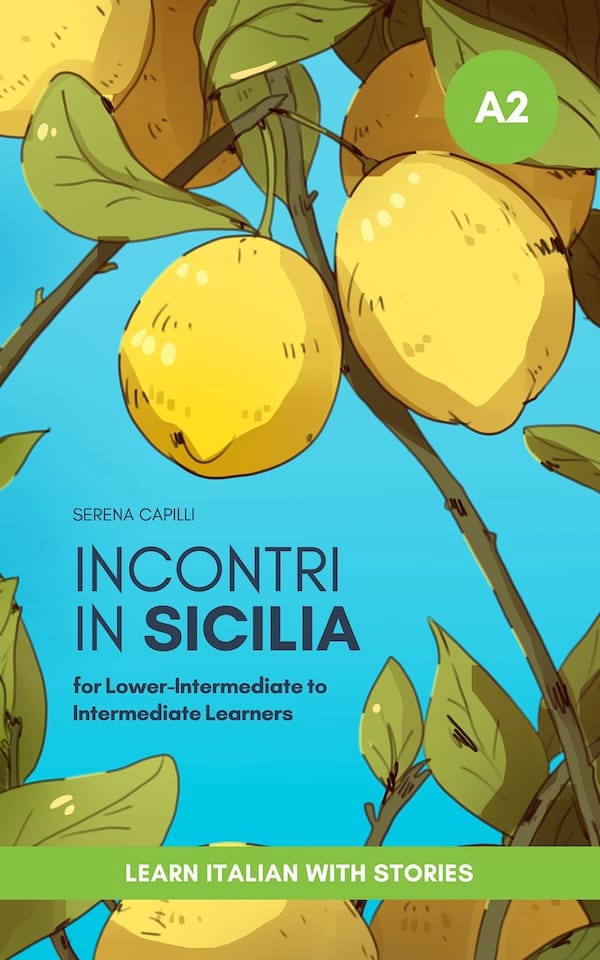
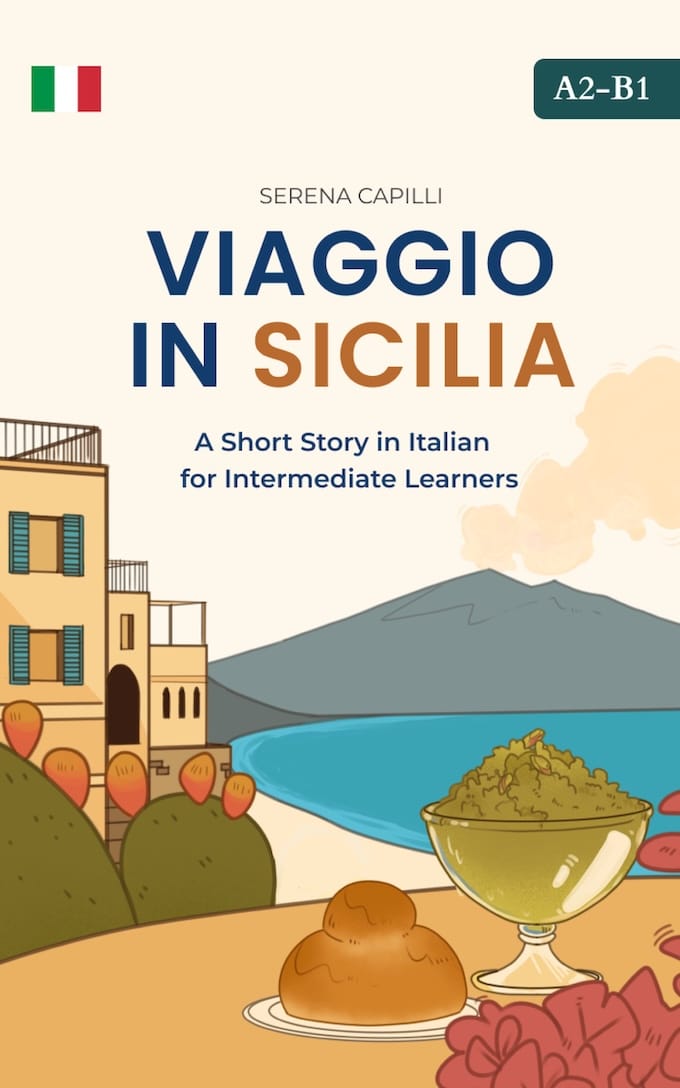
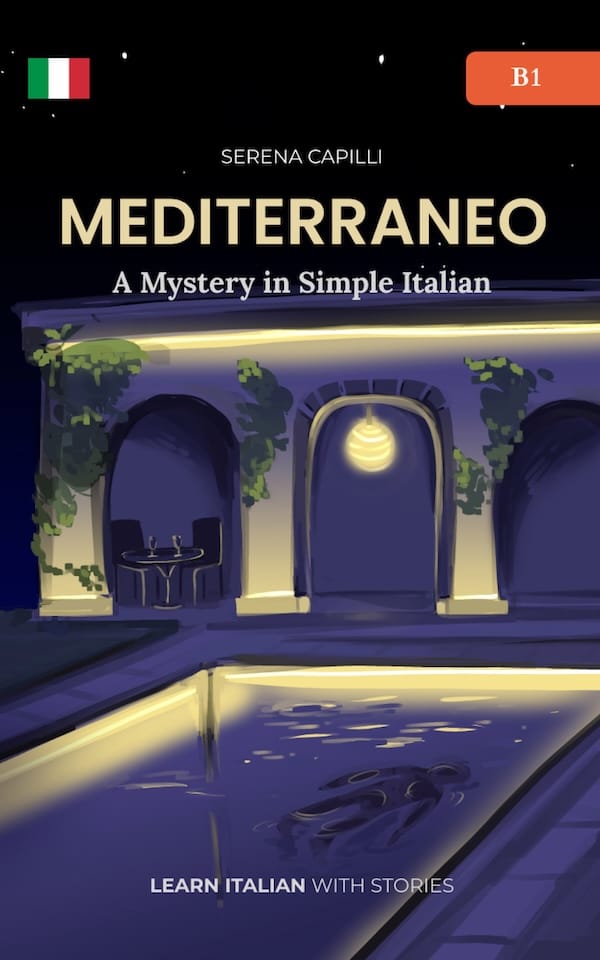
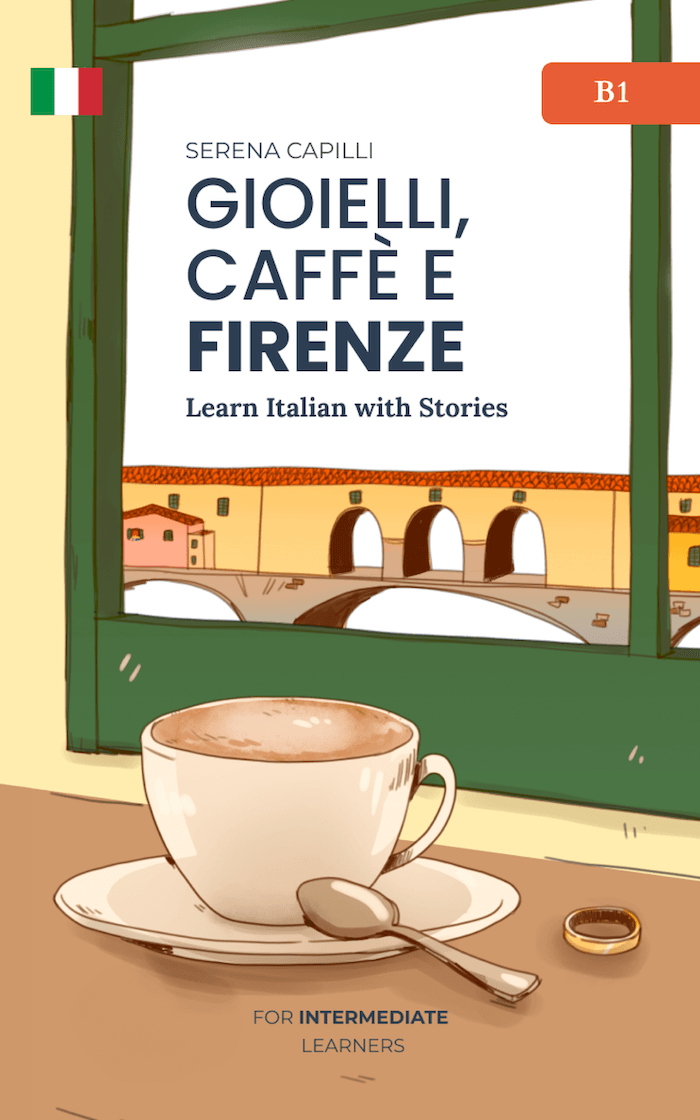
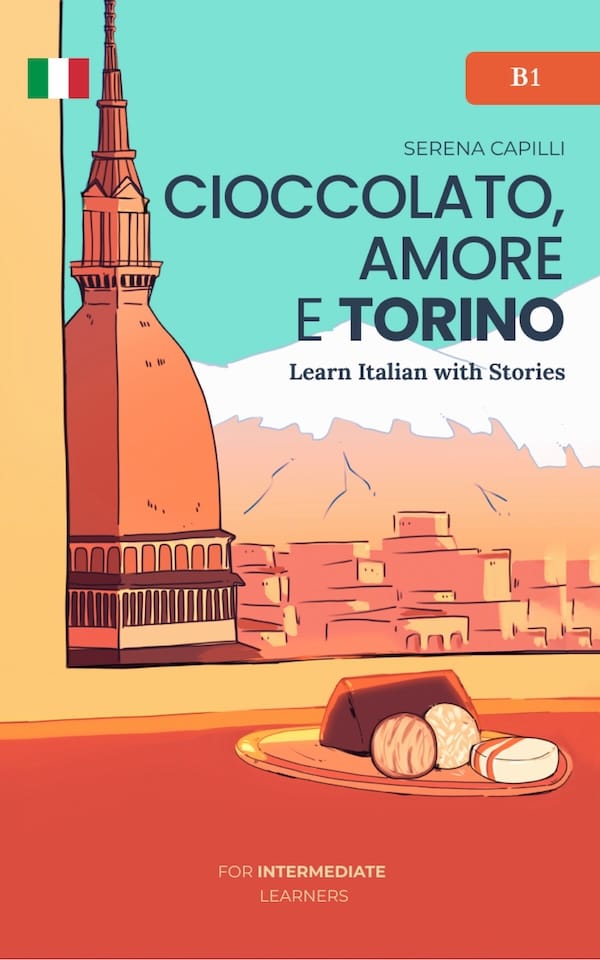
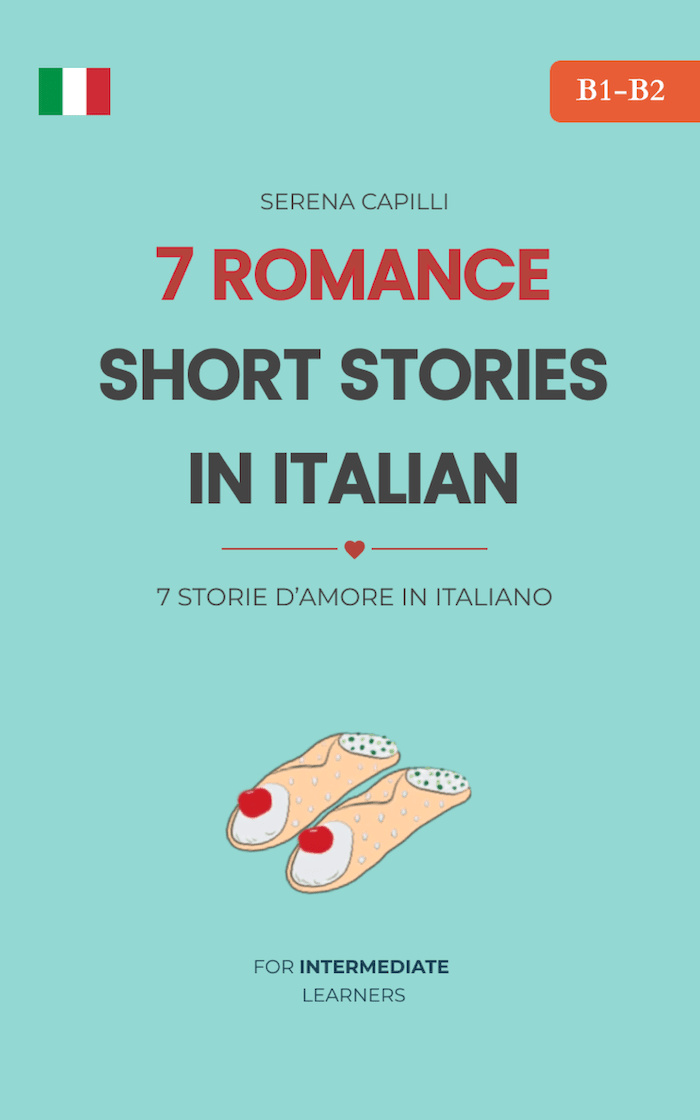
See the catalog as a table: level, setting and theme
| Book | Level | Setting | Theme |
|---|---|---|---|
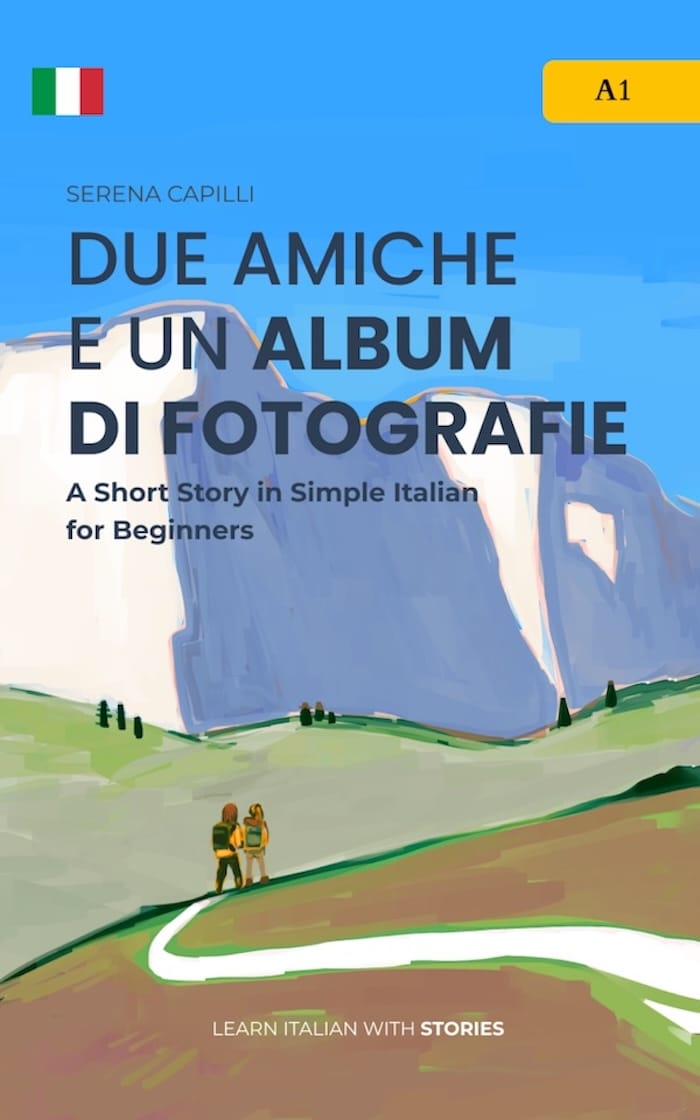
| Due Amiche e un Album di Fotografie | A1-A2 | South Tyrol | Friendship and travel |
| Due Amiche e una Bufera di Neve | A1-A2 | Valle d’Aosta | Friendship and mountain life |
| Magia a Venezia | A1-A2 | Venice | Magic, history and mystery |
| Le Avventure di Paul a Roma | A1-A2 | Rome | Everyday life and travel |
| Incontri in Sicilia | A2-B1 | Sicily | Heritage, identity and family |
| Viaggio in Sicilia | A2-B1 | Taormina, Sicily | A start-up team on a trip |
| Mediterraneo | A2-B2 | Puglia | Mystery, travel and culture |
| Gioielli, Caffè e Firenze | B1-B2 | Florence | Art, romance and mystery |
| Cioccolato, Amore e Torino | B1-B2 | Turin | Love, creativity and city life |
| 7 Romance Short Stories in Italian | B1-B2 | Italy and beyond | Relationships and everyday life |
Why it works
The Paguro Method vs a traditional course
Grammar still matters: grammar is the map. But the story is the journey, and the journey is what makes you want to keep going.
| A traditional course | The Paguro Method | |
|---|---|---|
| Where you start | A grammar rule | A story you can understand |
| Vocabulary | Lists of single words to memorize | Chunks you can reuse in conversation |
| Grammar | Explained first, then practiced | Noticed in the story, then explained |
| Listening | Native speed, or short textbook dialogues | Slow, clear audio of the same story |
| Speaking | Free conversation from nothing | Retelling and discussing something you understood |
| What keeps you going | Finishing the unit | Wanting to know what happens next |
A great fit if you understand more than you can say, freeze when the conversation leaves the usual topics, or feel stuck at B1.
Small-group classes
Practice the method with me: the Speaking Clubs
A few times a year I open small groups for intermediate and advanced learners, with the same structure and accountability as my private classes.
A2
A2 Speaking Club
For learners who can handle everyday situations and want to start telling stories.
B1
B1 Speaking Club
For learners who understand a lot and want to give opinions and keep a conversation going.
B2
B2/C1 Speaking Club
For advanced learners who want nuance, precision and natural Italian.
Places are very limited. Classes are $40 to $45 per person per class. Join the waitlist and you’ll be the first to know when the next group opens.
Prefer one to one? See my private classes
For teachers and Italian schools
From reading to conversation: a routine for your classes
Students need something concrete to talk about. Teachers need a structure that doesn’t take hours of preparation. The book becomes the structure of the lesson.
1
Read
Before the lesson, students read the chapter for the general meaning.
2
Listen
They listen to the audio, with the text and then without it.
3
Write
They prepare 5 to 8 sentences: a summary, expressions, questions.
4
Speak
In class, the story becomes the starting point for the conversation.
The best book isn’t the hardest one: it’s the one students understand well enough to talk about.
From my guide for teachers
A 50 minute lesson plan you can reuse
| Time | Stage | What happens |
|---|---|---|
| 5 min | Warm up | What happened? What struck you? |
| 10 min | Retelling | Students rebuild the chapter together. |
| 20 min | Discussion | Characters, choices, themes, culture and personal connections. |
| 10 min | Language | Reuse vocabulary and useful expressions from the text. |
| 5 min | Next step | Predict what happens next and assign the next chapter. |
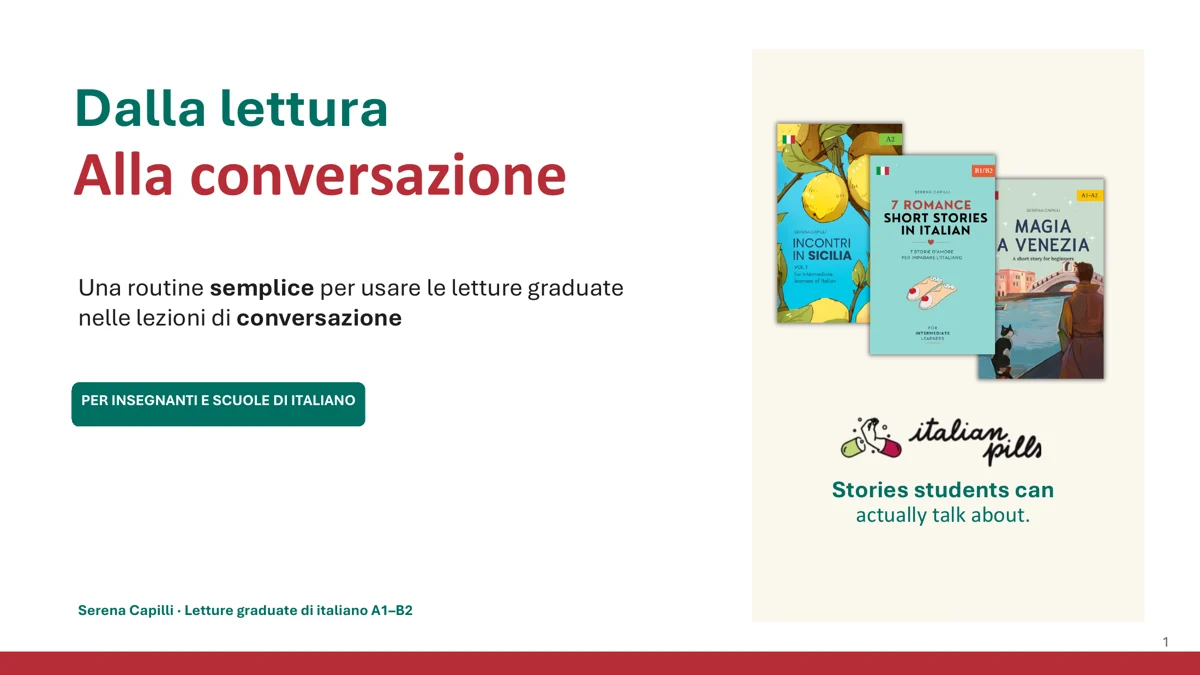
Free PDF guide
Get the guide for teachers
The full routine, a homework checklist to copy and my catalog by level, in 12 pages (in Italian).
Choosing a book for your class? Write to me with the level and the number of students. Free copies are available for class adoptions.

Ciao, I’m Serena!
I grew up in Sicily and today I live in Rome. I speak seven languages, so I know exactly what it feels like to look at a page and understand only half of it.
My books were born in my conversation lessons. I noticed that a short story helped my students speak, even at the lowest levels: they retold what happened, talked about the characters and said what they would do in their place. In 2022 those stories became my first graded readers, and I still write every book myself.
- Certified Italian teacher, Ca’ Foscari University of Venice
- Teaching Italian to adult English speakers since 2014
- Author of 14 graded readers in Italian, Spanish and French
- 30,000+ copies sold
FAQ
Frequently asked questions
What is the Paguro Method?
The Paguro Method is the way I teach Italian: comprehensible input built around chunks you can use straight away. You read and listen to short stories written for your level, you learn useful word combinations in context, and then you use them to speak. It’s the method behind my graded readers, my podcast, my magazine and my classes.
Is the Paguro Method based on comprehensible input?
Yes. Comprehensible input means Italian you can genuinely understand, not native content that leaves you lost after one sentence. My stories use simple grammar, high frequency vocabulary and a clear storyline, so you can follow them and learn from them at the same time.
What is a chunk in language learning?
A chunk is a group of words that native speakers always use together, like a ready made piece of language. For example, ho voglia di means I feel like. If you learn the whole chunk instead of the single word voglia, you can use it in a sentence straight away.
Do I still need to study grammar?
Yes. Grammar still matters: grammar is the map. But the story is the journey, and the journey is what makes you want to keep going. In my books you meet grammar in context first, so the rules make sense when you study them.
What level do I need to start?
You can start at any level from A1 to B2. My graded readers go from A1 to B2, the Piazzetta Italiana podcast is for A2 and B1 learners, and my private classes are for students from A2 upward.
Can I use the Paguro Method on my own?
Yes. Read a short chapter, listen to the audio, check your answers in the exercises, then summarize the story and talk about it with a tutor, a language partner, or even out loud by yourself.
How can teachers use graded readers in conversation classes?
Assign one chapter before the lesson: students read it, listen to the audio and write a short summary with three useful expressions. In class they retell the chapter, compare interpretations, reuse the new expressions and imagine what happens next. The book becomes the structure of the lesson.
What does a 50 minute conversation lesson with a graded reader look like?
5 minutes of warm up (What happened? What struck you?), 10 minutes to retell the chapter together, 20 minutes to discuss characters, choices, themes and culture, 10 minutes to reuse vocabulary and expressions from the text, and 5 minutes to predict what happens next and assign the next chapter.
Do you offer group classes with the Paguro Method?
Yes. A few times a year I open small-group Speaking Clubs for A2, B1 and B2/C1 learners, with the same structure and accountability as my private classes. Places are very limited and classes are $40 to $45 per person per class. You can join the waitlist on italianpills.com to know when the next group opens.
How much time do I need every day?
A chapter is short enough to finish in one sitting. It’s better to read and listen a little every day than to study a lot once a week.
Your first step
Start with one story
Pick a book for your level, read the first chapter, listen to it, then tell it out loud. Or practice it with me in a small group.
Know a teacher or a learner who would like this? Share it on LinkedIn