by Serena | Jun 2, 2025 | learning tips
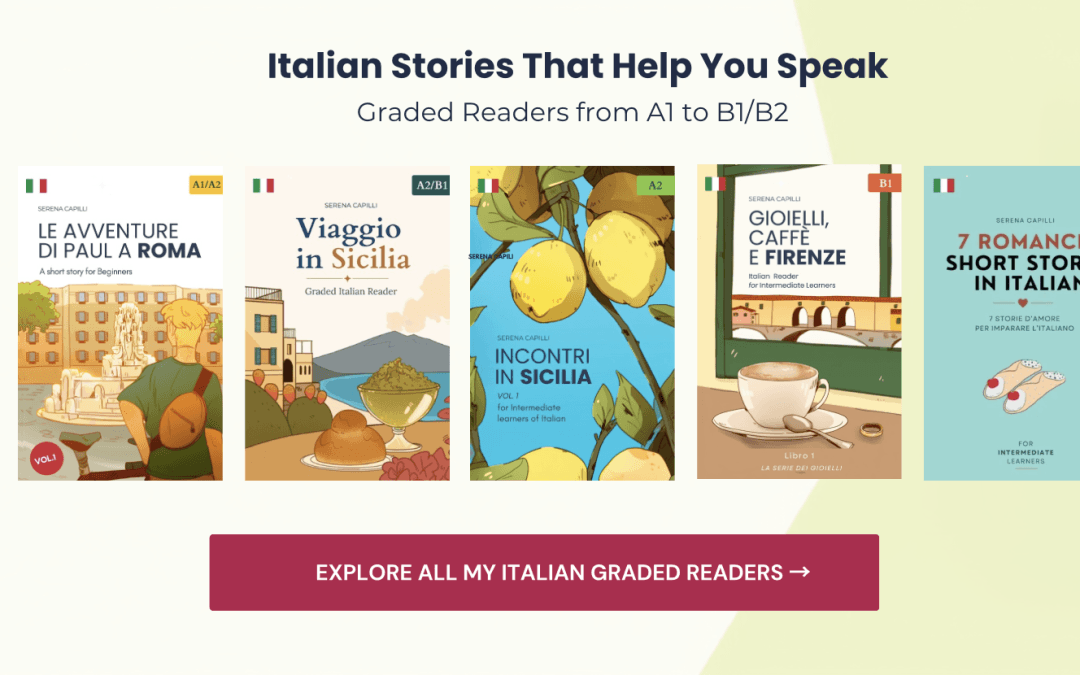
Teacher’s tip: at A1 and A2, a good textbook gives your Italian structure. On its own, though, it’s not enough. What works best with my students is a mix: a textbook, some grammar practice and an easy reader. Reading is where everything you studied in...

by Serena | Jun 2, 2025 | Italian grammar
What does “Quale” mean in Italian? In Italian, quale means which or sometimes what, and it’s used when you’re choosing between specific people or things. If you’re ever asking someone to pick from options or give precise information, quale is...

by Serena | Jun 1, 2025 | learning tips
I’ve Been There, I Get It. I’ve been teaching Italian for over a decade and have worked with thousands of learners. And while the internet is overflowing with “the best methods,” honestly? I keep seeing the same problems show up again and again. Most...

by Serena | May 20, 2025 | Italian grammar
What Does “Ogni” Mean? Ogni is a small but essential word in Italian. It means “every” or “each.” It never changes form — it stays the same regardless of gender or number. Even though its meaning is plural, ogni is always followed...

by Serena | May 16, 2025 | Italian grammar, parole difficili
The meaning of ciò Ciò is a pronoun used to refer to an idea, fact, or action that was previously mentioned or understood from the context. In English, it often translates as: what (at the beginning of a statement) that which this / that (when referring to a...