A good vocabulary is one of the strongest signs of how well you’ll understand new texts and real conversations. After 10 years of teaching Italian, these are the books I use in my classes or recommend to my students for self-study, plus the graded readers I write myself.
In short
- Beginners (A1/A2): Le prime 1000 parole italiane + Due Amiche e un Album di Fotografie
- Intermediate (A2 to B2): Attiva il lessico and Le prime 3000 parole italiane + Viaggio in Sicilia
- Idioms and natural Italian (B2/C1): Italiano per modo di dire and Hai voluto la bicicletta
- My tip: pair a textbook (to practice) with a graded reader (to meet the words in a story).
Some links are affiliate links: if you buy through them, I may earn a small commission at no extra cost to you.
For beginners (A1/A2)
Le prime 1000 parole italiane

Level: A1/A2
Best for: the most common words
Exercises and activities built around the 1,000 most common Italian words. Answer keys and recap charts are included, so it works for self-study and in class.
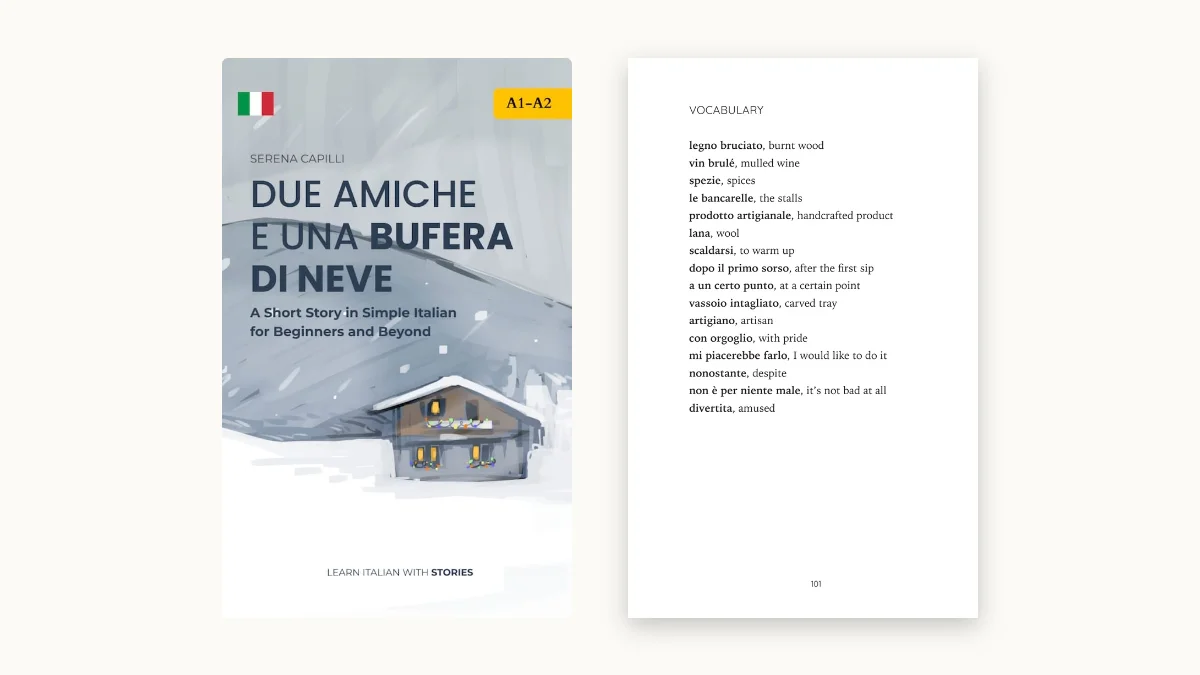
📖 Pair it with a story: my Due Amiche series. Start with Due Amiche e un Album di Fotografie (A1), then read the sequel, Due Amiche e una Bufera di Neve (A1/A2).
For intermediate learners (A2 to B2)
Attiva il lessico A2/B1

Level: A2/B1
Best for: vocabulary by topic, in context
Short units on everyday topics (traveling, cooking, ordering). New words come in short texts or dialogues, followed by exercises, plus a section on idioms and chunks.
Le prime 3000 parole italiane

Level: B1
Best for: a wider everyday vocabulary
The next step after the first 1,000 words: activities built around the 3,000 most common Italian words, with answer keys and recap charts.
Attiva il lessico B1/B2

Level: B1/B2
Best for: richer topics
Same structure as the A2/B1 volume, with topics that go further: art, music, health and describing someone’s personality.
📖 Pair it with a story: Viaggio in Sicilia (A2/B1) or Mediterraneo (B1).
For idioms and natural Italian (B2/C1)
Italiano per modo di dire

Level: A2 to C1
Best for: sayings, proverbs and idioms
One of my favorites: idioms and sayings organized by theme, to help you understand everyday Italian and sound more natural. Excellent for self-study.
Hai voluto la bicicletta

Level: B2/C1
Best for: verb expressions and idioms
For learners who want to get close to a native level: verb expressions and idioms in context, with dialogues and plenty of activities.
📖 Pair it with a story: 7 Romance Short Stories in Italian (B1/B2), full of natural conversations.
My graded readers: vocabulary in context
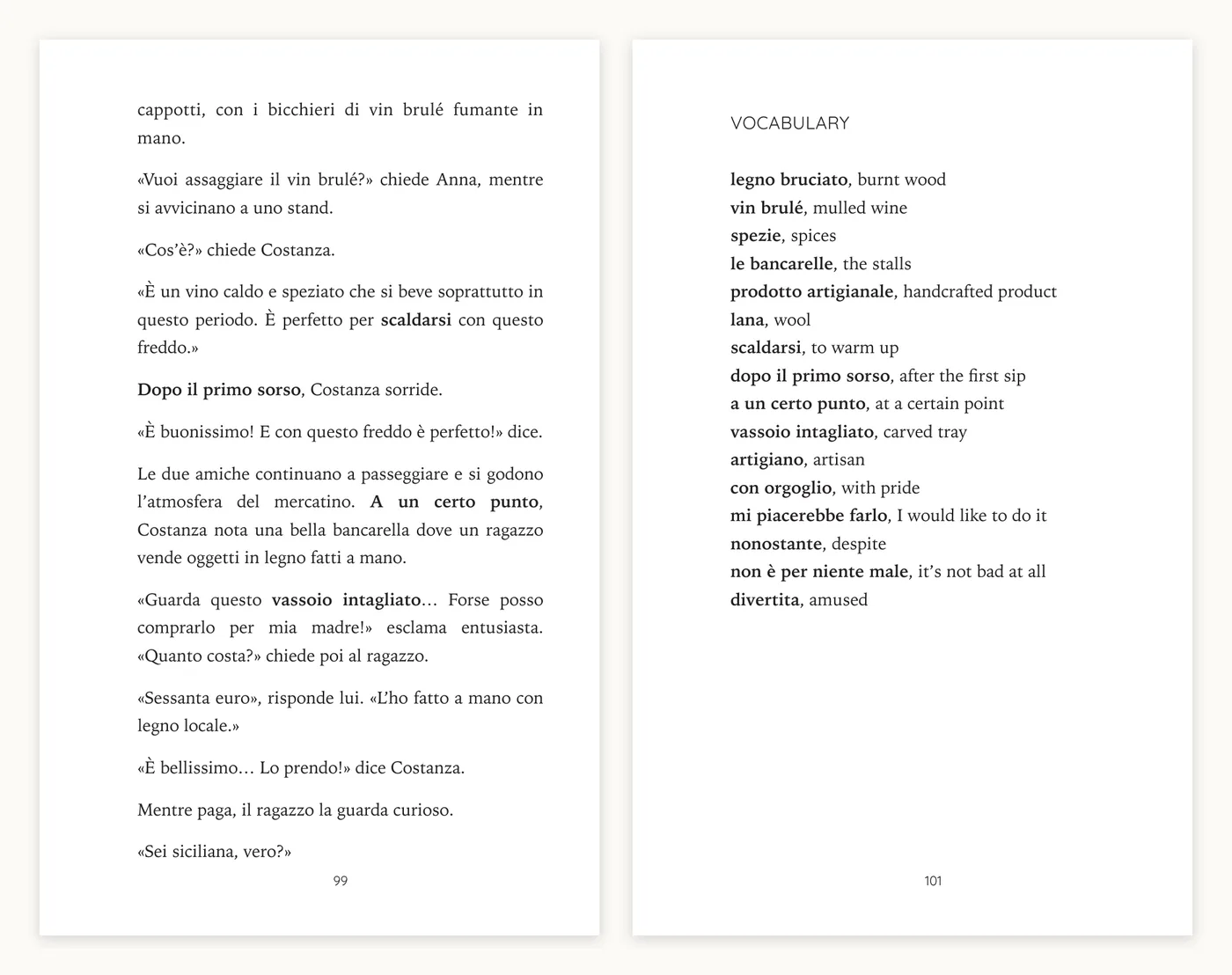
Textbooks are great for practice, but words really stick when you meet them again and again in a story. In my graded readers, every chapter ends with a bilingual vocabulary list of the chunks you’ve just read, plus exercises and audio.
| Book | Level | The story |
|---|---|---|
| Due Amiche e un Album di Fotografie | A1 | Two friends, an old photo album and a trip through southern Italy. |
| Le Avventure di Paul a Roma | A1/A2 | Paul moves to Rome and discovers the city one day at a time. |
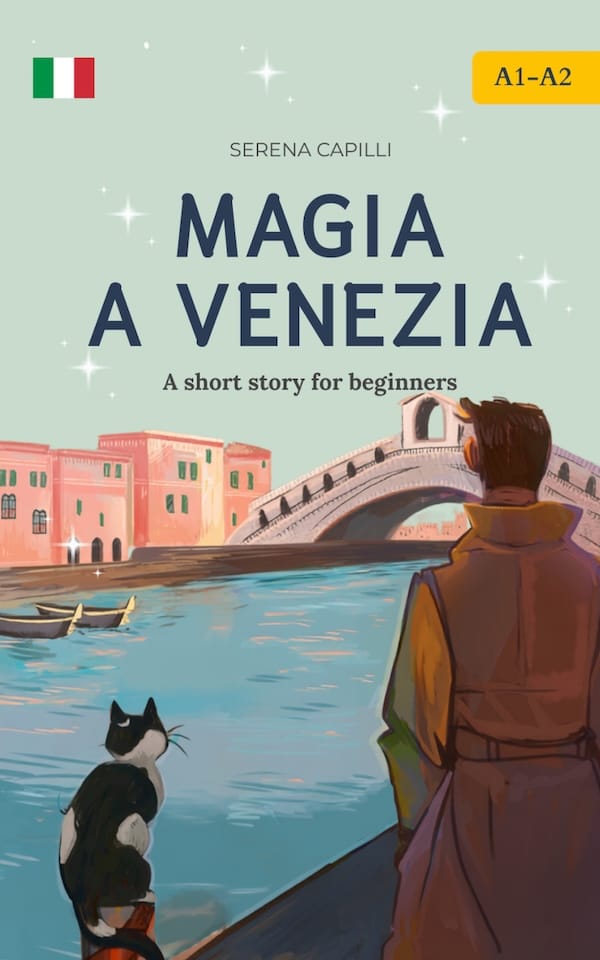
| Magia a Venezia | A1/A2 | A mystery in Venice, with time travel and acqua alta. |
| Due Amiche e una Bufera di Neve | A1/A2 | Costanza and Anna get stuck in a snowstorm, with a surprise. |
| Incontri in Sicilia | A2 | Fiona travels to Sicily and meets the people who change her trip. |
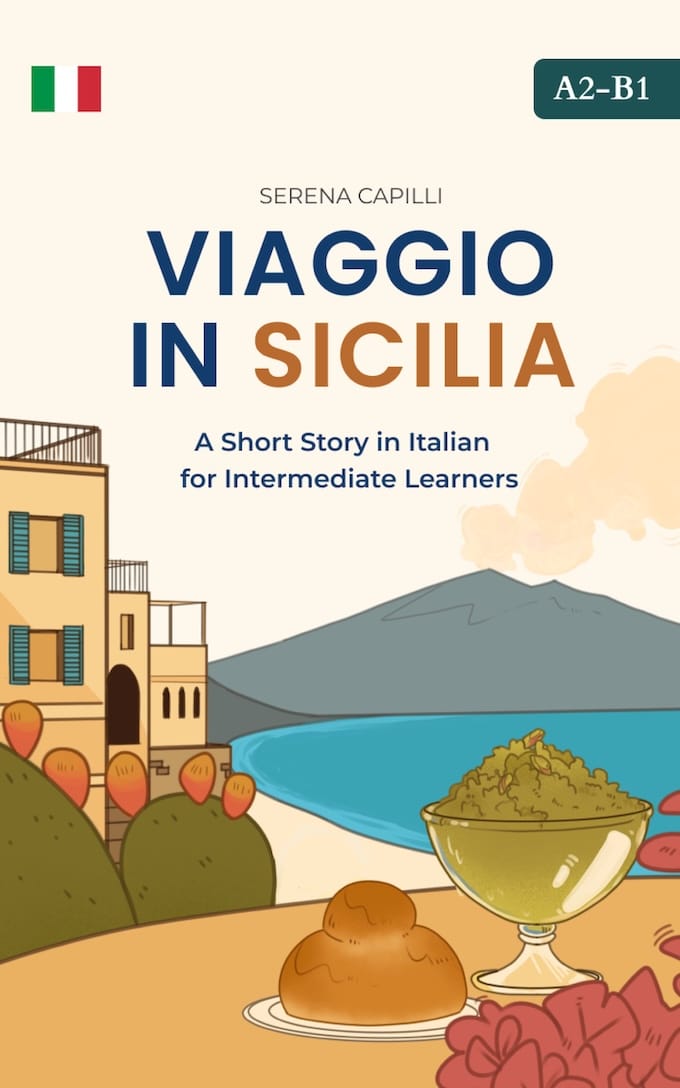
| Viaggio in Sicilia | A2/B1 | A Milan start-up team, a week in Taormina and a lot of surprises. |
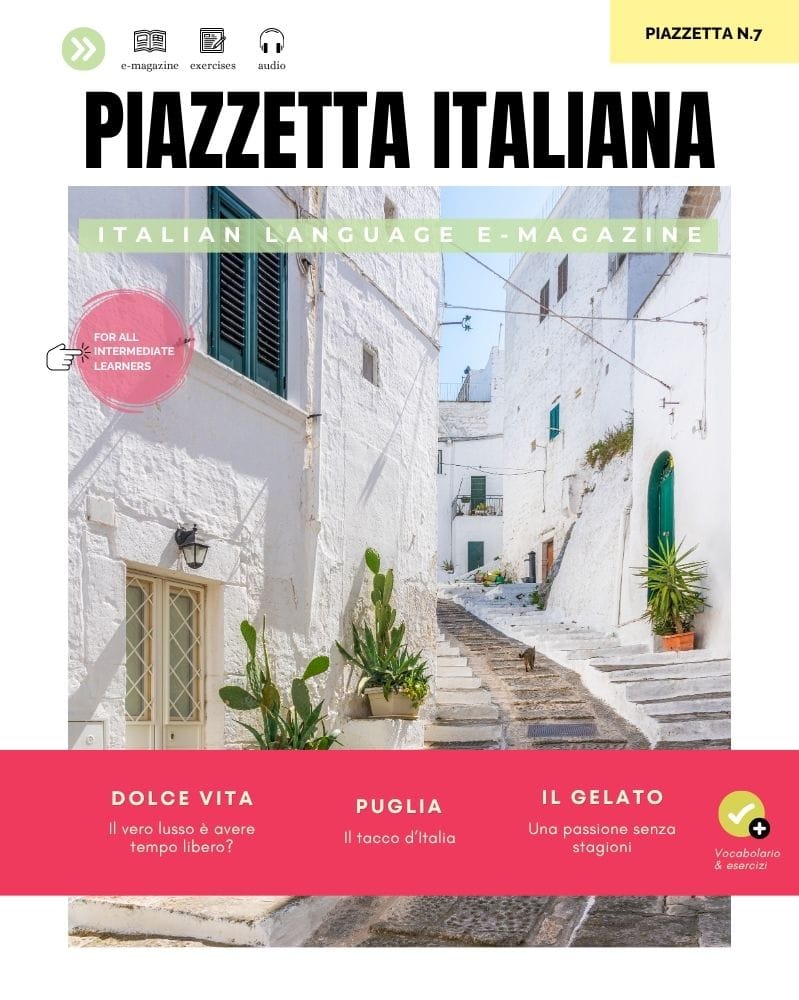
| Piazzetta Italiana | A2/B1 | My magazine for learners: real articles about Italian culture and everyday life, with vocabulary and audio. |
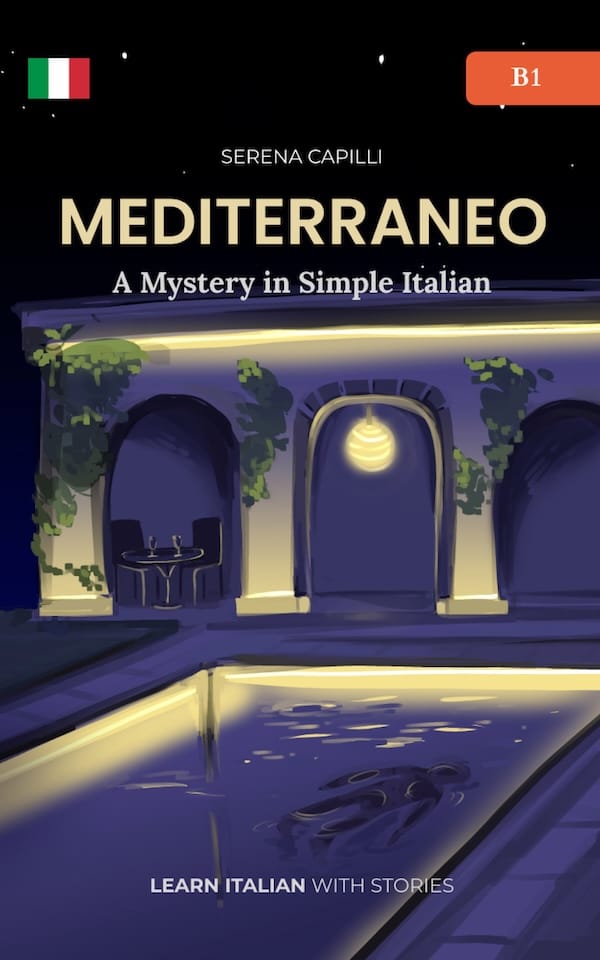
| Mediterraneo | B1 | Liam and Charlotte’s new life in Puglia turns into a mystery. |
| Cioccolato, Amore e Torino | B1+ | Marie’s journey continues in Turin, between love, creativity and chocolate. |
| Gioielli, Caffè e Firenze | B1+ | Marie moves to Florence, where jewelry making leads to a new life. |
| 7 Romance Short Stories in Italian | B1/B2 | Seven stories about love and everyday life, full of natural conversations. |
How to get the most out of these books
- 5 to 7 words per session are enough. Quality beats quantity.
- Write your own sentences with the new words: that’s what makes them stick.
- Review regularly, and make flashcards only for the words you keep forgetting.
More ideas in my guide on how to learn Italian vocabulary.
Frequently asked questions
What is the best book to learn Italian vocabulary?
It depends on your level. Beginners can start with Le prime 1000 parole italiane, intermediate learners with Attiva il lessico A2/B1 or B1/B2, and advanced learners with Italiano per modo di dire or Hai voluto la bicicletta. Pair any of them with a graded reader to see the words in context.
How many words do I need to speak Italian?
The 1,000 most common words cover a large part of everyday conversation, which is why many beginner books start there. To read comfortably and follow native speakers you’ll need a few thousand words and, above all, common chunks and expressions.
Are graded readers good for learning vocabulary?
Yes. Graded readers are written at a specific level, so you understand most of the text and pick up new words from context. My readers include a bilingual vocabulary list, exercises and audio for every chapter.
Should I use a textbook or read stories to learn vocabulary?
Both. A vocabulary textbook gives you structured practice, while stories help you remember words because you meet them in a meaningful context.
Start with a story
If you’d like to start with a story, here are three readers for different levels:
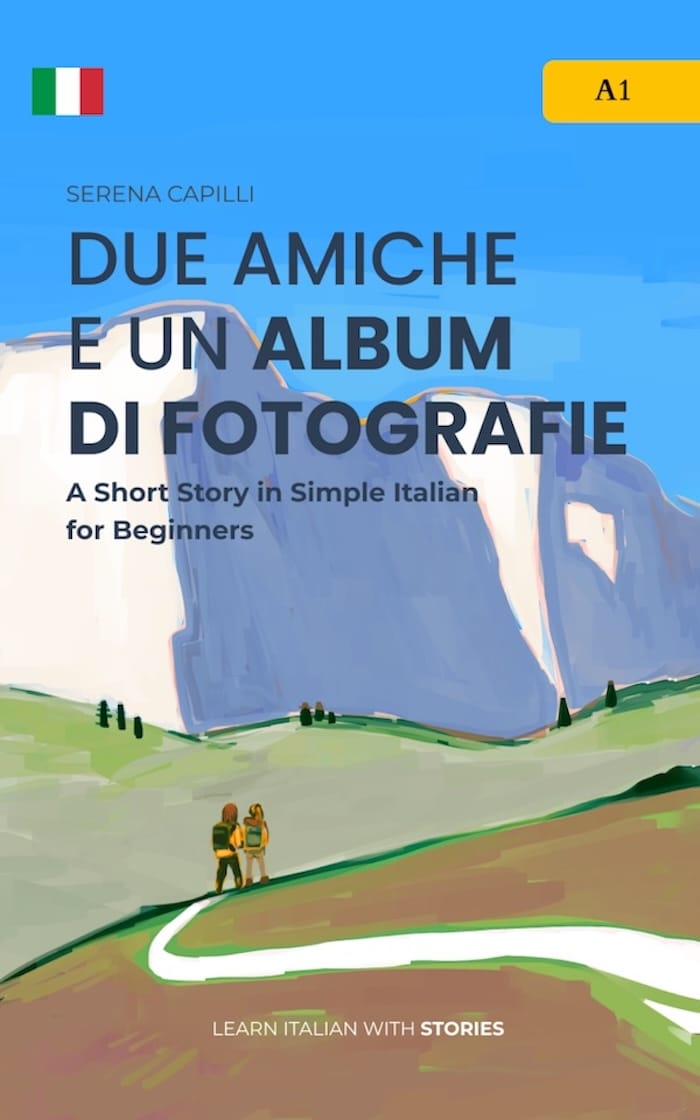
Due Amiche e un Album di Fotografie
Level A1
Two friends, an old photo album and a trip through southern Italy.
Read more: how to learn Italian vocabulary: 9 tips · the 60 most common Italian verbs · nonfiction books in Italian