When people ask me which cities are best for learning Italian, I always answer with a question. But first, a bit about me. I speak seven languages, and I learned them through stories, context and real life, not by memorizing rules. I left Sicily at 18 to study foreign languages in the Aosta Valley, and later I taught Italian in Japan, the UK, Slovakia and Spain.
So if you’ve been learning Italian for a while, I’ll tell you what I tell my private students: at some point you need real life. Not as a tourist, but as someone who lives here, even just for a few weeks. Go and spend a few weeks (or more) surrounded by the language.
Then comes the first big decision: which city? Firenze? Venezia? Somewhere smaller?
My question is always the same: what will you do there after your lesson ends?
You can take an excellent course and still spend every afternoon speaking English. That’s also why I don’t recommend traveling with your partner, family or friends, unless they’re learning Italian too.
The short answer: my five cities
My shortlist is Turin, Modena, Varese, Siracusa, and Rome. Turin if you want city life and culture. Modena if you want a small, local routine. Varese if you want quiet, lakes and Milan close by. Siracusa for eastern Sicily and the sea. Rome for the variety of a big city, especially if you love history.
It’s not a ranking of where you’ll learn fastest. They’re five very different stays. If you’re between A1 and B1, what matters most is a good course, a short trip to school and things you actually want to do in Italian.
| City | Size and feel | Best for | Nearby |
|---|---|---|---|
| Turin | Big city you can walk | Museums, historic cafés, food, cinema | The Alps, France |
| Modena | Small, lived-in old town | Food lovers who want a local routine | Bologna, about 30 minutes by train |
| Varese | Quiet garden city | Nature, lakes, independent learners | Milan, Lake Varese, Lake Maggiore |
| Siracusa | Seaside town built around Ortigia | Sea, ancient history, a slower pace | Noto, Catania, the rest of eastern Sicily |
| Rome | Huge capital made of neighborhoods | History lovers, people who want choice | Day trips across Lazio |
What I’d think about before choosing a city
1. Will you speak Italian outside class?
In places full of visitors, people often switch to English as soon as they hear your accent. It’s kind, and sometimes it’s a relief, especially when you’re tired or dealing with something important. But you came to practice.
So think beyond ordering a cappuccino: a cooking class in Italian, a walking group, a talk about something you love. Pick at least one thing that brings you back to the same people every week. That’s where real conversations start.
2. Accents and dialects
You’ll hear regional accents everywhere in Italy, and dialect in some conversations. Somebody will tell you to go to Florence or Siena because that’s where the “purest” Italian is spoken. As a Sicilian, I’ll tell you: don’t choose a city for that, and don’t avoid one because of its accent. Real Italian is the Italian people speak.
At A2/B1 level, look for a teacher who helps you connect what you learn in class with what you hear on the street. And ask! Scusi, può ripetere più piano? works in every city.
3. A routine you can actually keep
In a small city you can walk from your apartment to school, the market, your café and your Pilates class (or the gym). In a big city you can do the same, but inside one neighborhood.
Check the trip between home and school. A beautiful apartment isn’t so beautiful if getting to class takes your whole morning. You want some energy left for doing something in Italian in the afternoon.
4. Money
Rent is usually the biggest cost. A month in central Rome, Florence or Milan costs much more than a month in Modena, Varese or Siracusa. A cheaper city often means you can stay longer, and staying longer almost always means more Italian.
5. The season
Siracusa in August is hot and full of tourists, and around Ferragosto (August 15) half of Italy is on vacation. Turin in November is gray, but it’s the best time to sit in its historic cafés. Ask your school what a normal week looks like in the month you’re going, and how many students they’ll have.
Five cities I’d recommend for learning Italian
For each city I’ve added one or two schools with courses for adults from abroad. Nobody pays me to mention them, and I’m not affiliated with any of them. See them as a starting point, and check dates and prices with the school directly.
Turin (Torino): for city life
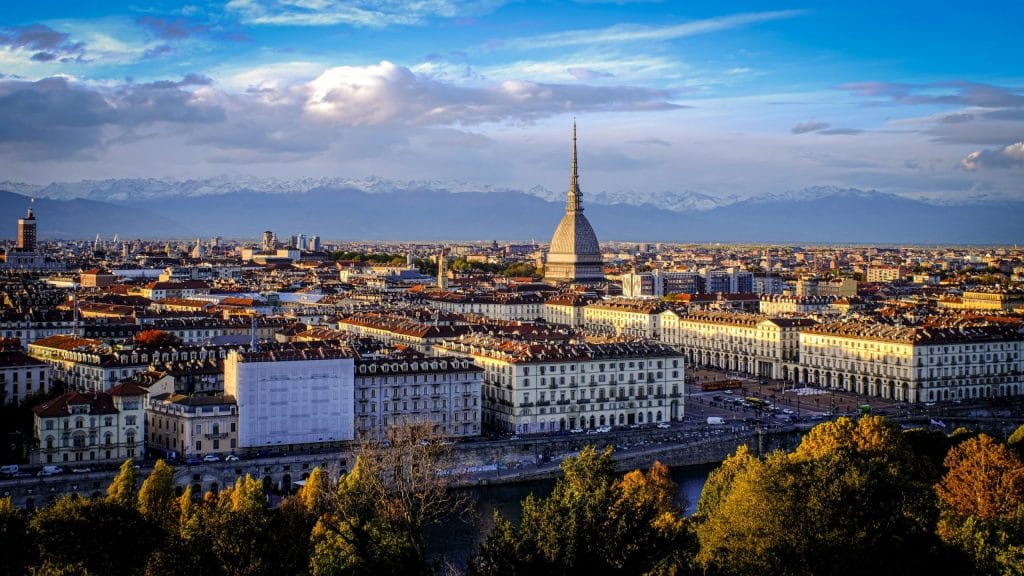
Let me be honest: Turin is one of my favorite cities in Italy, so I’m biased. It’s a big northern city, but it doesn’t feel huge like Milan or Rome, and you can walk almost everywhere. The arcades and the historic cafés give you a routine from the first day, and the Porta Palazzo market, one of the biggest open-air markets in Europe, is perfect for everyday chats.
Turin isn’t the Italy of postcards, and I love it for that. It was the first capital of unified Italy, France is close and you can feel a bit of French charm in its squares and pastry shops. When you need nature, the Alps are right there.
If you love food, you’ll eat very well here (try a bicerin in winter). If you love cinema, the National Cinema Museum inside the Mole Antonelliana gives you plenty to talk about in Italian.
Turin is perfect if you want a big city with museums and culture. Just remember that distances add up in a city this size, so choose your neighborhood based on where your school is.
One of my books, Cioccolato, Amore e Torino (B1/B2), is set here.
For schools, have a look at Ciaoitaly / Scuola Leonardo Torino on Piazza San Carlo, which also organizes cooking classes and wine tastings, and the Scuola di Italiano di Torino of the Società Dante Alighieri, which runs guided tours and PLIDA exams.
Modena: for a small, local routine and great food
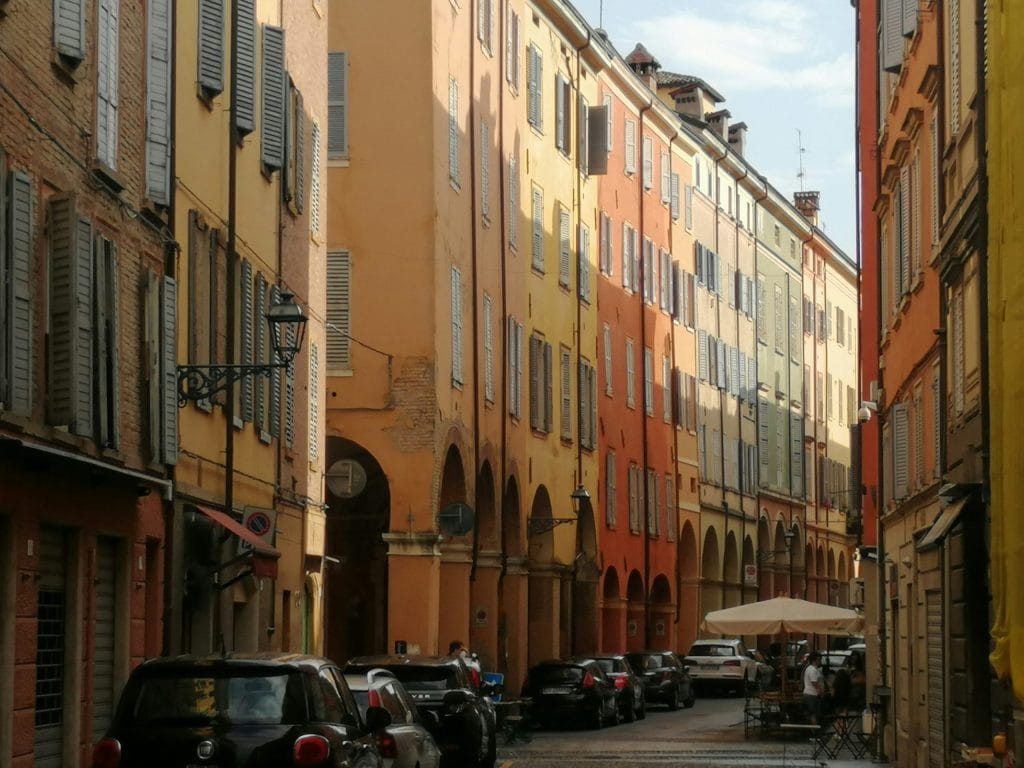
Modena’s old town is a gem, and people really live in it. Bologna is only about 30 minutes away by train, but Bologna is a university city, full of students. Modena belongs to the people who live there, and that’s exactly what lets you live a bit like a local.
And then there’s the food: balsamic vinegar, Parmigiano Reggiano, tortellini, Lambrusco. Ask someone from Modena where to eat the best tortellini and you won’t need a conversation class that day.
Modena is for food lovers who want a small city they can walk. There are fewer schools than in bigger cities, so check course dates before you book an apartment, and ask yourself if there’s enough to do for your whole stay. When you need more, Bologna is close.
A school to look at: Italiaper, in the center near the Duomo, with small groups of up to 8 students.
Varese: for quiet and nature
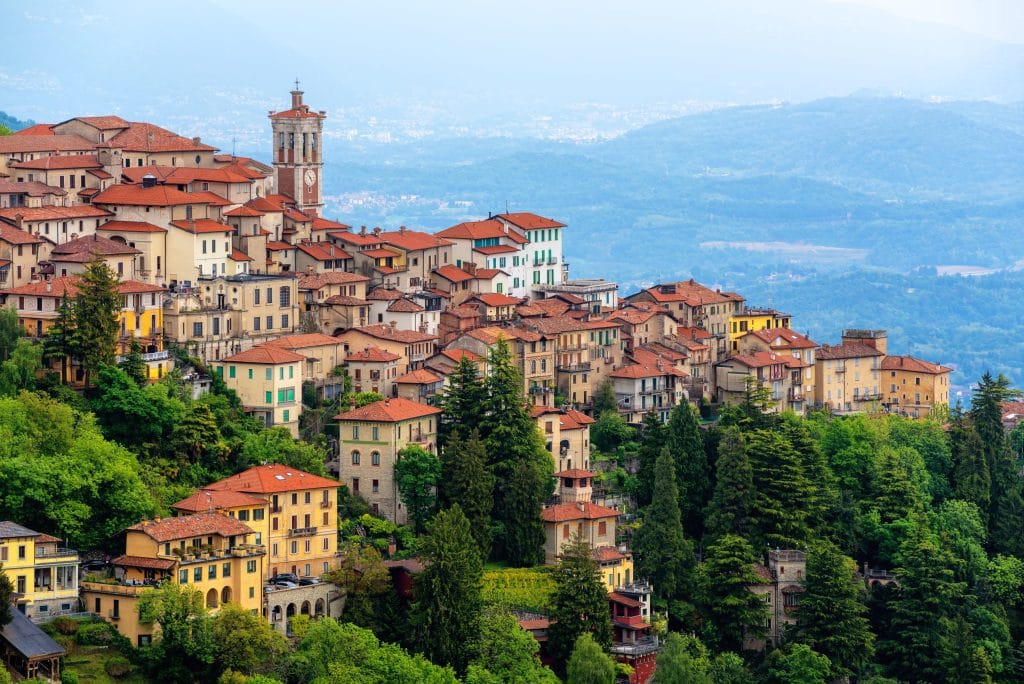
Varese is called the “garden city,” and it’s the one I’d suggest if you’d rather walk in a park than run from one monument to the next. The Estense Gardens, the Sacro Monte and Lake Varese are all close, Lake Maggiore is nearby, and Milan is about an hour away by train.
In a quiet city, conversations don’t happen by chance as often, so you have to look for them. Join something organized in Italian that you enjoy, like a hiking group or a yoga class.
Varese is for independent learners who love nature and smaller cities. Don’t assume every small city in Lombardy is the same: check course dates, accommodation and how you’ll get to the places you want to see.
A school to look at: ILC School Varese, with groups of up to 6 students and private lessons.
Siracusa (Syracuse): for Sicily and the sea
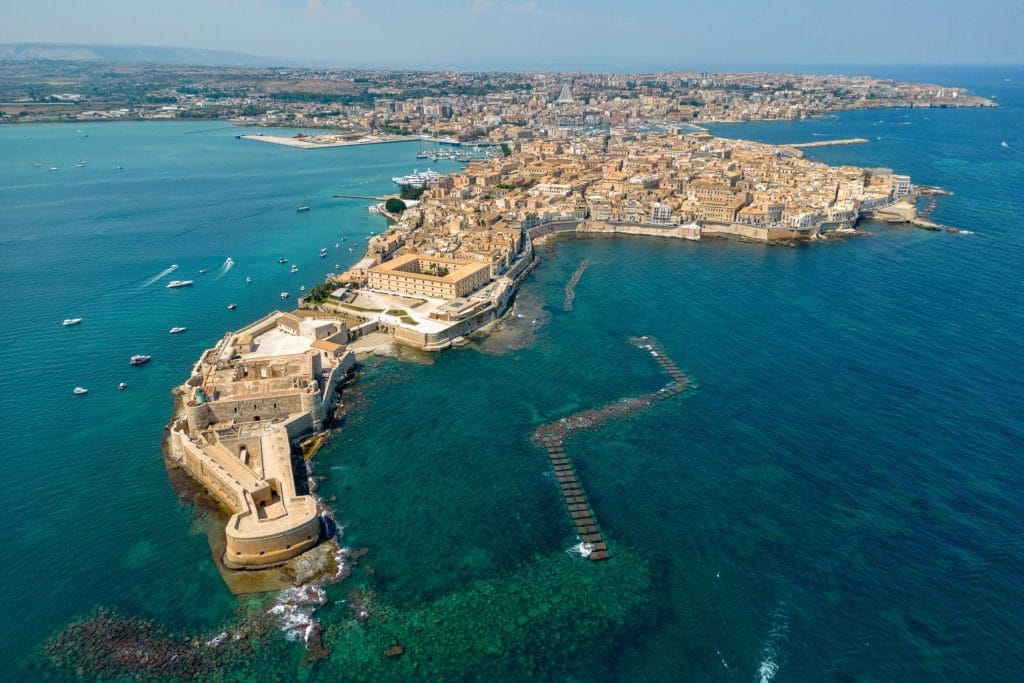
I’m Sicilian, so of course Sicily is on my list. Many people choose Palermo or Catania. They’re full of character, but they can be overwhelming if you don’t like chaos and noise. For me, Siracusa is the queen of Sicilian cities: you can have your lessons in the morning and spend the afternoon by the sea, in Ortigia or at the Greek theater.
Start your day at the Ortigia market, the best place to practice everyday Italian about food. Then choose a few regular places (a café, a bakery, a bar for your evening granita) and keep going back until they know your name. That’s how it works in Sicily.
Siracusa is perfect if you want Italian, history, the sea and trips around eastern Sicily (Noto is close). Remember that Ortigia is also very touristy: book early, and ask your school how its activities get you speaking Italian outside the classroom.
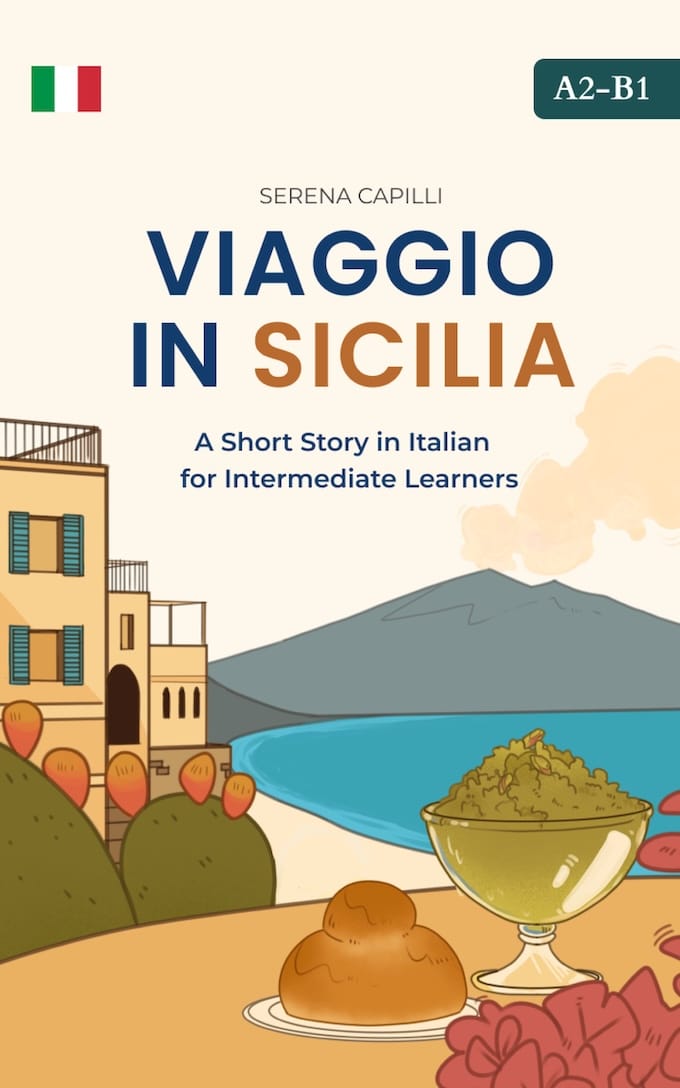
Want to get to know Sicily before you go? Two of my books are set there: Incontri in Sicilia (A2) and Viaggio in Sicilia (A2/B1), which takes you to Taormina.
A school to look at: The Italian Academy, open since 1984, in a historic villa next to the Catacombs of San Giovanni, a short walk from Ortigia. And if you’re comparing other places on the island, my guide to Italian language schools in Sicily covers Milazzo, Palermo, Taormina and Catania.
Rome: choose the neighborhood first

I live in Rome, and here the neighborhood matters as much as the school. If you want a real routine, look at San Paolo (lively and close to the center), Monteverde (quiet and residential) or Centocelle (working class, changing fast, and great for food). Where your school is will help you choose.
You don’t have to avoid the historic center, Trastevere or Monti. Just don’t count on them for conversation: everyone’s in a hurry and half the people around you are tourists. Pick one smaller area, get to know it, and give yourself a reason to go back.
Rome is for people who love big cities, history and having lots of choice. Getting across the city can take a big part of your day, so check the route between your apartment and your school before you book. My guide to the best neighborhoods in Rome for Italian learners goes into more detail.
If you want to arrive already knowing Rome a little, Le Avventure di Paul a Roma (A1/A2) follows Paul as he moves here.
A school to look at: Ciao Italia, open since 1996, in Monti, with standard, intensive and evening courses.
What about Florence, Venice and Milan?
They’re not on my list, but I’d never tell you to avoid them. If you’re in love with a city, that’s a very good reason to study there: you’ll want to go back, and you’ll keep learning once you’re home.
Just plan the Italian part as carefully as the sightseeing. Ask the school how much of the afternoon program is really in Italian, stay close to class, and find something to do away from the tourist routes. In Florence and Venice especially, English is everywhere, so you’ll need to go looking for your Italian.
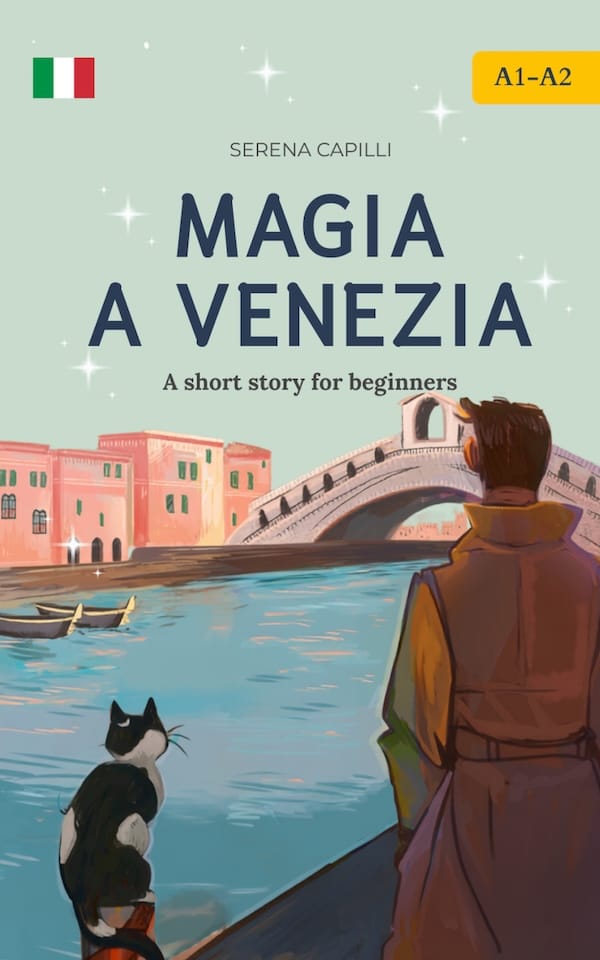
If Florence is your city, Gioielli, Caffè e Firenze (B1) is set there. For Venice, try Magia a Venezia (A1/A2).
Before you go: how I’d prepare
1. Get your ears ready
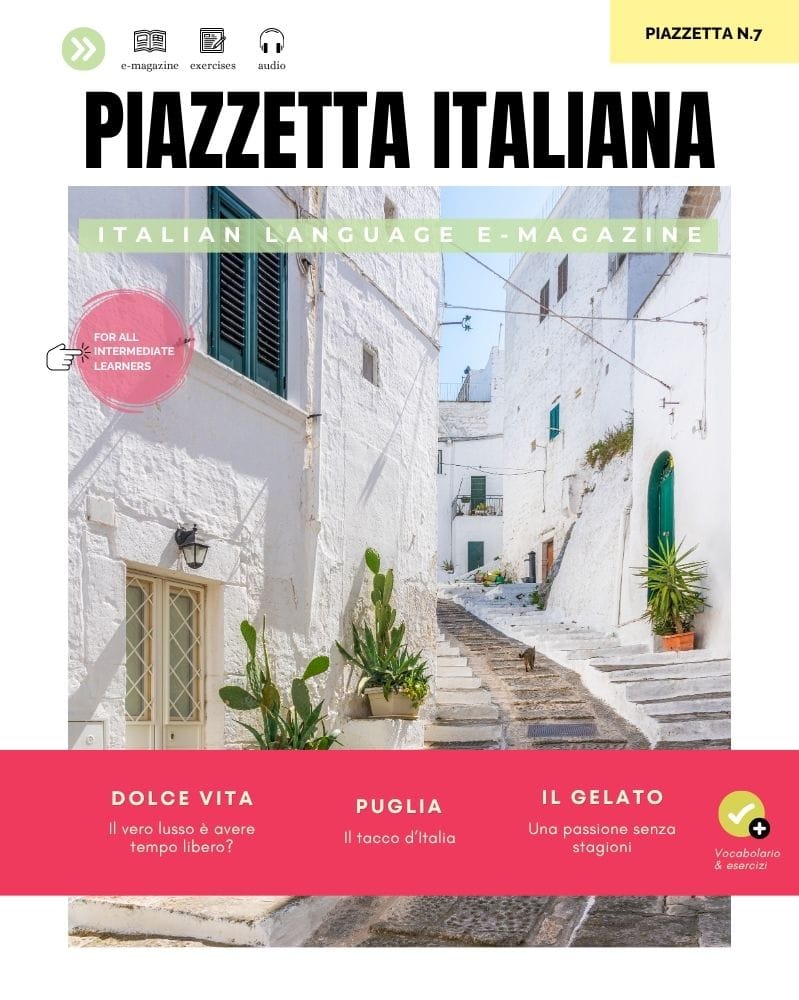
Even a question you know perfectly sounds different when someone says it fast across a counter. Before you leave, listen to Italian you can mostly understand. My slow Italian podcast, Piazzetta Italiana, is made for A2/B1 learners: it’s about Italian culture and everyday life, with transcripts and vocabulary on the website.
2. Read stories set where you’re going
A story lets you arrive already knowing a bit about the place, its food and how people talk there. Choose a level where you can follow the plot without stopping every line, and use the audio to hear the expressions. If you’re just starting out, my list of the best Italian books for beginners is a good place to begin.
Before you pack, start with a story. My Italian graded readers come with vocabulary, exercises and audio. Pick one you can enjoy now and start collecting the expressions you want to use on your trip.
Explore my Italian graded readers with audio →
3. Take a few private lessons before you leave
A course in Italy works much better if speaking already feels normal when you land. Two or three online lessons a week for a month are enough to build a speaking habit. Ask your tutor to prepare you for your city too: how to find an apartment, what to say at the market, how people talk there.
Find your Italian tutor on Preply →
Affiliate link: if you book a lesson, I may earn a small commission at no extra cost to you.
4. Find your activities before you arrive
Look for gyms, yoga classes, running groups or language exchanges before you land. In Italy we use Meetup and Eventbrite a lot, and many cities have Facebook groups for events in Italian. And read a little about the place: its history, its food, what locals are proud of. You’ll arrive with things you actually want to talk about.
How I’d make the final choice
If you want city life, compare Turin and Rome. For a small, local routine, Modena. For quiet and nature, Varese. For the sea and Sicily, Siracusa.
Then look at real courses and apartments for your dates. Before paying anything, I’d want to know three things: where I’d study, how I’d get there, and what I’d do in Italian on a normal afternoon.
Imagine a Tuesday. Your lesson is over, you need lunch, and you have a few free hours. Where would you like to be? Start from there.
This is my personal list, not the final word. If you’ve had a great experience learning Italian in another city, write to me and tell me about it. I’m always looking for new places.
FAQ
What is the best city in Italy to learn Italian?
There’s no single best city: it depends on the stay you want. My picks are Turin for city life, Modena for a small local routine, Varese for nature, Siracusa for Sicily and the sea, and Rome for big city variety. Choose the place where you’d enjoy spending your afternoons in Italian.
Is Florence a good place to learn Italian?
Yes, if you love it. Florence has many schools, but it’s also full of tourists and English speakers, so plan activities away from the main sights to actually use your Italian outside class.
Where in Italy is the “best” Italian spoken?
Standard Italian is spoken everywhere, and every region has its own accent. Don’t choose a city for a “perfect” accent: getting used to real accents is part of understanding Italians.
Is a big city or a small city better for learning Italian?
A small city like Modena or Varese makes it easy to walk everywhere and see the same people every day. A big city like Rome or Turin gives you more schools and activities. In a big city, build your routine inside one neighborhood.
How long should I stay in Italy to improve my Italian?
A few weeks of full immersion already makes a difference, especially at A2/B1 level. The longer you stay, the more your daily life happens in Italian, so a cheaper city can be a smart choice if it lets you stay longer.