In English, “need” does a lot of work. In Italian, the same idea can be expressed with dovere, servire, avere bisogno di and bisogna. They’re all correct, but they’re used in different situations and they’re not interchangeable. Let’s see when to use each one.
In short
- Dovere + infinitive = to have to, must, need to (do something): Devo andare.
- Servire + noun = to need something. It works like piacere: Mi serve una penna.
- Avere bisogno di = to need (something or someone), with a stronger, more personal tone: Ho bisogno di una vacanza!
- Bisogna + infinitive = it’s necessary to, one has to (impersonal): Bisogna prenotare.
| Verb | Followed by | Example | English |
|---|---|---|---|
| dovere | infinitive | Devo studiare. | I have to study. |
| servire | noun (+ indirect pronoun) | Mi serve una mano. | I need a hand. |
| avere bisogno di | noun, pronoun or infinitive | Ho bisogno di te. | I need you. |
| bisogna | infinitive, or che + subjunctive | Bisogna partire presto. | We need to leave early. |
Dovere: to have to, must, need to
Use dovere when you have to do something. It’s always followed by an infinitive.
| Italian | English |
|---|---|
| Devo andare. | I have to go. / I need to go. / I must go. |
| Dobbiamo studiare di più. | We need to study more. |
| Devi assolutamente visitare Roma! | You really must visit Rome! |
Must or have to? Italian doesn’t distinguish them: devo covers both. The context (and your tone of voice) tells the listener how strong the obligation is.
Dovere in the past: ho dovuto or sono dovuto?
In the passato prossimo, dovere usually takes the auxiliary of the verb that follows it:
| Italian | English |
|---|---|
| Ho dovuto cucinare. | I had to cook. (cucinare takes avere) |
| Sono dovuta andare via. | I had to leave. (andare takes essere) |
In everyday speech you’ll also hear ho dovuto andare, and it’s accepted. Read more about Italian modal verbs.
Dovevo: I was supposed to
Use dovere in the imperfetto to say that something was supposed to happen, but didn’t:
| Italian | English |
|---|---|
| Dovevo partire ieri, ma ho perso il treno. | I was supposed to leave yesterday, but I missed the train. |
| Dovevamo vederci alle otto. | We were supposed to meet at eight. |
Dovrei: I should
To give advice or a suggestion, use the conditional: dovrei, dovresti, dovrebbe, dovremmo, dovreste, dovrebbero = should.
| Italian | English |
|---|---|
| Dovresti mangiare più verdure. | You should eat more vegetables. |
| Dovresti leggere di più. | You should read more. |
| Dovrebbe smettere di fumare. | She should stop smoking. |
Servire: to need something
When you need a thing, Italians very often use servire. It works like piacere: the thing you need is the subject, and the person who needs it is an indirect object (mi, ti, gli, le, ci, vi). So it’s serve with one thing and servono with more than one.
| Italian | English |
|---|---|
| Ti serve una mano? | Do you need a hand? |
| Ci serve aiuto! | We need help! |
| Ti servono dei soldi? | Do you need some money? |
| Mi servono due biglietti. | I need two tickets. |
Read more in my guide on how to use servire.
Avere bisogno di: to need (strongly)
Avere bisogno di is perfectly correct, but it sounds stronger and more personal than servire. Many English speakers translate every “I need” with ho bisogno di, and that’s where it starts to sound heavy. Use it:
- for a real, pressing need: Ho bisogno di una vacanza!
- with people and pronouns: Hai bisogno di me? Abbiamo bisogno di un medico.
- for emotional needs: Ho bisogno di parlarti.
| Italian | English |
|---|---|
| Ho bisogno di una pausa. | I (really) need a break. |
| Hai bisogno di me? | Do you need me? |
| Ho bisogno di parlarti. | I need to talk to you. |
Servire or avere bisogno di?
For everyday things, servire is more natural: Mi serve una forchetta (I need a fork). Ho bisogno di una forchetta is correct, but it sounds as if you’re desperate for one!
Bisogna: it’s necessary, one has to
Bisogna is impersonal: it only exists in the third person singular (bisogna, bisognava, bisognerà, bisognerebbe). It’s another way to say è necessario.
- bisogna + infinitive for a general rule, with no specific subject
- bisogna che + subjunctive when you say who has to do it
| Italian | English |
|---|---|
| Bisogna prenotare in anticipo. | You need to book in advance. |
| In Italia bisogna pagare il caffè alla cassa. | In Italy you have to pay for your coffee at the register. |
| Bisogna che mio figlio studi di più. | My son needs to study more. |
Exercise: dovere, servire, avere bisogno or bisogna?
- Domani ______ alzarmi presto. (io)
- Scusi, mi ______ una penna, me la presta?
- Sono stanchissima, ______ di una vacanza!
- Per entrare al museo ______ prenotare online.
- Ti ______ dei soldi per il taxi?
- Sei stanco, ______ dormire di più. (conditional)
Show the answers
- devo
- serve
- ho bisogno
- bisogna
- servono
- dovresti
Frequently asked questions
What is the difference between dovere and avere bisogno di?
Dovere + infinitive means “to have to” do something (devo andare). Avere bisogno di means “to need” something or someone, with a stronger, more personal tone (ho bisogno di aiuto).
How do you say “I need” in Italian?
For things, the most natural way is mi serve / mi servono (mi serve una penna). For actions, use devo + infinitive (devo partire). Ho bisogno di is correct but more emphatic.
How does servire work in Italian?
Like piacere: the thing you need is the subject and the person is an indirect object. Mi serve un caffè, ti servono i soldi.
What does bisogna mean?
Bisogna means “it’s necessary” or “one has to.” It’s impersonal: bisogna prenotare (you need to book).
Practice with my stories
My characters always need something: a ticket, a hand, a break. Reading these verbs in context is the fastest way to stop translating “need.” Here are three stories to try:
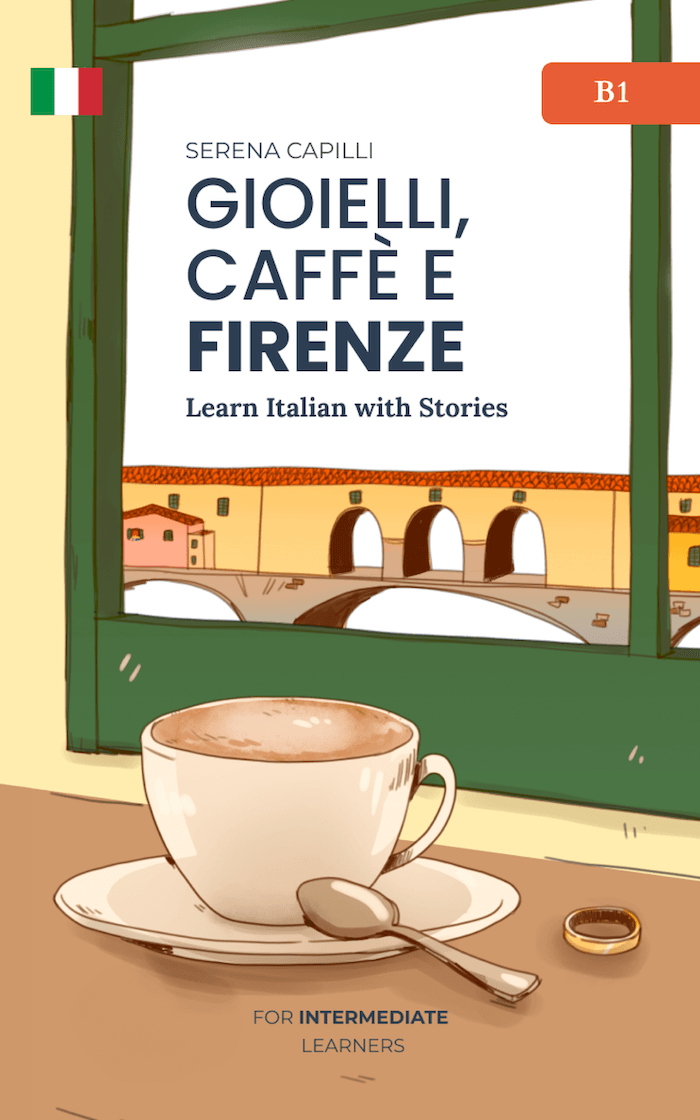
Gioielli, Caffè e Firenze
Level B1+
Marie moves to Florence, where jewelry making leads to a new life.
Dive deeper: Italian modal verbs · how to use servire · the present subjunctive