Building solid foundations is key in every language you learn, and mastering the basics is your pathway to fluency, I promise. Today we’ll cover the Italian definite articles (gli articoli determinativi): their forms, how to choose the right one, and when Italian uses them differently from the English “the.”
In short
- Italian has seven forms of “the”: il, lo, l’, la, i, gli, le.
- The article depends on the gender, the number and the first letter of the word that follows.
- Lo / gli go before masculine words starting with s + consonant, z, ps, gn, x, y: lo zaino, gli studenti.
- L’ goes before any singular word starting with a vowel: l’amico, l’isola.
- Italian uses the article much more than English: la mia casa, mi piace la pizza, sono le otto.
The forms of the Italian definite article
| Singular | Plural | Before | |
|---|---|---|---|
| Masculine | il libro | i libri | most consonants |
| Masculine | lo zaino, lo studente | gli zaini, gli studenti | s + consonant, z, ps, gn, x, y |
| Masculine | l’amico | gli amici | a vowel |
| Feminine | la casa | le case | a consonant |
| Feminine | l’isola | le isole | a vowel |
More examples
| Article | Examples |
|---|---|
| il | il medico, il cane, il formaggio, il weekend |
| lo | lo scooter, lo yogurt, lo psicologo, lo gnocco, lo xilofono, lo zio |
| l’ | l’appartamento, l’uomo, l’erba, l’isola, l’hotel |
| la | la casa, la macchina, la finestra, la dottoressa |
| i | i medici, i cuochi, i libri, i computer |
| gli | gli appartamenti, gli uomini, gli alberi, gli hotel, gli scooter, gli zii |
| le | le case, le macchine, le amiche, le isole |
Note: the Italian h is silent, so words like hotel behave as if they started with a vowel: l’hotel, gli hotel.
How to choose the right article in 3 steps
- Is the noun masculine or feminine? Most nouns ending in -o are masculine, most ending in -a are feminine.
- Is it singular or plural?
- Look at the first letter of the word right after the article. Careful: if there’s an adjective before the noun, the article agrees with the adjective: lo studente but il bravo studente, gli amici but i vecchi amici.
When Italian uses the article and English doesn’t
This is where most English speakers make mistakes. In Italian, you need the article in all of these cases:
| When | Italian | English |
|---|---|---|
| With possessives | la mia casa, il mio cane | my house, my dog |
| With general statements and likes | Mi piace la pizza. Il caffè italiano è forte. | I like pizza. Italian coffee is strong. |
| With abstract nouns | l’amore, l’amicizia, la pace | love, friendship, peace |
| With titles | la professoressa Rossi, il signor Franchi | Professor Rossi, Mr. Franchi |
| When telling time | Sono le otto e mezza. È l’una. | It’s 8:30. It’s one o’clock. |
| With dates | Oggi è il 14 aprile. | Today is April 14th. |
| With countries, regions, lakes, mountains, rivers | l’Italia, la Toscana, il lago di Como, l’Etna, il Tevere | Italy, Tuscany, Lake Como, Mount Etna, the Tiber |
| With body parts and clothes | Mi lavo le mani. Mi metto le scarpe. | I wash my hands. I put on my shoes. |
Body parts: Italians never say mi lavo le mie mani. The reflexive verb already tells us whose hands they are, so the article is enough. More in my post on reflexive verbs.
Days of the week: lunedì = this Monday, il lunedì = every Monday. Lunedì vado a Roma (I’m going to Rome on Monday) vs Il lunedì vado in palestra (I go to the gym on Mondays).
When Italian doesn’t use the article
With cities. Roma è bellissima. Vivo a Palermo. The exceptions are cities with the article in their name: L’Aquila, La Spezia, Il Cairo.
With first names. Anna, Marco, Maria. In the north of Italy you’ll often hear la Anna or il Marco in colloquial speech, but in standard Italian there’s no article.
With singular family members after a possessive. mio fratello, mia cugina, mio zio. In the plural, the article comes back: i miei fratelli, le mie cugine. You also keep it with loro (il loro padre), when the noun is modified (il mio fratello maggiore, la mia sorellina), and very often with mamma and papà (la mia mamma). More in possessive adjectives.
With small islands. Capri, Ischia, Lampedusa. Big islands and groups of islands take the article: la Sicilia, la Sardegna, le Eolie, le Canarie.
With in + feminine countries and regions. Vivo in Italia. Vado in Sicilia. Never in la Sicilia. With masculine and plural places, in combines with the article: nel Lazio, negli Stati Uniti. See Italian prepositions.
When you speak directly to someone. Il dottor Rossi è arrivato, but: Buongiorno, dottor Rossi!
With famous people’s first names and full names. Dante è considerato il padre della lingua italiana. You may still hear la Callas or, in older books, il Manzoni.
Common mistakes
| Wrong | Right | Why |
|---|---|---|
| il zaino | lo zaino | Z takes lo |
| i amici | gli amici | Masculine plural before a vowel takes gli |
| Mi piace pizza. | Mi piace la pizza. | General likes need the article |
| la mia madre | mia madre | Singular family member with a possessive |
| in la Toscana | in Toscana | In + feminine region drops the article |
| Sono otto. | Sono le otto. | Time needs the article |
Exercise: il, lo, l’, la, i, gli or le?
- ______ studente
- ______ amiche
- ______ isola
- ______ zii
- ______ libri
- ______ psicologo
- Mi piace ______ musica italiana.
- Sono ______ tre e mezza.
Show the answers
- lo
- le
- l’
- gli
- i
- lo
- la
- le
Frequently asked questions
What are the definite articles in Italian?
There are seven: il, lo, l’, la (singular) and i, gli, le (plural). They all mean “the” and change with the gender, number and first letter of the next word.
When do you use lo instead of il?
Use lo with masculine singular words starting with s + consonant, z, ps, gn, x or y: lo studente, lo zaino, lo psicologo. In the plural it becomes gli.
Do you say “la mia madre” in Italian?
No. With singular family members after a possessive, you drop the article: mia madre, mio fratello. In the plural it comes back: i miei fratelli.
Why do Italians say “mi piace la pizza”?
Because Italian uses the definite article for general statements and likes, where English uses no article: mi piace la pizza, amo il caffè.
Practice with my stories
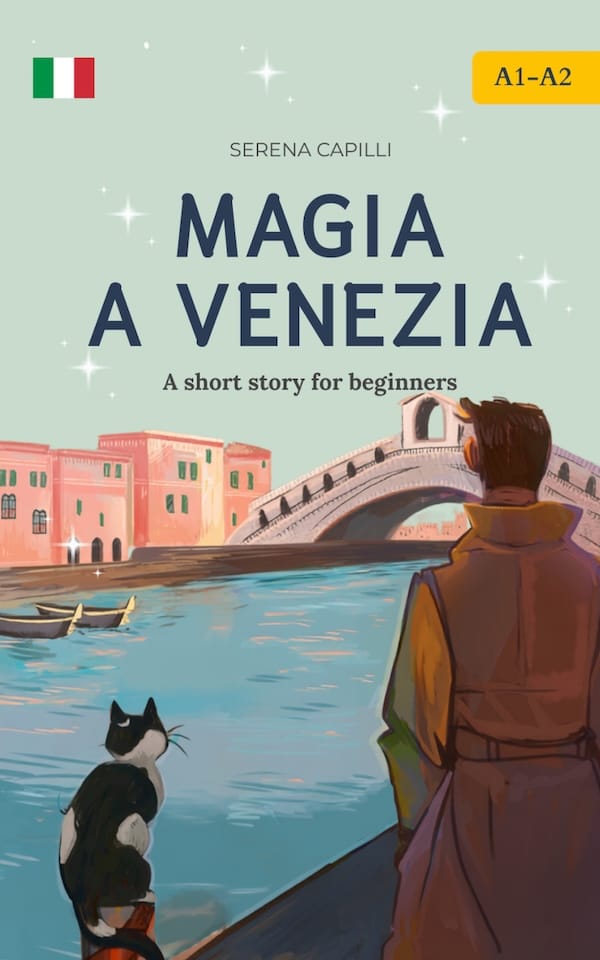
The best way to make articles automatic is to read a lot of easy Italian: after a while, “il zaino” just sounds wrong. These stories are written for beginners, with audio:
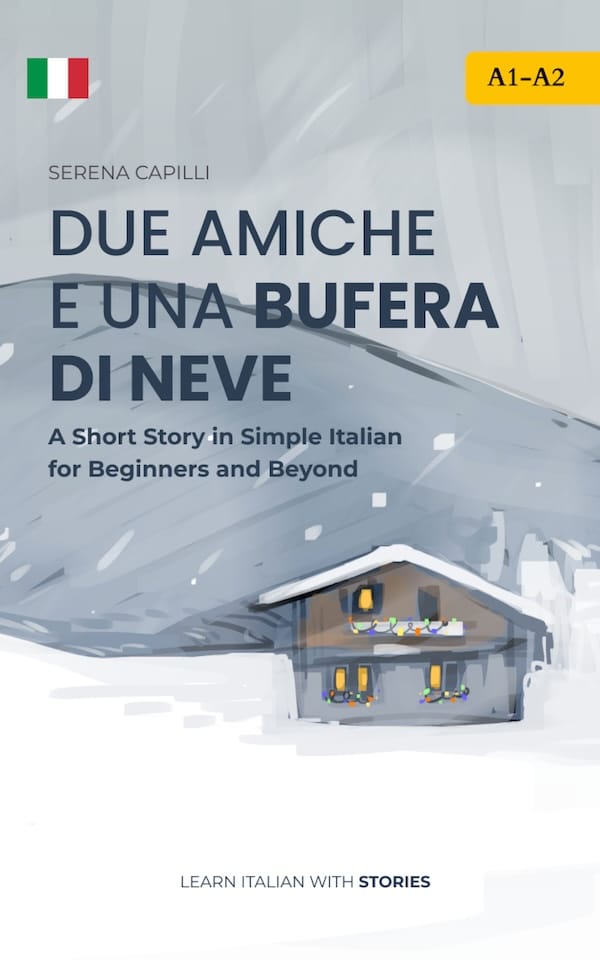
Due Amiche e una Bufera di Neve
Level A1/A2
Costanza and Anna get stuck in a snowstorm, with a surprise.
Due Amiche e un Album di Fotografie
Level A1
Two friends, an old photo album and a trip through southern Italy.
Dive deeper: partitive articles · Italian prepositions · possessive adjectives