Italian Modal Verbs: Devo, Posso, Voglio
Modal verbs are some of the most common and most useful verbs in Italian.
They’re called verbi modali (modal verbs) because they modify the meaning of another verb.
In short
- The three Italian modal verbs are dovere (must, have to), potere (can, may) and volere (to want).
- They are irregular in the present: devo, posso, voglio.
- The verb after them stays in the infinitive: Voglio uscire, not voglio esco.
- For skills, Italian uses sapere, not potere: So nuotare (I can swim).
- Pronouns can go before the modal or after the infinitive: Lo voglio comprare = Voglio comprarlo.
The Three Main Modal Verbs in Italian
In English, they correspond to must / have to, can / be able to, and want / would like to.
| Modal Verbs | Meaning in English | Examples |
|---|---|---|
| dovere | must / have to | Devo studiare. → I have to study. |
| potere | can / be able to | Posso entrare? → Can I come in? |
| volere | want | Voglio un caffè. → I want a coffee. |
The most Important Thing to Remember
Modal verbs are irregular, so you’ll need to memorize their forms.
They always work together with another verb in the infinitive (the “to” form).
- Devo studiare = I have to study
- Puoi venire = You can come
- Vogliamo uscire = We want to go out
Common mistake:
Beginners often try to conjugate both verbs, like voglio esco ❌.
The second verb (the main one) always stays in the infinitive: voglio uscire ✅.
Conjugation Sheet
| dovere (must, have to) | potere (can, may) | volere (to want) | |
|---|---|---|---|
| io | devo | posso | voglio |
| tu | devi | puoi | vuoi |
| lui / lei | deve | può | vuole |
| noi | dobbiamo | possiamo | vogliamo |
| voi | dovete | potete | volete |
| loro | devono | possono | vogliono |
Yes, memorize them! You’ll use these forms in almost every conversation.
Questions with Modal Verbs
Modal verbs are extremely common in questions:
- Vuoi? → Do you want to?
- Volete venire? → Do you (plural) want to come?
- Puoi aiutarmi? → Can you help me?
- Potete entrare? → Can you (plural) come in?
- Devi lavorare oggi? → Do you have to work today?
- Dovete studiare? → Do you (plural) have to study?
What modal verbs mean in English
- Devo can mean I must, I have to or I need to. In Italian there’s no real difference between these: they all translate as devo.
- Posso means I can, I’m able to, or I may.
- Voglio means I want. For the polite “I’d like”, use vorrei.
Negatives
To make a sentence negative, just add non before the modal verb:
- Non voglio uscire. → I don’t want to go out.
- Non devo studiare oggi. → I don’t have to study today.
- Non posso venire. → I can’t come.
The word non always comes before the modal verb, not before the infinitive.
The Verb Dovere
Dovere + infinitive = must / have to / need to
→ Devo andare in palestra → I must / need to / have to go to the gym
Dovere is a common Italian verb with three main translations in English:
- I must
- I have to
- I need to
English vs. Italian
In English, I must and I need to may convey slightly different meanings.
But in Italian, this distinction doesn’t exist, dovere covers all three ideas.
To emphasize a stronger sense of obligation (as in “must”), Italians rely on intonation, not on a different word.
Devo studiare → I need to study
DEVO studiare → I must study (emphasis on devo)
So, keep in mind: there’s no formal difference between I must, I need to, and I have to in Italian.
They all translate to dovere + infinitive.
Dovere as a Non-Modal Verb: “To Owe”
In addition to its modal use, dovere can also function as a non-modal verb when followed by a noun rather than a verb. In this case, it means to owe.
Dovere + noun = to owe
→ Ti devo 5 euro per la pizza → I owe you 5 euros for the pizza.
English vs. Italian: Understanding Sapere vs. Potere
In English, the verb can expresses two main ideas:
- Permission → Can I leave early?
- Ability → I can swim.
In Italian, these meanings are expressed with two different verbs:
| Meaning | Use this Italian verb |
|---|---|
| Permission / Possibility | potere |
| Skill / Ability / Know-how | sapere |
When to Use Potere
Use potere to express permission or possibility, when someone is allowed to do something or when something is situationally possible.
Examples:
- Io posso parlare italiano → I’m allowed to speak Italian / It’s possible for me to speak Italian
- Posso cantare → I’m allowed to sing (it’s OK for me to sing)
When to Use Sapere
Use sapere to express ability, when someone knows how to do something (a learned skill or knowledge).
Examples:
- So cantare → I can sing / I know how to sing
- Io so parlare italiano → I can speak Italian / I know how to speak Italian
Modal Verbs with Pronouns
In Italian, pronouns usually come before the verb, unlike in English, where they often follow it.
However, when using modal verbs (volere, potere, dovere), pronouns have flexible placement:
They can appear before the modal verb or be attached to the end of the infinitive that follows.
Examples:
- Lo voglio comprare → I want to buy it
(pronoun before the modal verb) - Voglio comprarlo → I want to buy it
(pronoun attached to the infinitive: comprare + lo)
Frequently asked questions
What are the modal verbs in Italian?
The Italian modal verbs are dovere (must, have to), potere (can, may) and volere (to want). They are followed by a verb in the infinitive: Devo studiare, Posso entrare?, Voglio uscire. Sapere (to know how to) is often added to the group.
What is the difference between potere and sapere?
Potere expresses permission or possibility: Posso entrare? (May I come in?). Sapere expresses a skill you have learned: So nuotare (I can swim). In English both are “can”.
Is it voglio or vorrei?
Voglio means “I want” and can sound direct. Vorrei, the conditional, means “I would like” and is the polite form to use in shops, bars and restaurants: Vorrei un caffè, per favore.
Where do pronouns go with modal verbs?
Either before the modal verb or attached to the infinitive. Both are correct: Ti posso chiamare? and Posso chiamarti? (Can I call you?).
Practice with my stories
Devo, posso, voglio: my characters use modal verbs in almost every conversation, so reading is an easy way to make them automatic. These stories are written for beginners:
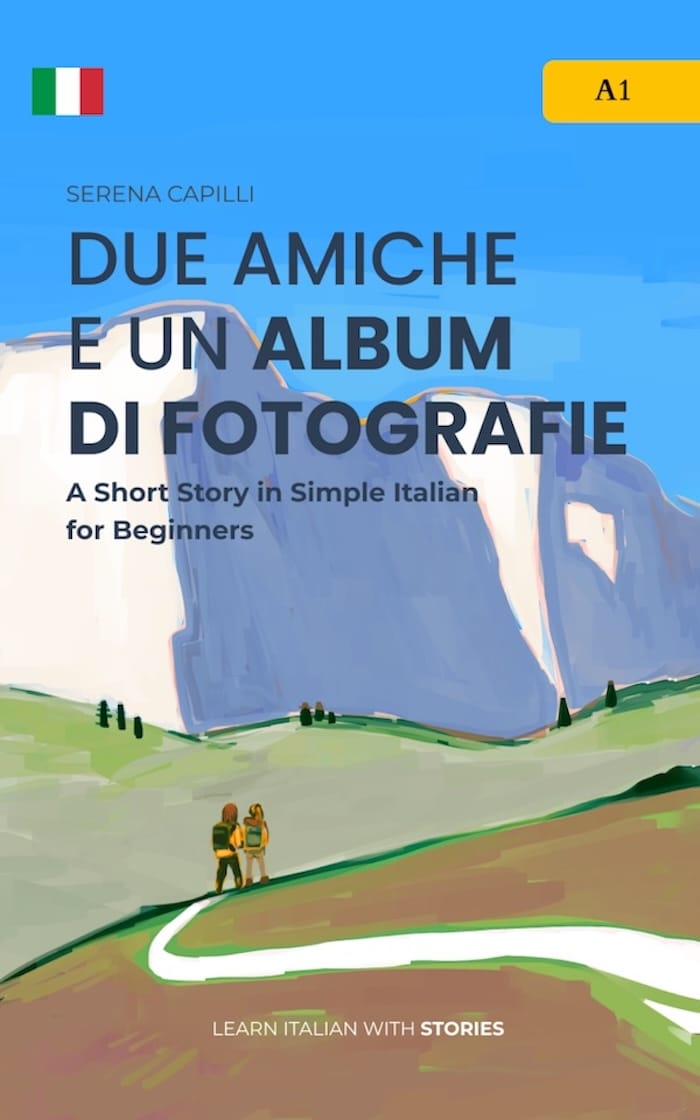
Due Amiche e un Album di Fotografie
Level A1
Two friends, an old photo album and lots of everyday Italian.
Due Amiche e una Bufera di Neve
Level A1/A2
Costanza and Anna are back for a winter adventure in Valle d’Aosta.

Read more: