If you ended up on this page, you’re probably wondering what the difference is between dovevo and ho dovuto, volevo and ho voluto, or sapevo and ho saputo.
And you’re right to wonder: some Italian verbs change their meaning depending on whether you use them in the imperfetto or in the passato prossimo. These verbs are:
- dovere (dovevo / ho dovuto)
- volere (volevo / ho voluto)
- potere (potevo / ho potuto)
- sapere (sapevo / ho saputo)
- conoscere (conoscevo / ho conosciuto)
Most of them are modal verbs: volere (to want), potere (can), dovere (to have to) and sapere (to know how to).
In short
- Imperfetto (dovevo, volevo, potevo) = intention or possibility: we don’t know if it happened
- Passato prossimo (ho dovuto, ho voluto, ho potuto) = it actually happened
- Sapevo = I knew; ho saputo = I found out, I heard
- Conoscevo = I knew (someone); ho conosciuto = I met (for the first time)
- Volevo is also a polite way to ask for something: Volevo un caffè, per favore.
| Verb | Imperfetto | Passato prossimo |
|---|---|---|
| dovere | dovevo: I was supposed to (did I?) | ho dovuto: I had to (and I did) |
| volere | volevo: I wanted to (did I?) | ho voluto: I wanted to, I decided to (and I did) |
| potere | potevo: I could, I was able to (did I?) | ho potuto: I managed to (and I did) |
| sapere | sapevo: I knew | ho saputo: I found out, I heard |
| conoscere | conoscevo: I knew (someone) | ho conosciuto: I met (someone) for the first time |
Dovere, potere, volere: the general rule
With the modal verbs volere, potere and dovere, the imperfetto describes an intention, a duty or a possibility, but we don’t know whether the action really happened. The passato prossimo tells us that it did happen.
Dovevo vs. ho dovuto
| Italian | What it means |
|---|---|
| Dovevo andare in banca. | I was supposed to go to the bank. (We don’t know if I went: often I didn’t!) |
| Stamattina sono dovuta andare in banca. | This morning I had to go to the bank. (And I went.) |
Volevo vs. ho voluto
| Italian | What it means |
|---|---|
| Volevo comprare una macchina nuova. | I wanted to buy a new car. (We don’t know if I bought it.) |
| Ho voluto comprare una macchina nuova. | I decided to buy a new car. (And I bought it.) |
| Non volevo andare al lavoro. | I didn’t want to go to work. (Did I go? We don’t know.) |
| Volevo chiamarti ieri sera. | I wanted to call you last night. (An intention: probably I didn’t.) |
| Ho voluto chiamarti subito perché… | I wanted to call you right away because… (And I did.) |
Volevo in polite requests
A special mention goes to volere: in the imperfetto it’s also used to make polite requests, a bit like “I was wondering…” in English.
| Italian | English |
|---|---|
| Volevo chiederti un’informazione. | I wanted to ask you something. |
| Volevo chiederti un favore. | I wanted to ask you a favor. |
| Buongiorno, volevo due etti di prosciutto. | Good morning, I’d like 200 grams of ham. |
Potevo vs. ho potuto
| Italian | What it means |
|---|---|
| Stanotte non potevo dormire. | Last night I couldn’t sleep. (It was hard; maybe in the end I fell asleep.) |
| Stanotte non ho potuto dormire. | Last night I couldn’t sleep. (I didn’t sleep at all.) |
| Finalmente ho potuto riposare. | Finally I managed to rest. (And I did.) |
Read more: potevo vs. ho potuto.
Sapevo vs. ho saputo
In the imperfetto, sapere means “to know, to be aware of something.” In the passato prossimo, it means “to find out, to hear” something, usually from someone else.
| Italian | English |
|---|---|
| Sapevi che Marta ha avuto un bambino? | Did you know Marta had a baby? |
| Non sapevo che fossi sposato. | I didn’t know you were married. |
| Hai saputo che Lucia ha avuto un figlio? | Did you hear Lucia had a baby? |
| L’ho saputo ieri da Marco. | I found out yesterday from Marco. |
Read more: ho saputo vs. sapevo.
Conoscevo vs. ho conosciuto
Although it’s not a modal verb, conoscere also changes meaning. In the imperfetto it means “to know someone,” in the passato prossimo “to meet someone for the first time.”
| Italian | English |
|---|---|
| Quando andavo a scuola, conoscevo già mio marito. | When I was at school, I already knew my husband. |
| Ho conosciuto mio marito a una partita di calcio. | I met my husband at a soccer game. |
Read more: conoscere vs. sapere.
Exercise: imperfetto or passato prossimo?
Choose the right form.
- Ieri (dovevo / ho dovuto) andare dal medico, ma poi ho cambiato idea.
- Ieri sera (ho conosciuto / conoscevo) la nuova collega di Anna: simpaticissima!
- (Sapevi / Hai saputo) la notizia? Giulia si sposa!
- Buongiorno, (volevo / ho voluto) un cappuccino, per favore.
- Il treno era in ritardo, quindi non (ho potuto / potevo) arrivare in tempo alla riunione.
- Da bambina (sapevo / ho saputo) già leggere.
Show the answers
- dovevo
- ho conosciuto
- Hai saputo
- volevo
- ho potuto
- sapevo
Frequently asked questions
What is the difference between dovevo and ho dovuto?
Dovevo means “I was supposed to” and doesn’t tell us if the action happened (often it didn’t). Ho dovuto means “I had to” and the action happened: Sono dovuta andare in banca (and I went).
What is the difference between sapevo and ho saputo?
Sapevo means “I knew,” ho saputo means “I found out” or “I heard”: Non lo sapevo (I didn’t know), L’ho saputo ieri (I found out yesterday).
Why do Italians say volevo when ordering?
Volevo (I wanted) is a polite, softer way to ask for something: Volevo un caffè, per favore. It works like “I’d like.”
The difference between imperfetto and passato prossimo is the heart of storytelling, so the best way to absorb it is by reading stories. Here are three of mine, with audio:

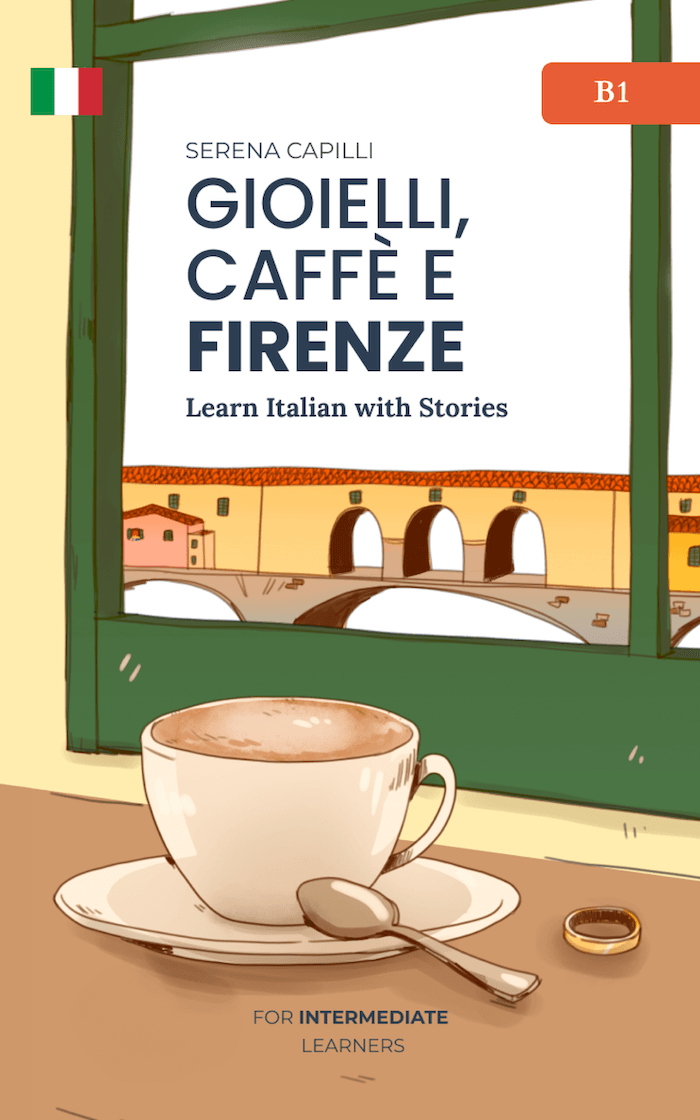
Gioielli, Caffè e Firenze
Level B1+
Marie moves to Florence, where jewelry making leads to a new life.