Migliore or meglio? Many of my students mix up these two words, and I totally get it: they both translate as “better”. The short answer is that migliore is an adjective, so it goes with a noun, while meglio is an adverb, so it goes with a verb.
In short
- Migliore = better, the best. It’s an adjective: it describes a noun and agrees with it (migliore, migliori).
- Meglio = better. It’s an adverb: it describes a verb and never changes.
- Before a singular noun, migliore often becomes miglior: il miglior amico.
- Never say più migliore: migliore already means “more good”.
- Peggiore and peggio (worse, the worst) work exactly the same way.
The tricky part is that meglio means “better”, while migliore can mean both “better” and “best”. So in Italian you can’t simply split them into “better” and “best” like in English: you need to look at the function of the word in the sentence.

Ciao, I'm Serena
I'm a certified Italian teacher from Sicily, and I live in Rome. Since 2015 I've been teaching Italian online to English-speaking adults, through stories and comprehensible input. I speak eight languages, I've sold over 30,000 copies of my books, and I host Piazzetta Italiana, a slow Italian podcast. My graded readers grew out of those lessons: short stories in real, culturally rich Italian, with exercises and audio, so you can bring together and activate the grammar and vocabulary you already know. I believe this is the most effective way to learn a language, and to make learning it part of your lifestyle.
The quick test: ask yourself what the word describes. A thing or a person (a noun)? Use migliore. An action (a verb)? Use meglio.
Migliore vs meglio at a glance
| Migliore | Meglio | |
|---|---|---|
| Part of speech | Adjective | Adverb |
| Describes | A noun (a thing or a person) | A verb (an action) |
| Changes form? | Yes: migliore, migliori (and miglior before a singular noun) | Never |
| Means | better, the best (il migliore) | better, the best thing (il meglio) |
| Opposite | peggiore | peggio |
| Example | Questo vino è migliore. | Oggi sto meglio. |
How to use migliore
Migliore is an adjective, the comparative of buono (good). Like any adjective, it goes with a noun and agrees with it: migliore in the singular, migliori in the plural. You can use it in two ways.
1. Migliore meaning “the best”
With the article (il, la, i, le), migliore means “the best”:
- Il mio miglior amico vive a Londra.
My best friend lives in London. - I miei migliori studenti viaggiano spesso in Italia.
My best students often travel to Italy. - Quelle fragranze sono le migliori.
Those fragrances are the best. - Il riposo è la miglior medicina contro lo stress.
Rest is the best medicine against stress.
Note: before a singular noun, migliore often drops its final -e: il miglior amico, la miglior medicina. Both forms are correct. In the plural, it’s always migliori.
2. Migliore meaning “better than”
When you compare two things or people, migliore means “better” and is followed by di:
- Questo vino è migliore di quello.
This wine is better than that one. - La lezione di oggi è migliore di quella di ieri.
Today’s lesson is better than yesterday’s.
Since migliore comes from buono, you’ll also hear più buono, especially for food: Questa torta è più buona. If buono and bene confuse you too, read my post on bene, bravo, bello and buono.
How to use meglio
Meglio is always an adverb, the comparative of bene (well). It usually comes after a verb, and it never changes: no feminine, no plural.
- Se non hai capito questo argomento, studialo meglio.
If you didn’t understand this topic, study it better. - Martina sa cucinare meglio di Serena.
Martina can cook better than Serena. - È meglio studiare un po’ ogni giorno che studiare tanto una volta alla settimana.
It’s better to study a little every day than a lot once a week. - Conosco meglio Roma che Napoli.
I know Rome better than Naples.
Wondering why the last example uses che and not di? I explain it in my post on che vs di in comparisons.
Everyday expressions with meglio
Meglio is everywhere in spoken Italian. These are the ones you’ll hear most:
- È meglio + infinitive: it’s better to… È meglio prenotare. It’s better to book.
- Sto meglio: I feel better.
- Meglio tardi che mai: better late than never.
- Meglio di niente: better than nothing.
- Il meglio: the best thing, the best part. Il meglio deve ancora venire. The best is yet to come.
- Fare del proprio meglio: to do one’s best. Faccio del mio meglio!
Meglio or migliore after essere?
This is where most students get stuck, because after essere both words can appear. Here’s the rule:
- Use migliore when the subject is a thing or a person: Questo ristorante è migliore di quello.
- Use meglio when the subject is an action or a situation, often an infinitive: È meglio partire presto. It’s better to leave early.
In everyday speech you’ll often hear Italians say questo è meglio about things too. It’s very common in conversation, but in writing and in exams like the CILS, stick to migliore.
Peggiore vs peggio
The good news: once you understand migliore and meglio, you also know how to use their opposites, peggiore and peggio. They follow exactly the same logic.
Peggiore is an adjective. It means “the worst” with the article, and “worse” in comparisons:
- È stata la peggiore vacanza della mia vita.
It was the worst holiday of my life. - Questo vino è peggiore di quello che ho bevuto ieri.
This wine is worse than the one I had yesterday.
Peggio is an adverb, so it goes with verbs and never changes:
- Capisco peggio lo spagnolo che il francese.
I understand Spanish worse than French. - Oggi sto peggio di ieri.
Today I feel worse than yesterday. - Non vuoi venire? Peggio per te!
You don’t want to come? Too bad for you!
All the forms in one table
| Base word | Better / worse | The best / the worst | Very good / very bad |
|---|---|---|---|
| buono (good) | migliore / più buono | il migliore / il più buono | ottimo / buonissimo |
| cattivo (bad) | peggiore / più cattivo | il peggiore / il più cattivo | pessimo / cattivissimo |
| bene (well) | meglio | il meglio (the best thing) | benissimo |
| male (badly) | peggio | il peggio (the worst thing) | malissimo |
Common mistakes
| Wrong | Right | Why |
|---|---|---|
| più migliore | migliore | Migliore already means “more good”. Same for più meglio and più peggiore. |
| Parli migliore di me. | Parli meglio di me. | It describes the verb parlare, so you need the adverb. |
| la meglio amica | la migliore amica | It describes the noun amica, so you need the adjective. |
| i miglior studenti | i migliori studenti | Miglior only works before a singular noun. |
| Questa pizza è meglio di quella. | Questa pizza è migliore di quella. | You’re comparing two things. You’ll hear the first one in speech, but avoid it in writing and exams. |
Practice: meglio or migliore?
Complete with meglio, migliore, migliori, peggio or peggiore, then open the answers.
- Questo ristorante è ___ di quello in piazza.
- Oggi sto ___ di ieri.
- Sei la mia ___ amica.
- Parli italiano ___ di me!
- Questi sono i ___ libri che ho letto quest’anno.
- È ___ partire presto per evitare il traffico.
- Il tempo di oggi è ___ di ieri: piove ancora di più.
- Ho dormito ___ del solito, sono stanchissima.
Show the answers
- migliore
- meglio
- migliore (or miglior)
- meglio
- migliori
- meglio
- peggiore
- peggio
Final thoughts
Because both migliore and meglio mean “better”, they confuse a lot of my students who speak English as their first language. That’s why it’s so important to look at the grammatical function of the word in the sentence, rather than relying only on a direct translation.
Want to go further with comparisons? Read about how to use più in Italian.
Practice with my stories
The best way to stop thinking about meglio and migliore is to meet them again and again in real sentences. Here are a few of my stories, written for your level.
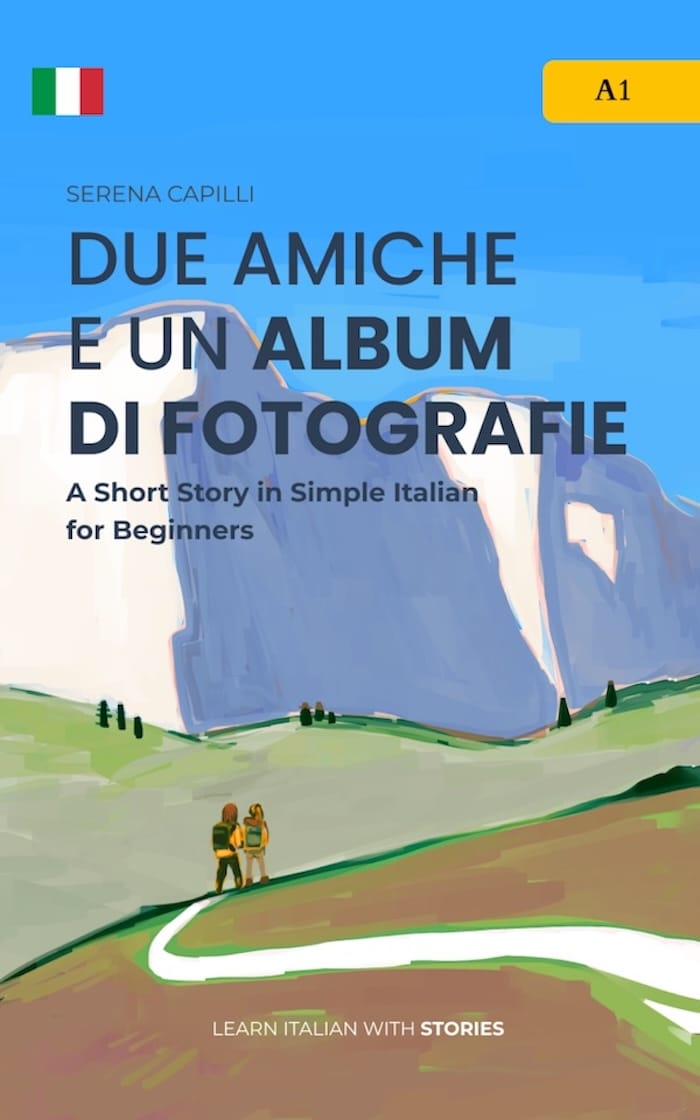
Due Amiche e un Album di Fotografie
Level A1
Two friends, an old photo album and a trip through southern Italy.
Piazzetta Italiana
Level A2/B1
My magazine for learners: real articles about Italian culture and everyday life, with vocabulary and audio.
Frequently asked questions
What is the difference between migliore and meglio?
Migliore is an adjective, so it describes a noun and agrees with it (migliore, migliori). Meglio is an adverb, so it describes a verb and never changes. Both translate as “better”: Questo vino è migliore (this wine is better), Oggi sto meglio (today I feel better).
Do you say “è meglio” or “è migliore”?
Use è migliore when you compare two things or people: Questo ristorante è migliore di quello. Use è meglio when the subject is an action or a situation, usually followed by an infinitive: È meglio partire presto (it’s better to leave early).
Is “più migliore” correct in Italian?
No. Migliore already means “more good”, so più migliore is a mistake. The same goes for più meglio, più peggiore and più peggio.
Miglior or migliore?
Both are correct before a singular noun: il miglior amico and il migliore amico. Miglior is just a shorter form. In the plural you always use migliori: i migliori amici.
What does “il meglio” mean?
Il meglio is meglio used as a noun, and it means “the best thing” or “the best part”: Il meglio deve ancora venire (the best is yet to come). Fare del proprio meglio means “to do one’s best”: Faccio del mio meglio.
What is the difference between peggiore and peggio?
It works exactly like migliore and meglio. Peggiore is an adjective (worse, the worst) and goes with nouns: la peggiore vacanza. Peggio is an adverb (worse) and goes with verbs: Oggi sto peggio.