If you love the lingua di Dante and you’ve already reached a certain level, an Italian language certification is a brilliant idea: to prove your level, to keep your motivation high, or because you need it for citizenship, work or university. Here’s how the four official certifications compare and how to choose yours.
In short
- There are four official certifications: CILS (Siena), CELI (Perugia), PLIDA (Dante Alighieri) and CERT.IT (Roma Tre).
- They all follow the CEFR levels (A1 to C2) and are recognized by the Italian government.
- For citizenship you need B1; for university, usually B2.
- They all test reading, listening, writing and speaking. Grammar is checked throughout.
- Choose based on the center near you, the dates and the format you prefer.
Why get an Italian certification?
- It keeps you motivated. Preparing for an exam gives your study a goal and a deadline.
- You can mix business with pleasure. You can take the exam in many countries, or travel to Italy and sit it there: sessions run in cities from North to South.
- You stand out. An official certificate looks great on your resume and proves your level to employers.
- Citizenship. Maybe your spouse is Italian, or you live in Italy and want to apply for citizenship: since December 2018 you need at least a B1 certificate.
- You fill the gaps. Preparing for a test is the best way to tune up all four skills: reading, listening, writing and speaking.
- You challenge yourself. You’re not in school anymore, so a test can actually be fun. Language learning is a great brain workout, after all.

CILS, CELI, PLIDA and CERT.IT compared
| CILS | CELI | PLIDA | CERT.IT | |
|---|---|---|---|---|
| Issued by | Università per Stranieri di Siena | Università per Stranieri di Perugia | Società Dante Alighieri | Università Roma Tre |
| Level names | A1, A2, Uno (B1), Due (B2), Tre (C1), Quattro (C2) | Impatto (A1), CELI 1 (A2) to CELI 5 (C2) | A1 to C2 | several CEFR levels |
| Where | Italy and centers worldwide | Italy and centers worldwide | Dante Alighieri committees and centers worldwide | Italy and centers abroad |
| Citizenship version | Yes: B1 Cittadinanza | Yes: CELI for immigrants (B1) | Check with your center | Check with your center |
| My guides | A1, A2, B1, B2, B1 Cittadinanza | CELI 2 (B1) | PLIDA B1 |
Which level should you choose?
It depends on your goal. If you’re not sure where you are, take a sample paper at the level you think you have: if you pass it comfortably, aim one level higher.
| Your goal | Level to aim for |
|---|---|
| Motivation, travel, a first milestone | A1 or A2 |
| Italian citizenship by marriage or residence | B1 |
| Working in Italy | B1 or B2, depending on the job |
| Enrolling at an Italian university | usually B2 (some programs ask for C1) |
| Teaching Italian or proving near-native skills | C1 or C2 |
Wondering how long it takes to get there? Read how long it takes to learn Italian.
What are the exams like?
The formats differ in the details, but every exam tests the same four skills, each with its own time limit:
- Listening: audio clips with multiple-choice or matching questions.
- Reading: short texts with comprehension tasks (CILS adds a separate grammar and vocabulary section).
- Writing: emails, short texts or forms, with a word count.
- Speaking: a conversation with an examiner, often with a photo or a role play.
How to sign up
- Choose your level and your certification.
- Find a center near you: here are the CILS exam centers and the CELI exam centers.
- Check the dates: some levels run only a few times a year, and not every center activates every level.
- Register and pay before the deadline, usually four to six weeks before the exam.
How to prepare
There’s plenty of official material online to get familiar with the format: start with the sample papers on each certification’s website, then do as many mock tests as you can, with a timer. Have a teacher correct your writing and practice speaking out loud. My guides go into each exam in detail: CILS A1, CILS A2, CILS B1, CELI 2, PLIDA B1, B1 Cittadinanza speaking, B1 Cittadinanza writing.
You’ll find all my exam guides in one place on the Italian language exams page. And if you’d like a teacher to build a plan around your exam, I offer bespoke private Italian classes online.
Practice with my stories
Reading stories at your level is one of the easiest ways to get faster at the reading and listening parts, and to build the vocabulary you need for writing.
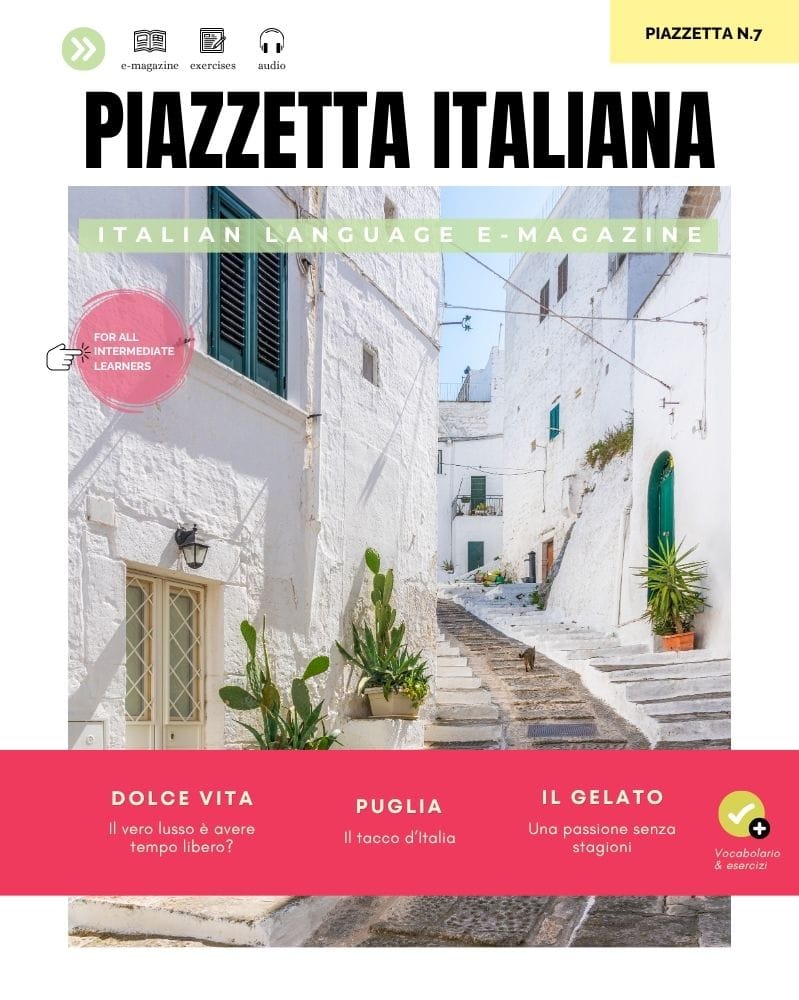
Piazzetta Italiana
Level A2/B1
My magazine for learners: real articles about Italian culture and everyday life, with vocabulary and audio.
Frequently asked questions
What are the official Italian language certifications?
The four main ones are CILS (Università per Stranieri di Siena), CELI (Università per Stranieri di Perugia), PLIDA (Società Dante Alighieri) and CERT.IT (Università Roma Tre). Together they form CLIQ, recognized by the Italian government.
Which Italian certification is best?
None is better in absolute terms: all are official and recognized. Choose based on the exam center near you, the dates that fit your schedule and the format you feel more comfortable with after looking at sample papers.
Which level do I need for Italian citizenship?
B1. Since December 2018, citizenship by marriage or residence requires a B1 certificate from a recognized body, such as CILS, CELI, PLIDA or CERT.IT.
Which level do I need for an Italian university?
Usually B2, although some programs ask for C1. Always check the requirements of your university and course.
Do Italian language certificates expire?
CILS, CELI and PLIDA certificates have no expiry date. An institution may still ask for a recent one, so check what they require.